

 , Naseema Shaik2, Mukesh Kumar Dharmalingam Jothinathan3 , Padmaja Yarlagadda2 and Uma Penmetcha2
Vulvovaginal candidiasis (VVC) is a common fungal infection mostly caused by Candida albicans, that affects many pregnant women. The increased susceptibility of pregnant woman is related to hormonal changes, and decrease in cell-mediated immunity, and disturbed vaginal microbiota. If left untreated, VVC may lead to negative effects for both the mother and the fetus, including low birth weight, neonatal candidiasis, and premature labor. This review explores the pathogenesis, diagnostic advancements, treatment approaches and the role of probiotics managing VVC during pregnancy. The clinical presentation of VVC include pruritus, burning, leucorrhoea and dysuria, but asymptomatic colonization is also frequent. The proper diagnosis is important and is usually made by a clinical evaluation, along with laboratory testing including KOH microscopy, culture, and germ tube testing. Advanced diagnostic tools, such as rapid card tests and molecular methods like PCR, LAMP, and MALDI-TOF MS enhance pace and accuracy of diagnosis. Topical azoles, especially clotrimazole are preferred as first line in view of their safety in pregnancy. Systemic agents such as fluconazole are used cautiously depending on the gestational age and the severity of the presentation. Probiotic treatment with Lactobacillus may serve as an adjunctive antifungal therapy and may contribute to the restoration of vaginal microbiota, as well as a shortage of recurrence particularly in recurrent VVC in women. This review emphasizes the need for early diagnosis and multimodal management including anti-fungals and probiotics in order to achieve the best maternal and neonatal outcome. Further research is warranted to establish standardized guidelines for probiotic use during pregnancy in VVC management.
Vulvovaginal Candidiasis, Pregnancy, Candida albicans, Pathogenesis, Diagnosis, Antifungal Therapy, Probiotics, Antifungal Resistance
Candida albicans primarily causes vulvovaginal candidiasis (VVC), a fungal infection of the vulva and vagina; however, other species of Candida may also play a role. Symptoms of this illness include burning, itching, redness, swelling, and a thick, white discharge from the vagina.1 Until now, it is estimated that at least 70% of women will experience at least one episode of VVC in their lifetime.2 VVC is a common issue during pregnancy because of the physiological and immunological changes that it brings about, which increase its vulnerability.3,4 VVC often manifests as pruritus, a burning feeling, vaginal discharge, dyspareunia, dysuria, vulva and vaginal edema, and redness.4,5
Women of childbearing age are susceptible to vaginal candidiasis, which affects them frequently, at least one episode occurs in the lives of these women.6,7 According to researchers, the occurrence of vaginal candidiasis is linked to the number of gestations and trimesters. Researchers found that women in their third trimester and multigravida had the highest incidence rates of Candidiasis.8 We can divide VVC instances into two categories, simple and complex.9 Patients with uncomplicated VVC, which is often caused by Candida albicans and affects healthy, non-pregnant women, may benefit from short-course antifungal medications. It manifests as intermittent bouts of mild-to-moderate severity. Alternatively, non-albicans Candida (NAC) species produce complex VVC, which is more common in women with immunodeficiency, diabetes, pregnancy, and other medical disorders. It can appear severe or recurring, and short-term antifungal medications make it difficult to treat.9,10
Numerous risk factors, including pregnancy, immunosuppression, HIV infection, diabetes, the use of contraceptives, and antibiotics, increase one’s susceptibility to VVC.11 Several pregnancy-related factors, such as higher estrogen levels, more glycogen production by the vaginal mucosa, and lower cell-mediated immunity, may also increase the risk of VVC during pregnancy and allow the bacteria to settle without any symptoms.11,12 Studies show that between 10 and 20 percent of pregnant women have VVC, which is a very prevalent condition during pregnancy.13 In addition to being uncomfortable, untreated VVC during pregnancy might result in serious side effects. Preterm labor, low birth weight, and neonatal candidiasis are a few possible problems. In order to protect the mother’s health as well as the health and well-being of the fetus, prompt and efficient VVC therapy is essential.14 Despite its high frequency and potential problems, VVC management in pregnant women presents distinct challenges. The safety of antifungal medications during pregnancy is of significant concern, necessitating a careful balance between effectiveness and possible hazards to the growing baby.15 Furthermore, recurrent VVC, defined as four or more episodes per year, creates additional therapeutic challenges and demands a thorough knowledge of the underlying pathophysiology and risk factors.16
Vaginal Candidiasis is the most common disease in pregnant women all over the world. The risk of carriage to develop disease in pregnant women is two times higher than non-pregnant women particularly during the third trimester due to changes in the levels of reproductive hormones and deposition of glycogen in the vagina.17,18 VVC affects a considerable proportion of women worldwide, with up to 70%-75% experiencing it at some point in their lives. The prevalence among pregnant women is higher due to hormonal and physiological changes during pregnancy.19 VVC mainly affects women of childbearing age, predominantly between 20 and 40 years of age.20-23 A study in the Ho municipality reported a VVC prevalence of 40.1% among pregnant women. The study identified Candida albicans as the most frequently isolated species, accounting for 65.2% of the cases.24 The prevalence of Vulvovaginal candidosis (VVC) in pregnant women has been extensively studied globally. Studies have reported varying prevalence rates, with percentages ranging from 29.2% in Africa to as high as 90.38% in Asian countries like Kenya.25,26 Study from Spain reported 28% prevalence of Candida species among pregnant women. Of these, Candida albicans was the major isolate 90.4% followed by Candida glabrata 6.3%. Most studies reported Candida albicans as the most predominant cause of vaginal Candidiasis in pregnant women which accounts 80%-95% of Candida infection.27-31
Numerous risk factors, including pregnancy, immunosuppression, HIV infection, diabetes, the use of contraceptives, and antibiotics, increase one’s susceptibility to VVC.11 Several pregnancy-related factors, such as higher estrogen levels, more glycogen production by the vaginal mucosa, and lower cell-mediated immunity, may also increase the risk of VVC during pregnancy and allow the bacteria to settle without any symptoms.11,12 Studies show that between 10 and 20 percent of pregnant women have VVC, which is a very prevalent condition during pregnancy.13 In addition to being uncomfortable, untreated VVC during pregnancy might result in serious side effects. Preterm labor, low birth weight, and neonatal candidiasis are a few possible problems. In order to protect the mother’s health as well as the health and well-being of the fetus, prompt and efficient VVC therapy is essential.14
Despite its high frequency and potential problems, VVC management in pregnant women presents distinct challenges. The safety of antifungal medications during pregnancy is of significant concern, necessitating a careful balance between effectiveness and possible hazards to the growing baby.15 Furthermore, recurrent VVC, defined as four or more episodes per year, creates additional therapeutic challenges and demands a thorough knowledge of the underlying pathophysiology and risk factors.16
A study conducted at the Garoua Regional Hospital revealed a prevalence of 27.8% among pregnant women, with Candida albicans being the predominant species, representing 73% of the isolates and A study in Hyderabad found a prevalence of 26% among pregnant women attending antenatal clinics, with Candida albicans being the most common pathogen.32 In Oyo State, a study reported a VVC prevalence of 17.3% among pregnant women, indicating significant regional differences within Africa.33 A cohort study involving 3,965 pregnant women found that 10.5% experienced VVC during pregnancy. The prevalence was higher in the second trimester (6.8%) compared to the first (4.3%) and third trimesters (5.0%).34 Additionally, the prevalence of VVC during pregnancy has been found to differ based on geographical regions, with higher rates observed in less-developed countries.35-37 These findings highlight the significant burden of VVC among pregnant women worldwide, emphasizing the importance of appropriate identification techniques and larger sample sizes to accurately estimate the occurrence of VVC in this population group.
This review provides a comprehensive overview of vulvovaginal candidiasis during pregnancy, focusing on its pathogenesis, recent diagnostic advances, therapeutic strategies, and the emerging role of probiotics. It also highlights current evidence, existing knowledge gaps, and future research directions to improve maternal and fetal outcomes.
Clinical presentation of vulvovaginal Candidiasis in pregnant women
The pregnant woman typically presents with vulvar itching, burning sensation of the vulva, thick curd like white vaginal discharge, redness (erythema) of the vulva, swelling (edema), painful urination (dysuria), and painful sex (dyspareunia).36,37 On the other hand, it is common for a pregnant woman to have an asymptomatic vaginal Candida infection.38-40 This makes diagnosis by laboratory testing such as microscopic examination, culturing and/or molecular testing necessary prior to initiating therapy because of the overlapping symptomatology with bacterial vaginosis and Trichomonas vaginalis.41-43
Healthcare practitioners who are aware of VVC’s clinical presentation ensure better maternal and newborn outcomes. Therefore, if a pregnant woman has any VVC symptoms, she should consult with her healthcare provider to ensure an appropriate diagnosis and treatment plan.
Pathogenesis
The pathogenesis of VVC during pregnancy is multifactorial, involving complex interactions between Candida virulence factors, hormonal changes, alterations in the vaginal microbiota, and modulation of the maternal immune response. Although Candida species normally exist as commensals in the vaginal tract, pregnancy-related hormonal and immunological changes, along with risk factors such as broad-spectrum antibiotic use, chronic corticosteroid therapy, diabetes mellitus, HIV infection, oral contraceptive use, contraceptive devices, and organ transplantation, can disrupt the normal vaginal environment and host defenses. These changes promote the transition of Candida from asymptomatic colonization to symptomatic infection.44-46
Estrogen and progesterone levels are higher during pregnancy. Increased estrogen levels during pregnancy cause Candida species to adhere more strongly to vaginal epithelial cells and increase glycogen content in vaginal tissue, resulting in immune suppression. This creates a favorable environment for Candida’s growth.47-49 Elevated progesterone levels during pregnancy may also change the vaginal microbiota and immunological responses, which can raise the risk of VVC in addition to estrogen. It is normal for the immune system to suppress during pregnancy in order to accommodate the developing baby, particularly due to a decrease in cell-mediated immunity. This makes pregnant women more susceptible to infections, including VVC.48,50 Changes in cytokine production during pregnancy may impact Candida’s immunological response, increasing the susceptibility to VVC.49,50
The use of antibiotics during pregnancy might disturb the natural equilibrium of the vaginal microbiota, leading to a decrease in the population of beneficial Lactobacillus species and creating an environment conducive to the growth of Candida. Pregnant women often receive antibiotics for various diseases, which increases the risk of VVC.51 Pregnant women who have diabetes or gestational diabetes have high blood sugar levels, which may create a favorable environment for fungus development. Elevated glucose levels in vaginal secretions may facilitate the establishment of Candida colonization.52 Furthermore, the use of hormonal contraceptives before or during pregnancy might make women more susceptible to VVC as a result of hormonal effects on the vaginal ecosystem.53,54 Dietary practices like high-sugar diets might raise the risk of VVC by giving Candida development more nutrients.55 Obesity may also modify the vaginal microenvironment and immune response, increasing the vulnerability of people to VVC.56 A history of recurrent VVC may suggest a susceptibility to future episodes, especially during pregnancy, due to a variety of risk factors.57
These risk factors emphasize the importance of closely monitoring and managing VVC during pregnancy to prevent adverse outcomes for both the mother and the fetus. Early diagnosis and appropriate treatment are critical to reducing these risks.
Diagnostic advances
A combination of laboratory tests and clinical examination usually diagnoses pregnant women with vulvovaginal candidiasis. Symptoms including burning, itching, and irregular vaginal discharge are common in pregnant women.58 It is crucial to remember that these symptoms are not unique to VVC and may be brought on by other illnesses.4 Most pregnant women do not exhibit symptoms; however, a considerable percentage may have Candida species in their vagina. Since therapy is usually not required for asymptomatic colonization, it is crucial to differentiate between colonization and actual infection.59 When the patient exhibits abnormal pelvic findings, we will consider direct microscopy when collecting a vaginal swab. Vaginal discharge’s pH was evaluated in addition to direct microscopy.30 The fundamental methods for diagnosing candidiasis are microscopic analysis of a 10% potassium hydroxide wet mount preparation and Gram stain preparation from the vaginal discharge of clinically positive pregnant women.49,60,61
Microscopic examination can detect the presence of Candida, however, it is unable to identify the specific species. Therefore, additional methods for species identification of Candida are required, such as culturing on Sabouraud dextrose agar (SDA). Because of Candida while inhibiting the growth of bacteria due to its acidic pH and antibiotic properties.62,63 Figure depicts a summary of the clinical features, risk factors, diagnosis, and treatment of vulvovaginal candidiasis.
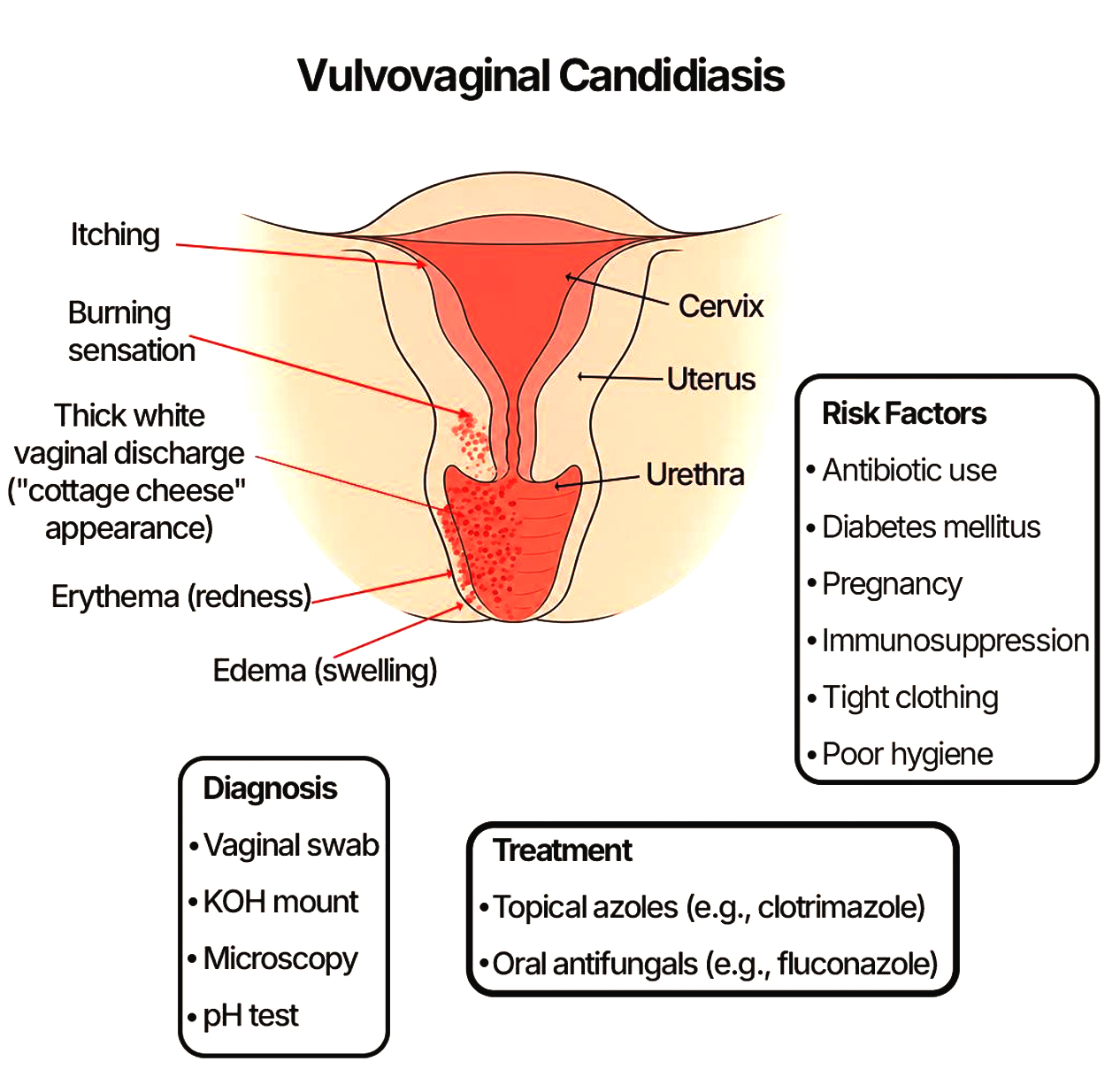
Figure. This illustration highlights common symptoms, risk factors, basic diagnostic methods and treatment options for Vulvovaginal Candidiasis (VVC)
CHROM agar is often used for identifying mixed cultures.64-66 By observing how various Candida species react with the chromogenic substrate after an incubation period at 37 °C, one can identify species using a fungal culture medium known as CHROM agar. Different Candida species result in distinct colony types and colors.66,67 Another technique for identifying Candida species is the germ tube test. This approach is useful for identifying hyphae of Candida species, such as Candida albican and Candida dubliniensis, hyphae formers generate hyphae when cultured in serum for two to four hours at 35 °C.67,68 The yeast assimilation test is the most secure way to identify non-candida albican species. The basis for this test is yeast’s capacity to digest organic substances. Additional quick test kits are available for the diagnosis of Candida, such as the Immunologic Latex Agglutination Test.17,67,68 In addition to species identification, modern molecular techniques, including polymerase chain reaction (PCR) and 18S rRNA gene clone library approaches, enable the detection of drug-resistant Candida. The fundamental idea behind PCR is the large-scale amplification of the target DNA at varying temperatures.69
In order to provide an accurate diagnosis, guide appropriate and safe treatment, reduce difficulties for mothers and newborns, and promote larger public health goals, diagnostic testing for VVC in pregnant women is important. For mother and fetus health, accurate and timely diagnosis is crucial. Even though more diagnostic tests are available clinical diagnosis and direct microscopy techniques were enough to prescribe medication.70,71 But Accurate diagnosis ensures appropriate treatment, improving outcomes for pregnant women with VVC.
Table 1. New rapid methods for diagnosis of VVC
Rapid Card Test |
Sensitivity |
Specificity |
Description |
Ref. |
|---|---|---|---|---|
BD Affirm VPIII Microbial ID Test |
90%-95% |
85%-90% |
Detects Candida species, Gardnerella vaginalis, and Trichomonas vaginalis from vaginal samples. |
72 |
OSOM BVBlue Test |
85%-90% |
80%-85% |
Rapid detection of elevated sialidase activity in vaginal fluid, indicative of bacterial vaginosis and Candida infections. |
73 |
FemExam Test Card |
87%-92% |
82%-87% |
Detects elevated vaginal pH and amines, which can be indicative of bacterial vaginosis and Candida infections. |
74 |
Vaginitis Plus Test |
90%-94% |
88%-92% |
Detects Candida species, Gardnerella vaginalis, and Trichomonas vaginalis with a simple card- based test. |
75 |
Solana Candida Assay |
88%-93% |
90%-95% |
Nucleic acid amplification test for rapid detection of Candida species. |
76 |
GeneXpert Candida Assay |
92%-96% |
91%-95% |
PCR-based test for the detection of Candida species directly from vaginal swabs. |
77 |
Candida VagiCard |
85%-90% |
80%-85% |
Immunochromatographic test for rapid detection of Candida antigens in vaginal fluid. |
78 |
TaqMan Candida Test |
89%-93% |
88%-92% |
Real-time PCR test for the detection of Candida DNA. |
79 |
QuickVue Candida Assay |
87%-91% |
85%-89% |
Rapid immunoassay for detection of Candida antigens. |
80 |
Candida albicans Rapid Test |
90%-94% |
86%-90% |
Immunochromatographic test specifically for Candida albicans. |
81 |
Nano CHROM Candida Test |
91%-5% |
90%-94% |
Nanoparticle-based test for quick detection of Candida species. |
82 |
Table 1 includes commercially available rapid card or molecular tests; the reported sensitivity and specificity ranges, a short description of the detection principle or target and references. These means are faster and easier to use in the clinical/point-of-care setting compared to conventional culture-based diagnostics.
Table 2. Molecular methods for diagnosis of VVC
Method |
Description |
Ref. |
|---|---|---|
PCR (Polymerase Chain Reaction) |
A molecular technique that amplifies DNA sequences of Candida species, providing high sensitivity and specificity. |
83 |
Next-Generation Sequencing (NGS) |
High-throughput sequencing technology that identifies and quantifies microbial communities, including Candida species. |
84 |
LAMP (Loop-mediated Isothermal Amplification) |
A single-tube technique for the amplification of DNA, offering rapid and simple detection of Candida species. |
85 |
qPCR (Quantitative PCR) |
A PCR technique that quantifies the DNA of Candida species, providing both detection and measurement of infection load. |
86 |
Digital PCR (dPCR) |
A highly sensitive PCR technique that partitions the sample into many individual reactions, enabling precise quantification of Candida DNA. |
87 |
MALDI-TOF MS (Matrix-Assisted Laser Desorption/Ionization Time- of-Flight Mass Spectrometry) |
A technology that identifies microorganisms based on the unique protein fingerprint of their cellular components. |
88 |
T2 Candida Panel |
A magnetic resonance-based diagnostic panel that detects Candida species directly from whole blood. |
89 |
Metagenomic Sequencing |
A sequencing method that analyzes all genetic material in a sample, providing comprehensive profiling of microbial communities including Candida species. |
90 |
CRISPR-based Diagnostics |
A novel method using CRISPR-Cas systems for the rapid and specific detection of Candida DNA. |
91 |
Biosensors |
Devices that use biological molecules to detect the presence of Candida species, offering rapid and specific detection. |
92 |
Table 2 shows advanced molecular tools for diagnosis of vulvovaginal candidiasis (VVC). Compared to traditional methods, they provide improved sensitivity, specificity, and rapid detection. Each method is based on different principle from DNA amplification and sequencing through protein identification to biosensor devices, offering a set of techniques for accurate identification of Candida spp.
Therapeutic strategies
Treatment options for VVC in expectant mothers vary according to the severity and stage of the condition. Topical treatment or a single oral dosage can treat Candida albicans cases that are not too difficult. Probiotic therapy for VVC is still debatable and lacks clear evidence.93-96 Longer treatment periods with oral fluconazole or daily topical azoles may be required for more severe or complex cases.97-100 Probiotic therapy for VVC is still debatable and lacks clear evidence. Local antifungal treatment, either vaginal or along with oral medication, has been shown to be equally effective in preventing the return of VVC in all three trimesters of pregnancy.101-103
Topical azole antifungals, especially clotrimazole, are often recommended as first-line treatment because of their well-established safety profiles and high concentration in vaginal secretions.104,105 Oral fluconazole is typically not recommended for use during pregnancy, particularly in the first trimester, owing to the risks of causing birth defects (teratogenic hazards).106 However, some research suggests that short-term oral fluconazole may be a possibility in later trimesters, its use should be evaluated on a case-by-case basis after carefully weighing the benefits and drawbacks.107 It is critical to understand that antifungal resistance, especially to azoles, is a growing problem.
As a result, doctors should be aware of local resistance trends and undertake antifungal susceptibility testing as necessary. Due to their well-established safety profile, topical azoles, particularly clotrimazole, are widely used.105,106 Commercially available antifungal medications for the treatment of Candidiasis include imidazole, triazole, and polyene antifungals.108 According to other studies topical imidazole appears to be more effective than nystatin for treating symptomatic vaginal candidiasis in pregnancy.107,109,110 Various studies concur that a seven-day antifungal topical medication is the best option for treating candidiasis in pregnant women, as shorter therapy is associated with treatment failure.11,27,109 Treatment varies depending on vaginal options and should be based upon antifungal susceptibility tests when the causative agent belongs to the NAC species, such as C. krusei, C. dubliniensis, and C. glabrata, which are commonly resistant to fluconazole.11,27,111
Table 3. Antifungal Agents and Risk Categories Used in Pregnancy
Pregnancy Category |
Drug Class |
Drug Name |
Risk in Pregnancy |
Ref. |
|---|---|---|---|---|
A |
Polyenes |
Nystatin |
Safe in pregnancy; no known risk of congenital abnormalities. |
96, 112 |
B |
Azoles |
Clotrimazole |
Generally considered safe with no increased risk of major malformations. |
105, 106, 112 |
B |
Allylamines |
Terbinafine |
Generally considered safe; no increased risk of major malformations. |
96, 112 |
B |
Polyenes |
Amphotericin B |
Generally considered safe; preferred for serious systemic fungal infections during pregnancy. |
96, 112 |
C |
Azoles |
Miconazole |
Animal studies show adverse effects; may be used if maternal benefits outweigh fetal risks. |
96, 107, 112 |
C |
Azoles |
Fluconazole |
Low doses generally considered low risk; prolonged or high-dose therapy has been associated with congenital abnormalities. |
106, 107, 112 |
C |
Azoles |
Itraconazole |
Animal studies demonstrate fetal risk; use only when potential benefits outweigh risks. |
96, 112 |
C |
Azoles |
Ketoconazole |
Animal studies demonstrate fetal risk; avoid unless clearly indicated. |
96, 112 |
C |
Echinocandins |
Caspofungin |
Animal studies show fetal toxicity; insufficient human safety data. |
96, 112 |
C |
Echinocandins |
Micafungin |
Animal studies show fetal toxicity; insufficient human safety data. |
96, 112 |
C |
Echinocandins |
Anidulafungin |
Animal studies show fetal toxicity; insufficient human safety data. |
96, 112 |
D |
Azoles |
Voriconazole |
Evidence of human fetal risk; use only for life-threatening infections when benefits outweigh risks. |
96, 112 |
Table 3 summarizes commonly used antifungal agents by class and their U.S. FDA Pregnancy Categories (A-D), along with associated teratogenic risks during pregnancy. It serves as a clinical guide for selecting appropriate antifungal therapy by balancing potential maternal benefits against fetal risks based on available human and animal data. Clotrimazole, Terbinafine, and Amphotericin B (Category B) are generally safe with no increased risk of malformations. Drugs in Category C, like Miconazole and Fluconazole, show some animal study risks but may be used if benefits outweigh risks. Voriconazole (Category D) has evidence of human fetal risk but may be used in serious infections if necessary.96,112 Overall, the table serves as a clinical guide for selecting appropriate antifungal therapy during pregnancy by balancing maternal benefits against potential fetal risks based on available human and animal data.
Role of probiotics
Researchers have investigated the advantages and disadvantages of probiotic treatment for vulvovaginal candidiasis (VVC) in pregnant women. Probiotic usage, especially Lactobacillus species, attempts to maintain and repair the natural vaginal flora, which might be upset by a Candida infection.93 Pregnant women widely regard probiotic treatment as safe and may find it helpful in controlling VVC.94 Probiotics, particularly Lactobacillus strains, produce lactic acid, which lowers vaginal pH and prevents Candida growth, they also produce hydrogen peroxide and bacteriocins, which directly inhibit pathogenic microorganisms.95 These actions help maintain a healthy vaginal microbiome.
According to several studies and reviews, pregnant women may safely take probiotics, particularly those of the Lactobacillus species. Between the probiotic and placebo groups, there have been no discernible variations in the incidence of major or mild side effects. The examined trials often observed side effects such as gastrointestinal problems and local irritation, which did not significantly vary across groups.94,96,97 Probiotics are often thought to be risk-free, well tolerated, and have few side effects. Nevertheless, the safety characteristics may differ based on the specific probiotic strains used and the health condition of the person.98
Lactobacillus rhamnosus GR-1, Lactobacillus reuteri RC-14, and Lactobacillus acidophilus are among the probiotic strains that are effective for VVC. These strains’ positive effects on vaginal health have been the subject of significant research.99,101 Probiotics may be beneficial or ineffective depending on the amount and method (vaginal suppositories, oral capsules, or both). Studies reveal that consistent daily ingestion for at least four weeks yields significant results.100,104
Probiotics may be especially beneficial for women who have recurrent vulvovaginal candidiasis (VVC) as a preventative strategy. Frequent use of probiotics may aid in preserving a harmonious vaginal microbiota and diminishing the occurrence of infections.105,110 Probiotic supplementation with antifungal medications has been associated with varying degrees of benefit, with some trials reporting no discernible increase in clinical cure rates. While probiotics may be beneficial in certain situations, their use as a main therapy should be considered an adjuvant measure.102,111 While there is no general agreement, several clinical recommendations and evaluations indicate that probiotics may be an effective addition to traditional antifungal therapies, especially for recurrent VVC. Many recommend probiotics as a supplement because of their safety profile and potential benefits; however, more research is necessary to establish definitive guidelines.96,112
These findings suggest that probiotic therapy, when combined with antifungal medication, might be a safe and possibly useful supplementary treatment for VVC in pregnant women. However, it is crucial to use it under a doctor’s supervision and in conjunction with other antifungal medications.
Treating vulvovaginal candidiasis (VVC) during pregnancy requires the use of antifungal and probiotic treatments. Pregnant women have a notably greater occurrence of VVC as a result of hormonal and physiological alterations. There are several methods for diagnosing candidiasis, including clinical signs and symptoms, microscopy, culture, serology, germ tube testing, sugar absorption, and PCR. Topical azoles, such as clotrimazole, are first-line therapies because of their effectiveness and safety. Oral fluconazole is often contraindicated during the first trimester owing to possible hazards, although it may be contemplated at a later stage. Probiotics, particularly Lactobacillus strains, help to restore the normal balance of microorganisms in the vagina and prevent excessive Candida development. When used with antifungal medication, they have additional benefits, potentially decreasing the likelihood of the condition recurring. Nevertheless, more study is required to create universally accepted norms.
Rapid and precise diagnosis is critical for effective treatment and avoiding complications such as premature labor and neonatal candidiasis. Techniques like PCR and rapid card testing improve diagnostic accuracy, allowing for quick action. Overall, when combined with a proper diagnosis, antifungal and probiotic therapy may improve outcomes for pregnant women with VVC while protecting maternal and fetal health
ACKNOWLEDGMENTS
None.
CONFLICT OF INTEREST
The authors declare that there is no conflict of interest.
AUTHORS’ CONTRIBUTION
All authors listed have made a substantial, direct and intellectual contribution to the work, and approved it for publication.
FUNDING
None.
DATA AVAILABILITY
All datasets generated or analyzed during this study are included in the manuscript.
ETHICS STATEMENT
Not applicable.
- Centers for Disease Control and Prevention (CDC). Vulvovaginal candidiasis. In: Sexually Transmitted Infections Treatment Guidelines, 2021. Published July 22, 2021. Accessed July 1, 2025
- Rafat Z, Alipour N, Esmaeili E, et al. Vulvovaginal candidiasis: A global perspective through systematic review and meta-analysis. Microb Pathog. 2026;212:108284.
Crossref - Liu Z, Huang R, Sun T, Zhu L. Probiotic supplementation during pregnancy for vaginal microbiota improvement and pathogen clearance: A systematic review and meta-analysis. Acta Obstet Gynecol Scand. 2026;105(6):999-1016.
Crossref - Jafarzadeh L, Ranjbar M, Nazari T, et al. Vulvovaginal candidiasis: An overview of mycological, clinical, and immunological aspects. J ObstetGynaecol Res. 2022;48(7):1546-1560.
Crossref - Al Halteet S, Abdel-Hadi A, Hassan M, Awad M. Prevalence and Antifungal Susceptibility Profile of Clinically Relevant Candida Species in Postmenopausal Women with Diabetes. Biomed Res Int. 2020;2020:7042490.
Crossref - Hussen I, Aliyo A, Abbai MK, Dedecha W. Vaginal candidiasis prevalence, associated factors, and antifungal susceptibility patterns among pregnant women attending antenatal care at bule hora university teaching hospital, Southern Ethiopia. BMC Pregnancy Childbirth. 2024;24(1):619.
Crossref - Us E, Cengiz SA. Prevalence and phenotypic evaluation of Candida dubliniensis in pregnant women with vulvovaginal candidosis in a university hospital in Ankara. Mycoses. 2007;50(1):13-20.
Crossref - Nelson M, Wanjiru W, Margaret M. Identification and susceptibility profile of vaginal Candida species to antifungal agents among pregnant women attending the antenatal clinic of Thika District Hospital, Kenya. Open J Med Microbiol. 2013;3(4):239–247.
Crossref - Felix TC, de Brito Roder DVD, Dos Santos Pedroso R. Alternative and complementary therapies for vulvovaginal candidiasis. Folia Microbiol (Praha). 2019;64(2):133-141.
Crossref - Goncalves B, Ferreira C, Alves CT, Henriques M, Azeredo J, Silva S. Vulvovaginal candidiasis: Epidemiology, microbiology and risk factors. Crit Rev Microbiol. 2016;42(6):905-927.
Crossref - Aguin TJ, Sobel JD. Vulvovaginal candidiasis in pregnancy. Curr Infect Dis Rep. 2015;17(6):462.
Crossref - Denning DW, Kneale M, Sobel JD, Rautemaa-Richardson R. Global burden of recurrent vulvovaginal candidiasis: a systematic review. Lancet Infect Dis. 2018;18(11):e339-e347.
Crossref - Maftei N-M, Arbune M, Georgescu CV, Elisei AM, Iancu AV, Tatu AL. Vulvovaginal Candidiasis in Pregnancy—Between Sensitivity and Resistance to Antimycotics. J Xenobiot. 2023;13(3):312-322.
Crossref - van Riel SJJM, Lardenoije CMJG, Oudhuis GJ, Cremers NAJ. Treating (Recurrent) Vulvovaginal Candidiasis with Medical-Grade Honey—Concepts and Practical Considerations. J Fungi2021;7(8):664.
Crossref - Farr A, Effendy I, Frey Tirri B, Hof H, Mayser P, Petricevic L, Ruhnke M, Schaller M, Schaefer APA, Sustr V, Willinger B, Mendling W. Guideline: Vulvovaginal candidosis (AWMF 015/072, level S2k). Mycoses. 64(6):583-602.
Crossref - Sobel JD. Recurrent vulvovaginal candidiasis. Am J Obstet Gynecol. 2016;214(1):15-21.
Crossref - Fernández Limia O, Lantero MI, Betancourt A, de Armas E, Villoch A. Prevalence of Candida albicans and Trichomonas vaginalis in pregnant women in Havana City by an immunologic latex agglutination test. MedGenMed. 2004;6(4):50
- Shinkafi S, Salisu N, Mohammed N, Isah K. Prevalence of vaginal candidiasis among pregnant women attending antenatal clinic in selected hospitals within Gusau, Zamfara State, Nigeria. Niger J Bot. 2022;34(2):229-234.
Crossref - Disha T, Haque F. Prevalence and Risk Factors of Vulvovaginal Candidosis during Pregnancy: A Review. Infect Dis Obstet Gynecol. 2022;2022:6195712.
Crossref - Sustr V, Foessleitner P, Kiss H, Farr A. Vulvovaginal candidosis: current concepts, challenges and perspectives. J Fungi (Basel). 2020;6(4):267.
Crossref - Ringdahl EN. Treatment of recurrent vulvovaginal candidiasis. Am Fam Physician. 2000;61(11):3306-3312-3317
- Tsega A, Mekonnen F. Prevalence, risk factors, and antifungal susceptibility pattern of Candida species among pregnant women at Debre Markos Referral Hospital, Northwest Ethiopia. BMC Pregnancy Childbirth. 2019;19(1):527.
Crossref - Al Akeel RA, El Kersh TA, Al Sheikh YA, Al Ahmadey ZZ. Prevalence and comparison of detection methods for Candida species in vaginal specimens from pregnant and nonpregnant Saudi women. Afr J Microbiol Res. 2013;7(1):56-65.
Crossref - Waikhom SD, Afeke I, Kwawu GS, et al. Prevalence of vulvovaginal candidiasis among pregnant women in the Ho municipality, Ghana: species identification and antifungal susceptibility of Candida isolates. BMC Pregnancy Childbirth. 2020;20(1):266.
Crossref - Garcia HM, Garcia SD, Copolillo EF, et al. Prevalence of vaginal candidiasis in pregnant women: identification of yeasts and susceptibility to antifungal agents. Rev Argent Microbiol. 2006;38(1):9-12.
- Mohamed AO, Mohamed MS, Mallhi TH, et al. Prevalence of vulvovaginal candidiasis among pregnant women in Africa: a systematic review and meta-analysis. J Infect Dev Ctries. 2022;16(8):1243–1251.
Crossref - Yano J, Sobel JD, Nyirjesy P, et al. Current patient perspectives of vulvovaginal candidiasis: incidence, symptoms, management, and post-treatment outcomes. BMC Womens Health. 2019;19(1):48.
Crossref - Ibrahim SM, Bukar M, Mohammed Y, Audu BM, Ibrahim HM. Prevalence of vaginal candidiasis among pregnant women with abnormal vaginal discharge in Maiduguri. Niger J Med. 2013;22(2):138–142
- Williams D, Lewis M. Pathogenesis and treatment of oral candidosis. J Oral Microbiol. 2011;3.
Crossref - Babic M, Hukic M. Candida albicans and non-albicans species as etiological agent of vaginitis in pregnant and non-pregnant women. Bosn J Basic Med Sci. 2010;10(1):89-97.
Crossref - Sobel JD. Vulvovaginal candidosis. Lancet. 2007;369(9577):1961-1971.
Crossref - Eyong IM, Iwewe YS, Yangsi TT, Abas A, Katoua FN, Njamen TN. Vulvovaginal candidiasis in pregnant women attending the Garoua Regional Hospital (Cameroon) and antifungals susceptibility profile of isolates. Asian Res J Gynaecol Obstet. 2023;6(1):151-159.
Crossref - Asare KK, Bentil HA, Gyesi E, et al. Candidiasis profile at the outpatient department of the University of Cape Coast Hospital in the Central Region of Ghana: a retrospective study. BMC Womens Health. 2023;23(1):101.
Crossref - Blomberg L, Backman K, Kirjavainen PV, Karvonen AM, Harju M, Keski-Nisula L. Vulvovaginal yeast infections, gestational diabetes and pregnancy outcome. BMC Pregnancy Childbirth. 202;23(1):70.
Crossref - Mhandire D, Rowland-Jones S, Mhandire K, Kaba M, Dandara C. Epidemiology of Cytomegalovirus among pregnant women in Africa. J Infect Dev Ctries. 2019;13(10):865-876.
Crossref - Gandhi AB, Purandare A, Athota K, et al. Vulvovaginal candidiasis: Epidemiology, treatment and prevention strategies. Indian J ObstetGynecol Res. 2022;9(3):328-334. doi.org/10.18231/j.ijogr.2022.063
- Bender RA, Caliskan S, Onal B, Aslancan R, Caliskan E. Treatment methods for vulvovaginal candidiasis in pregnancy. J Mycol Med. 2021;31(3):101138.
Crossref - Deorukhkar SC, Saini S. Vulvovaginal candidiasis due to non-albicans Candida: its species distribution and antifungal susceptibility profile. Int J Curr Microbiol Appl Sci. 2013;2(12):323-328
- Jeanmonod R, Chippa V, Jeanmonod D. Vaginal Candidiasis. [Updated 2024 Feb 3]. In: StatPearls [Internet]. Treasure Island (FL): StatPearls. 2024
- Eckert LO, Hawes SE, Stevens CE, Koutsky LA, Eschenbach DA, Holmes KK. Vulvovaginal candidiasis: clinical manifestations, risk factors, management algorithm. Obstet Gynecol. 1998;92(5):757-765.
Crossref - Mtibaa L, Fakhfakh N, Kallel A, et al. Vulvovaginal candidiasis: etiology, symptomatology and risk factors. J Mycol Med. 2017;27(2):153-158.
Crossref - Schaaf VM, Perez-Stable EJ, Borchardt K. The limited value of symptoms and signs in the diagnosis of vaginal infections. Arch Intern Med. 1990;150(9):1929-1933
- Linhares LM, Witkin SS, Miranda SD, Fonseca AM, Pinotti JA, Ledger WJ. Differentiation between women with vulvovaginal symptoms who are positive or negative for Candida species by culture. Infect Dis Obstet Gynecol. 2001;9(4):221-225.
Crossref - Alli JAO, Okonko IO, Odu NN, Kolade AF, Nwanze JC. Detection and prevalence of Candida isolates among patients in Ibadan, southwestern Nigeria. J Microbiol Biotechnol Res. 2011;1(3):176-184
- Chowta MN, Adhikari P, Rajeev A, Shenoy AK. Study of risk factors and prevalence of invasive candidiasis in a tertiary care hospital. Indian J Crit Care Med. 2007;11(2):67-73.
Crossref - Dariane CP, Luana THB, Luciane NC, Alexandre MF. A six-year epidemiological survey of vulvovaginal candidiasis in cytopathology reports in the state of Rio Grande do Sul, Brazil. Anal Bras Dermatol. 2012;41(2):163-168
Crossref - Patel MA, Aliporewala VM, Patel DA. Common antifungal drugs in pregnancy: risks and precautions. J Obstet Gynaecol India. 2021;71(6):577-582.
Crossref - Messina A, Mariani A, Brandolisio R, et al. Candidiasis in pregnancy: relevant aspects of the pathology for the mother and the fetus and therapeutic strategies. Trop Med Infect Dis. 2024;9(5):114.
Crossref - Hassan MHA, Ismail MA, Moharram AM, Shoreit AM. Prevalence of vaginal infection by multidrug-resistant Candida species among different ages in Egypt. Am J Microbiol Res. 2017;5(4):78-85.
Crossref - Guzel AB, Ilkit M, Burgut R, Urunsak IF, Ozgunen FT. An evaluation of risk factors in pregnant women with Candida vaginitis and the diagnostic value of simultaneous vaginal and rectal sampling. Mycopathologia. 2011;172(1):25-36.
Crossref - Cohen CR, Lingappa JR, Baeten JM, et al. Bacterial Vaginosis Associated with Increased Risk of Female-to-Male HIV-1 Transmission: A Prospective Cohort Analysis among African Couples. PLoS Med. 2012;9(6):e1001251.
Crossref - Zeng X, Zhang Y, Zhang T, Xue Y, Xu H, An R. Risk Factors of Vulvovaginal Candidiasis among Women of Reproductive Age in Xi’an: A Cross-Sectional Study. Biomed Res Int. 2018;2018:9703754.
Crossref - Spinillo A, Capuzzo E, Nicola S, Baltaro F, Ferrari A, Monaco A. The impact of oral contraception on vulvovaginal candidiasis. Contraception. 1995;51(5):293-297.
Crossref - Klinger G, Tiller FW, Klinger G. Die orale und vaginale Besied lungmit Candida albicans unter dem Einfluss hormonaler Kontrazeption [Oral and vaginal Candida colonization under the influence of hormonal contraception (author’s transl)]. Zahn MundKieferheilkdZentralbl. 1982;70(2):120-125
- Carrara MA, Bazotte RB, Donatti L, et al. Effect of experimental diabetes on the development and maintenance of vulvovaginal candidiasis in female rats. Am J Obstet Gynecol. 2009;200(6):659.e1-659.e4.
Crossref - Geiger AM, Foxman B. Risk factors for vulvovaginal candidiasis: a case-control study among university students. Epidemiology. 1996;7(2):182-7.
Crossref - Patel DA, Gillespie B, Sobel JD, et al. Risk factors for recurrent vulvovaginal candidiasis in women receiving maintenance antifungal therapy: results of a prospective cohort study. Am J Obstet Gynecol. 2004;190(3):644-653.
Crossref - Brown H, Drexler M. Improving the diagnosis of vulvovaginitis: perspectives to align practice, guidelines, and awareness. Popul Health Manag. 2020;23(S1):S3-S12.
Crossref - Schuster HJ, de Jonghe BA, Limpens J, Budding AE, Painter RC. Asymptomatic vaginal Candida colonization and adverse pregnancy outcomes including preterm birth: a systematic review and meta-analysis. Am J ObstetGynecol MFM. 2020;2(3):100163.
Crossref - Abbott J. Clinical and microscopic diagnosis of vaginal yeast infection: a prospective analysis. Ann Emerg Med. 1995;25(5):587-591.
Crossref - Gondo F, da Silva MG, Polettini J, et al. Vaginal flora alterations and clinical symptoms in low-risk pregnant women. GynecolObstet Invest. 2011;71(3):158-162.
Crossref - Muthusamy S, Elangovan S. Speciation and susceptibility testing of Candida isolates from vaginal discharge. Australas Med J. 2016;9(9):365-370.
Crossref - Aslani N, Kokabi R, Moradi F, Abbasi K, Vaseghi N, Afsarian MH. Characterization of Candida species isolated from vulvovaginal candidiasis by MALDI-TOF with in vitro antifungal susceptibility profiles. Curr Med Mycol. 2021;7(4):6-11.
Crossref - Nurat AA, Ola BG, Olushola SM, Mikhail TA, Ayodeji AS. Molecular and phenotypic identification of Candida isolates from pregnant women in Ogbomoso, Southwestern Nigeria. Int J Reprod Contracept Obstet Gynecol. 2016;5(2):317-322.
Crossref - Lavanya V, Pavani P, Kailasanatha RB. Speciation and antifungal susceptibility pattern of Candida isolates from vulvovaginitis patients attending a tertiary care hospital in South India. Int Arch Integr Med. 2019;6(2):62-68
- Gharehbolagh SA, Fallah B, Izadi A, et al. Distribution, antifungal susceptibility pattern and intra-Candida albicans species complex prevalence of Candida africana: a systematic review and meta-analysis. PLoS One. 2020;15(8):e0237046.
Crossref - Babic M, Hukic M. Candida albicans and non-albicans species as etiological agents of vaginitis in pregnant and non-pregnant women. Bosn J Basic Med Sci. 2010;10(1):89-97.
Crossref - Chiang SJF, Chien MK, Tsai CY, et al. A simple, fast, and reliable method for the identification of Candida albicans. Environ Health Insights. 2024;18:11786302241272398.
Crossref - Ruijter JM, Barnewall RJ, Marsh IB, et al. Efficiency correction is required for accurate quantitative PCR analysis and reporting. Clin Chem. 2021;67(6):829-842.
Crossref - Yismaw G, Asrat D, Woldeamanuel Y, Unakal C. Prevalence of candiduria in diabetic patients attending Gondar University Hospital, Gondar, Ethiopia. Iran J Kidney Dis. 2013;7(2):102-107
- Wiesenfeld HC, Macio I. The infrequent use of office-based diagnostic tests for vaginitis. Am J Obstet Gynecol. 1999;181(1):39-41.
Crossref - Quan M. Vaginitis: diagnosis and management. Postgrad Med. 2010;122(6):117-27.
Crossref - Bradshaw CS, Morton AN, Garland SM, Horvath LB, Kuzevska I, Fairley CK. Evaluation of a point-of-care test, BVBlue, and clinical and laboratory criteria for diagnosis of bacterial vaginosis. J Clin Microbiol. 2005;43(3):1304-1308.
Crossref - Krohn MA, Hillier SL, Eschenbach DA. Comparison of methods for diagnosing bacterial vaginosis among pregnant women. J Clin Microbiol. 1989;27(6):1266-71.
Crossref - Nyirjesy P, Alexander AB, Weitz MV. Vaginal Candida parapsilosis: pathogen or bystander? Infect Dis Obstet Gynecol. 2005;13(1):37-41.
Crossref - Baltogianni M, Giapros V, Dermitzaki N. Recent Challenges in Diagnosis and Treatment of Invasive Candidiasis in Neonates. Children (Basel). 2024;11(10):1207.
Crossref - Fuchs S, Lass-Florl C, Posch W. Diagnostic Performance of a Novel Multiplex PCR Assay for Candidemia among ICU Patients. J Fungi (Basel). 2019;5(3):86.
Crossref - Escuro RS, Jacobs M, Gerson SL, Machicao AR, Lazarus HM. Prospective evaluation of a Candida antigen detection test for invasive candidiasis in immunocompromised adult patients with cancer. Am J Med. 1989;87(6):621-7.
Crossref - Pfaller MA, Diekema DJ. Epidemiology of invasive candidiasis: a persistent public health problem. Clin Microbiol Rev. 2007;20(1):133-63.
Crossref - Dan M, Leshem Y, Yeshaya A. Performance of a rapid yeast test in detecting Candida spp. in the vagina. Diagn Microbiol Infect Dis. 2010;67(1):52-5.
Crossref - Matsui H, Higashide M, Hanaki H. Evaluation of a rapid immunochromatographic test for the detection of Candida species from oropharyngeal samples.
J Microbiol Methods. 2020;179:106090.
Crossref - Lorenzo-Villegas DL, Gohil NV, Lamo P, et al. Innovative Biosensing Approaches for Swift Identification of Candida Species, Intrusive Pathogenic Organisms. Life (Basel). 2023;13(10):2099.
Crossref - Camp I, Spettel K, Willinger B. Molecular Methods for the Diagnosis of Invasive Candidiasis. J Fungi (Basel). 2020;6(3):101.
Crossref - Mayer FL, Wilson D, Hube B. Candida albicans pathogenicity mechanisms. Virulence. 2013;4(2):119-28.
Crossref - Notomi T, Okayama H, Masubuchi H, et al. Loop-mediated isothermal amplification of DNA. Nucleic Acids Res. 2000;28(12):E63.
Crossref - Branda F, Petrosillo N, Ceccarelli G, et al. Antifungal agents in the 21st century: advances, challenges, and future perspectives. Infect Dis Rep. 2025;17(4):91.
Crossref - Huggett JF, et al. Digital PCR: a powerful new tool for clinical microbiology. Nat Rev Microbiol. 2013;11(8):591-598.
Crossref - Bader O. MALDI-TOF-MS-based species identification and typing approaches in medical mycology. Proteomics. 2013;13(5):788-799.
Crossref - Ahmad S, Khan Z. Invasive candidiasis: a review of nonculture-based laboratory diagnostic methods. Indian J Med Microbiol. 2012;30(3):264-269.
Crossref - White PL, Alanio A, Brown L, et al. An overview of using fungal DNA for the diagnosis of invasive mycoses. Expert Rev Mol Diagn. 2022;22(2):169-184.
Crossref - Kaminski MM, Abudayyeh OO, Gootenberg JS, Zhang F, Collins JJ. CRISPR-based diagnostics. Nat Biomed Eng. 2021;5(7):643-656.
Crossref - Neethirajan S, Ragavan V, Weng X, Chand R. Biosensors for Sustainable Food Engineering: Challenges and Perspectives. Biosensors. 2018; 8(1):23.
Crossref - Ang XY, Mageswaran UM, Chung YLF, et al. Probiotics Reduce Vaginal Candidiasis in Pregnant Women via Modulating Abundance of Candida and Lactobacillus in Vaginal and Cervicovaginal Regions. Microorganisms. 2022;10(2):285.
Crossref - Nachum Z, Suleiman A, Colodner R, et al. Oral Probiotics to Prevent Recurrent Vulvovaginal Infections During Pregnancy-Multicenter Double-Blind, Randomized, Placebo-Controlled Trial. Nutrients. 2025;17(3):460.
Crossref - Sadeghpour Heravi F. Host-vaginal microbiota interaction: shaping the vaginal microenvironment and bacterial vaginosis. Curr Clin Microbiol Rep. 2024;11(3):177-191.
Crossref - Satora M, Grunwald A, Zaremba B, et al. Treatment of vulvovaginal candidiasis—An overview of guidelines and the latest treatment methods. J Clin Med. 2023;12(16):5376.
Crossref - Zeng X, An R, Li H, Zhang Y. Improved treatment of vulvovaginal candidiasis with Clotrimazole plus probiotic Lacidophilin Vaginal Capsules: A prospective, real-world study. Medicine (Baltimore). 2023;102(1):e32664.
Crossref - Hill C, Guarner F, Reid G, et al. Expert consensus document: The International Scientific Association for Probiotics and Prebiotics consensus statement on the scope and appropriate use of the term probiotic. Nat Rev Gastroenterol Hepatol. 2014;11(8):506-514.
Crossref - Reid G, Charbonneau D, Erb J, et al. Oral use of Lactobacillus rhamnosus GR-1 and L. fermentum RC-14 significantly alters vaginal flora: randomized, placebo-controlled trial in 64 healthy women. FEMS Immunol Med Microbiol. 2003;35(2):131-134.
Crossref - Martinez RCR, Franceschini SA, Patta MC, et al. Improved cure of bacterial vaginosis with single dose of tinidazole (2 g), Lactobacillus rhamnosus GR-1, and Lactobacillus reuteri RC-14: a randomized, double-blind, placebo-controlled trial. Can J Microbiol. 2009;55(2):133–138.
Crossref - Falagas M, Betsi GI, Athanasiou S. Probiotics for the treatment of women with bacterial vaginosis. Clin Microbiol Infect. 2007;13(7):657-64.
Crossref PMID: 17633390 - Han Y, Ren QL. Does probiotics work for bacterial vaginosis and vulvovaginal candidiasis. Curr Opin Pharmacol. 2021;61:83-90.
Crossref - Rautemaa-Richardson R, Sobel JD, Stone N, et al. State-of-the-art review: Managing vulvovaginal candidiasis. Clin Infect Dis. 2026;82(3):371-382.
Crossref - Shree NSA, Pillai DS, Shanmugam R. The antifungal activity of chitosan nanoparticle-incorporated probiotics against oral candidiasis. Cureus. 2024;16(9):e70093.
Crossref - Gigi RMS, Buitrago-Garcia D, Taghavi K,et al. Vulvovaginal yeast infections during pregnancy and perinatal outcomes: systematic review and meta-analysis. BMC Womens Health. 2023;23(1):116.
Crossref - Maillard JY. Does the use of topical azoles have an impact on antifungal resistance? J Antimicrob Chemother. 2025;80(11):3168-3186.
Crossref - van Schalkwyk J, Yudin MH, Infectious Disease Committee. Vulvovaginitis: screening for and management of trichomoniasis, vulvovaginal candidiasis, and bacterial vaginosis. J Obstet Gynaecol Can. 2015;37(3):266-274.
Crossref - Balaji L, Subramaniam J. Bridging diagnostic gaps: utilizing HiCrome agar and tetrazolium reduction medium for the rapid and presumptive identification and speciation of Candida species in vulvovaginal candidiasis in low-resource environments. Cureus. 2024;16(7):e65601.
Crossref - Young GL, Jewell D. Topical treatment for vaginal candidiasis (thrush) in pregnancy. Cochrane Database Syst Rev. 2001;(4):CD000225.
Crossref - Barajas JF, Wehrs M, To M, et al. Isolation and Characterization of Bacterial Cellulase Producers for Biomass Deconstruction: A Microbiology Laboratory Course. J Microbiol Biol Educ. 2019;20(2):20.2.34.
Crossref - Aboagye G, Waikhom S, Asiamah EA, et al. Antifungal susceptibility profiles of Candida and non-albicans species isolated from pregnant women: implications for emerging antimicrobial resistance in maternal health. Microbiol Spectr. 2025;13(7):e0078725.
Crossref - Willems HME, Ahmed SS, Liu J, Xu Z, Peters BM. Vulvovaginal candidiasis: a current understanding and burning questions. J Fungi. 2020;6(1):27.
Crossref
© The Author(s) 2026. Open Access. This article is distributed under the terms of the Creative Commons Attribution 4.0 International License which permits unrestricted use, sharing, distribution, and reproduction in any medium, provided you give appropriate credit to the original author(s) and the source, provide a link to the Creative Commons license, and indicate if changes were made.