

 , Nitasha Sambyal2, Manbir Singh3, Deepti Narang4 and Mehak Tikoo1
The widespread use of antibiotics has led to a global public health crisis of antimicrobial resistance (AMR). The widespread misuse and overuse of antibiotics in human health, animal husbandry, and agriculture have fuelled the global public health crisis of antimicrobial resistance. This ‘Silent Pandemic’ poses a catastrophic threat, with recent projections estimating millions of deaths annually by 2050 if current trends continue. This review explores a range of promising alternatives to combat bacterial infections, including antimicrobial peptides, bacteriophage therapy, and the use of immunomodulators and vaccines. It also discusses the roles of probiotics, prebiotics, and phytobiotics in improving animal and human health. The paper further examines emerging technologies such as nanoparticles and quorum-sensing inhibitors, as well as the potential of artificial intelligence in accelerating the discovery of new antimicrobial agents. Finally, it emphasizes the importance of a holistic “One Health” approach, which recognizes the interconnectedness of human, animal, and environmental health, as a framework for managing and mitigating the threat of AMR.
Antimicrobial Resistance (AMR), Antibiotic Alternatives, Bacteriophage Therapy, Antimicrobial Peptides (AMPs), One Health, Quorum Sensing, Nanoparticles, Phytobiotics
Antibiotics have been a cornerstone of modern medicine since the 1940s, revolutionizing the treatment and prevention of infectious diseases. In animal production systems, the emergence of antimicrobial resistance is driven by multiple interrelated factors, including inappropriate and excessive antimicrobial use, improper dosing and incomplete treatment regimens, routine prophylactic and metaphylactic practices, limited veterinary oversight, suboptimal husbandry conditions, inadequate hygiene and biosecurity measures, high animal stocking densities, and continuous exposure to antimicrobial residues through contaminated feed, water, or manure. Collectively, these practices impose sustained selective pressure that facilitates the emergence and persistence of antimicrobial-resistant microorganisms in animal production systems.
Antibiotics have been widely used in animal husbandry, often at sub-therapeutic doses, to enhance growth and improve feed efficiency, which has a positive impact on the overall value of animal products. Additionally, it has been demonstrated that adding antibiotics to animal feeds is a significant method of increasing feed efficiency, encouraging animal growth and raising the value of the animal products.1 However, the widespread misuse has fuelled a global public health crisis: antimicrobial resistance (AMR).
The World Health Organization (WHO) has identified AMR as one of the top ten global health threats.2 A 2024 study in The Lancet estimated that antibiotic resistance directly caused 1.27 million deaths worldwide in 2019 and was associated with nearly 5 million deaths. Projections indicate that if current trends continue, there could be 1.91 million direct deaths annually by 2050, and it could play a role in 8.22 million deaths per year by then.3 As a result, worldwide efforts have been made to slow the spread of AMR. As a result, in 2015, the Global Action Plan on Antimicrobial Resistance (GAP) was developed with the goal of putting national action plans into action to slow the spread of AMR. This crisis, often termed a “Silent Pandemic”, necessitates a search for novel and effective alternatives to conventional antibiotics, particularly those that cause nosocomial infections and have a propensity to develop multidrug-resistance.
To combat AMR, researchers have called for more controlled and judicious use of antibiotics, including restricting prescriptions to specialists and mandating thorough antibiogram testing prior to drug delivery. The hunt for novel, potent molecules against bacteria that are already resistant are all necessary to combat antibiotic resistance, according to a number of researchers.4,5 The scale and impact of this crisis are illustrated by the emergence of major resistant pathogens and their global spread, as summarized in Table. This review will explore various strategies from natural compounds to cutting-edge technologies that can be used to combat drug-resistant pathogens and address this urgent global challenge (Figure).
Table:
Major Antimicrobial-Resistant Pathogens and Their Global Impact
Resistant Pathogen/Strain |
Year(s) of Major Report/Emergence |
Location(s) of Significant Impact |
Key Characteristics / Resistance |
Impact / Notes |
Ref. |
|---|---|---|---|---|---|
Methicillin-Resistant Staphylococcus aureus (MRSA) |
1961 (first identified) – Present |
Global (hospitals, community) |
Resistance to methicillin and often other beta-lactam antibiotics. |
Widespread problem in healthcare (HA-MRSA) causing serious infections (bloodstream, surgical sites). Emergence of Community-Associated MRSA (CA-MRSA) like USA300 in healthy individuals, causing skin/soft tissue infections. Leading cause of AMR-attributable deaths globally in 2019 (121,000 deaths). |
63, 64 |
Vancomycin-Resistant Enterococcus faecium (VRE) |
Late 1980s – Present |
Global (primarily healthcare settings) |
Resistance to vancomycin, often a last-resort antibiotic for Gram-positive bacteria. |
Common cause of hospital-acquired infections (UTIs, bloodstream, wound infections), especially in immunocompromised patients and ICUs. Difficult to treat due to limited options. |
65, 66 |
Carbapenem-Resistant Enterobacteriaceae (CRE) |
Early 2000s – Present |
Global (e.g., US, Greece, India, Middle East) |
Resistance to carbapenems (last-resort antibiotics) due to enzymes like (KPC), (NDM), (OXA). |
Considered “nightmare bacteria” due to high mortality rates and limited treatment options. Many outbreaks reported in hospitals and long-term care facilities, often linked to inter-hospital transfer and medical tourism. Example: 2016 Nevada death from pan-drug resistant KPC Klebsiella pneumoniae. |
67 |
Multidrug-Resistant Tuberculosis (MDR-TB) & Extensively Drug-Resistant TB (XDR-TB) |
Ongoing (since 1990s) |
Global (high burden in India, Philippines, Russia, Africa) |
MDR-TB: Resistant to at least isoniazid and rifampicin. XDR-TB: Resistant to MDR-TB drugs plus a fluoroquinolone and at least one injectable second-line drug. |
Major global health crisis. Much harder and longer to treat than drug-sensitive TB. High mortality rates, particularly in co-infected HIV patients (e.g., Tugela Ferry, South Africa, 2005-06). India, Philippines, and the Russian Federation had the largest share of global MDR/RR-TB cases in 2022. |
68, 69 |
Drug-Resistant Neisseria gonorrhoeae |
Early 2000s – Present (ongoing evolution) |
Global (e.g., UK, Australia, Japan, US) |
Increasing resistance to multiple antibiotic classes (penicillin, tetracycline, fluoroquinolones, macrolides, and increasingly, last-line cephalosporins like ceftriaxone). |
Growing concern for untreatable gonorrhea, which can lead to infertility and other serious complications. Cases of “super gonorrhea” resistant to ceftriaxone and azithromycin reported. |
70 |
Candida auris |
2009 (first identified) – Present |
Global (primarily healthcare facilities, notably US, Europe, India, South Africa) |
Often resistant to multiple classes of antifungal drugs (e.g., azoles, echinocandins). |
Emerging multidrug-resistant yeast causing severe infections (bloodstream) and difficult-to-control outbreaks in hospitals due to environmental persistence. Clinical cases in the US increased nearly five-fold from 2019 to 2022. |
71 |
Drug-Resistant Shigella |
Ongoing (e.g., XDR increase 2018-2023) |
Global (often travel-associated; e.g., UK, Europe, US, Pakistan) |
Resistance to various antibiotics, including fluoroquinolones. XDR strains resistant to azithromycin, ciprofloxacin, ceftriaxone, TMP-SMX, and ampicillin. |
Causes severe diarrheal disease (shigellosis). Resistant strains complicate treatment, especially in returning travelers. In Ontario, Canada, XDR shigellosis cases increased from 1.0% in 2018 to 9.1% in early 2023, with many linked to travel to Pakistan. |
72 |
Extensively Drug-Resistant Salmonella Typhi |
2016 onwards |
Pakistan (origination), global spread |
Resistant to multiple first and second-line antibiotics, often leaving only azithromycin as an oral option. |
Major outbreak of XDR typhoid fever in Pakistan that subsequently spread internationally via travelers, posing a significant public health threat. |
73 |
Impact of COVID-19 Pandemic on AMR |
2020 – Present |
Global (healthcare settings) |
Increased resistance in various bacteria (e.g., MRSA, VRE, CRE, Acinetobacter baumannii, Pseudomonas aeruginosa). |
Rise in healthcare-associated, antimicrobial-resistant infections (e.g., 20% increase in six key bacterial AR infections in US hospitals peaking in 2021) due to increased antibiotic use, sicker patients, and weakened infection control. |
64 |
Multidrug-Resistant Acinetobacter baumannii |
Early 2000s – Present |
Global (especially ICUs, combat zones) |
Resistance to carbapenems, cephalosporins, aminoglycosides, fluoroquinolones, and even polymyxins (XDR/PDR strains). |
A major cause of ventilator-associated pneumonia, bloodstream, and wound infections, particularly in critically ill patients. Difficult to treat, often requiring toxic last-line drugs. First on WHO’s critical priority list. |
74 |
Multidrug-Resistant Pseudomonas aeruginosa |
Ongoing |
Global (healthcare settings, cystic fibrosis patients) |
Resistance to carbapenems, fluoroquinolones, aminoglycosides, and extended-spectrum beta-lactams. |
Common cause of hospital-acquired infections (pneumonia, bloodstream, UTIs, surgical sites) in immunocompromised patients. Some strains produce carbapenemase enzymes, rapidly spreading resistance. Outbreaks linked to contaminated medical equipment or specific facilities. |
75 |
Fluoroquinolone-Resistant Campylobacter |
1990s – Present |
Global (foodborne, travel-associated) |
Resistance to fluoroquinolones (e.g., ciprofloxacin), often due to use in poultry. |
Causes diarrheal illness; resistant strains are harder to treat, leading to more severe or prolonged illness. Linked to contaminated poultry and international travel. Macrolides (like azithromycin) are now often the drug of choice. |
76 |
Antibiotic-Resistant Streptococcus pneumoniae |
Ongoing |
Global (community-acquired, healthcare settings) |
Resistance to beta-lactams (e.g., penicillin) and macrolides (e.g., erythromycin, azithromycin). |
A leading cause of pneumonia, meningitis, and ear infections. While vaccines (PCVs) have significantly reduced infections from vaccine serotypes, non-vaccine serotypes can emerge with resistance, complicating treatment. Outbreaks reported in childcare centers and long-term care settings. |
77 |
Carbapenem-Resistant Neisseria meningitidis |
Rare but emerging |
Sporadic reports (e.g., US) |
Resistance to carbapenems. |
While highly uncommon, isolated cases have been reported, raising concerns about potential challenges in treating meningococcal disease, which can be rapidly fatal. |
70 |
Clostridioides difficile– Hypervirulent Strains |
Early 2000s (e.g., NAP1/BI/027 strain) |
Global (healthcare settings) |
Not inherently antibiotic resistant, but its overgrowth is triggered by antibiotic use, leading to severe, often recurrent diarrhea. Hypervirulent strains are more resistant to some common treatments. |
Causes deadly diarrhea and colitis, especially in older adults and those on prolonged antibiotic therapy. The NAP1/BI/027 strain led to severe outbreaks with higher mortality and recurrence rates in North America and Europe. |
78,79 |
Abbreviation: Methicillin-Resistant Staphylococcus aureus (MRSA), Healthcare Associated- Methicillin-Resistant Staphylococcus aureus) (HA-MRSA), Klebsiella pneumoniae carbapenemase (KPC), New Delhi metallo-β-lactamase (NDM), Oxacillinase (OXA), Multidrug-Resistant Tuberculosis (MDR-TB), Extensively Drug-Resistant TB (XDR-TB), Trimethoprim/sulfamethoxazole (TMP-SMX), Vancomycin-Resistant Enterococci (VRE), Carbapenem-Resistant Enterobacteriaceae (CRE), Pan-Drug-Resistant (PDR), Pneumococcal Conjugate Vaccines (PCVs).
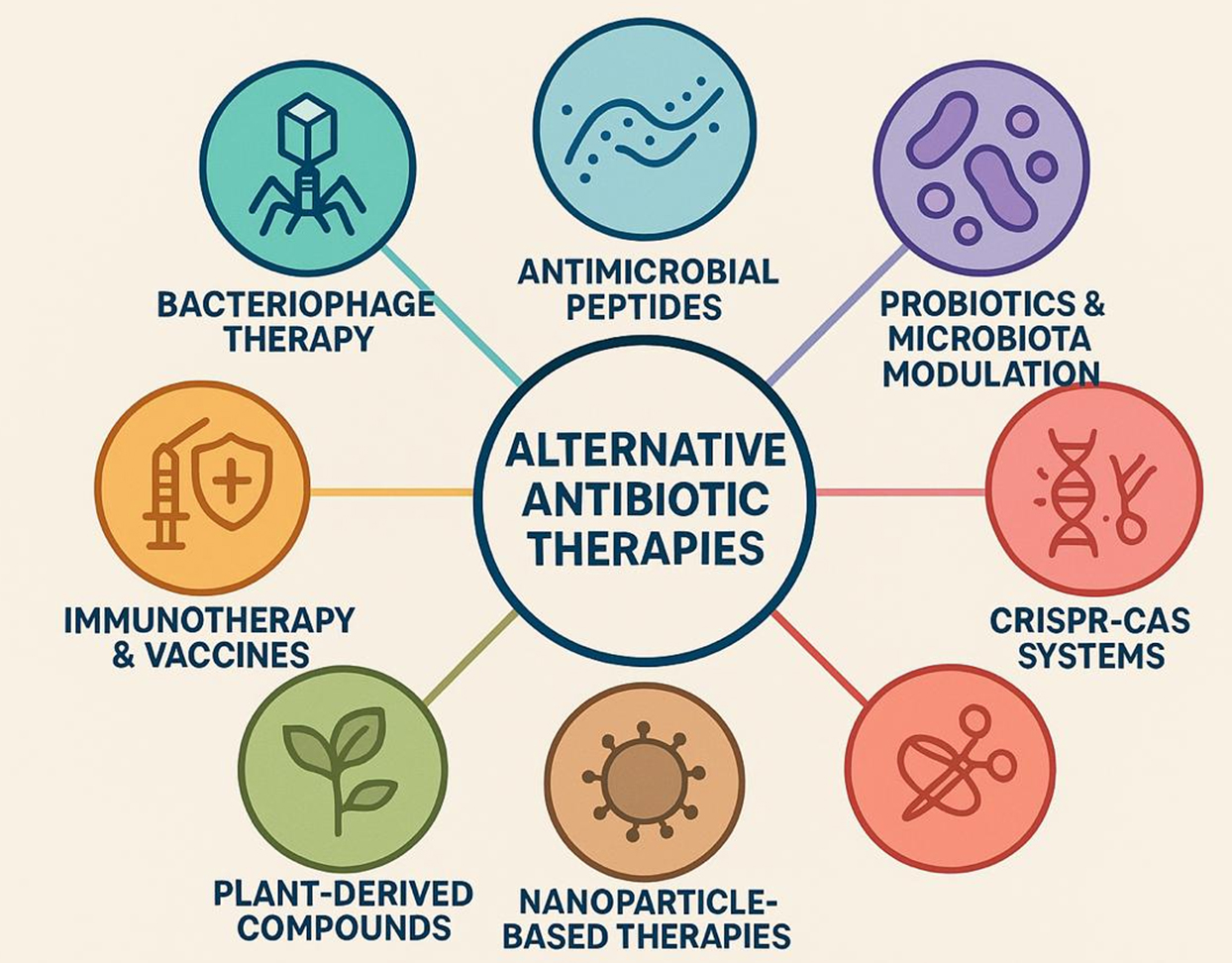
Figure. Alternative Strategies to Combat Antimicrobial Resistance
Alternative antimicrobial strategies
Antimicrobial peptides (AMPs)
Also known as host defence peptides, are a diverse class of naturally occurring peptides (12-50 amino acid residues long), that are part of the innate immune system. They possess a net positive charge (due to Arg and Lys residues) and a high percentage of hydrophobic residues (usually 50%), enabling them to form structures that target the negatively charged surfaces of bacterial cell membranes.
Mechanism of action
The primary mechanism of action for AMPs is their ability to disrupt bacterial cell membranes. Most AMPs are positively charged and are attracted to the negatively charged components of bacterial cell membranes. Once they bind to the cell membrane, they can form pores that destabilize the lipid bilayer, leading to rapid cell death. This membrane-targeting mechanism makes it difficult for bacteria to develop resistance compared to antibiotics that target specific enzymatic pathways.6 AMPs can also have non-membrane-mediated effects, such as inhibiting intracellular processes like protein or DNA synthesis.
Advantages and applications
AMPs exhibit broad-spectrum activity against a wide range of microorganisms, including Gram-positive and Gram-negative bacteria, fungi, and viruses.7 Plants and animals naturally produce amphipathic cationic peptides known as antimicrobial peptides as a component of their innate defense system.7 The Antimicrobial Peptide Database lists over 3,257 AMPs.8 viz. bacteriocins, defensins, tachyplesins, β-defensins, protegrins, and insect defensins.9,10 In combination with conventional antibiotics, AMPs can have a synergistic effect, lowering the minimal inhibitory concentration required to combat multidrug-resistant bacteria.11 Studies have shown their effectiveness in poultry as immune-boosters and growth enhancers,12 and insect defensins have demonstrated potential against antibiotic-resistant Staphylococcus aureus.13 In both in vitro and in vivo investigations, bacteriocins derived from a variety of microorganisms have demonstrated encouraging outcomes in preventing the growth of Clostridium perfringens in broiler chickens.14 However, the main hurdles for AMPs are their cost of production, potential toxicity at higher concentrations, and susceptibility to degradation by host proteases. Efforts are ongoing to engineer more stable and effective synthetic AMPs.
Bacteriophage therapy
This therapy uses lytic bacteriophages (phages) viruses that exclusively infect and kill bacteria to treat infections. A lytic phage hijacks the bacterial host’s machinery to replicate its own DNA, producing new phages until the host cell bursts, or lyses, releasing the new viruses to infect more bacteria.15
Mechanism of action
The primary advantage of phage therapy is its high specificity, allowing phages to target a narrow range of bacterial species while leaving beneficial microbiota unharmed.15
Advantages and applications
This approach has been used to treat infections in both humans and animals.16 Phage cocktails have shown success against pathogens like Salmonella, Campylobacter, and E. coli O157:H7.17 In 2006, the U.S. Food and Drug Administration (US-FDA) approved a phage cocktail (LMP-102TM) as a food additive to control Listeria contamination in meat. Studies in poultry and pigs have also demonstrated the effectiveness of phages in preventing colibacillosis and Clostridium infections and also reducing Salmonella colonization by up to 99.9% in the tonsils, ileum, and cecum.18,19
Immunomodulators
Immunomodulatory agents enhance the host’s immune system to more effectively combat infections, shifting the focus from directly killing the pathogen to empowering the host’s natural defenses.
Antibacterial vaccines
Immunotherapy involves stimulating the host’s immune system to fight off infections.
Mode of action
Antibacterial vaccines, or bacterins, are a key component of this approach. They are preparations made from weakened or killed bacteria that train the immune system to recognize and neutralize specific pathogens.20
Types and challenges
Vaccines can be live attenuated or killed. While live attenuated vaccines can provide a strong immune response, they carry a risk of reverting to full virulence.21,22 Killed vaccines, which are safer, produced by destroying bacterial colonies cultured in vitro and then adding adjuvants to boost the immune response.23 They are currently used in many poultry vaccines against pathogens like Pasteurella multocida and Salmonella, Mycoplasma, Ornithobacterium, Haemophilus, Staphylococcus, E. coli and Bordatella.1 Vaccines offer a preventative strategy that can significantly reduce the need for antibiotics.24 The success of pneumococcal conjugate vaccines in reducing resistant strains is a notable example.25
Antibacterial vaccines are still uncommon on the market, in contrast to the antiviral vaccine business, which is quite developed. Although immunizations against C. jejuni and E. coli O157 have been demonstrated to be efficacious in cattle and chicken, respectively.23 S. aureus vaccines are made to prevent bovine mastitis, however according to a systematic review that included 24 in vivo research, methodological variations and a lack of stricter scientific standards might occasionally make it difficult to determine how effective these vaccinations are.26 One major issue remains the development of a vaccination that is both affordable and useful enough to be used in developing nations.27 Despite the challenges this approach may pose, it can serve as a powerful defense against the bacterial strains for which vaccinations are available, hence reducing the need for antibiotics.28 However, their development and commercialization remain challenging due to high costs, a lack of standardized efficacy evaluation, and the potential for bacteria to develop resistance to non-vaccine serotypes.23,25
Monoclonal antibodies
These lab-produced antibodies are designed to bind to specific bacterial components, such as toxins or surface proteins, to either neutralize the pathogen directly or mark it for destruction by the host’s immune cells.29
Cytokines and immunostimulants
These molecules, such as interferons or colony-stimulating factors, can be administered to enhance the activity of various immune cells, including phagocytes and lymphocytes, improving the body’s ability to clear infections.25
CRISPR-Cas systems
The CRISPR-Cas system is an adaptive immune mechanism in bacteria that can be repurposed to fight antimicrobial resistance. This gene-editing tool offers a highly specific and targeted approach to eliminating pathogenic bacteria or disabling their resistance genes.
Mechanisms of action
The core mechanism of CRISPR-Cas involves a guide RNA (gRNA) that directs the Cas protein to a specific DNA sequence, which it then cleaves.
“Cure” bacteria of resistance: CRISPR-Cas can be programmed to target and destroy plasmids-small, circular DNA molecules that often carry antibiotic resistance genes within a bacterium. This makes the bacterium susceptible to existing antibiotics again.30
Kill the pathogen: By targeting essential genes on the bacterial chromosome, the CRISPR-Cas system can induce irreversible DNA damage, leading to the death of the cell.31
Challenges
Delivering the CRISPR-Cas system effectively into bacterial cells is a significant technical hurdle.32 Viral vectors, such as phages, are being explored as a delivery method. The potential for off-target effects and the possibility of bacteria developing anti-CRISPR mechanisms are also active areas of investigation.33,34
Prebiotics, probiotics and synbiotics
These dietary supplements have been used in animal husbandry to promote growth and enhance health, offering a safe alternative to antibiotic growth promoters.35
Prebiotics
Indigestible food components (e.g., fructooligosaccharides and man-nanoligosaccharides) that selectively promote the growth of beneficial gut bacteria.36 They possess immune-stimulating and growth-promoting qualities, but their high cost and potential for gastrointestinal side effects are drawbacks.37 At the moment, acidifiers and multifunctional oligosaccharides are the most promising prebiotics.1
Probiotics
Live microbial feed supplements (e.g. Bacillus, Lactobacillus, Lactococcus, Streptococcus, Enterococcus, Pediococcus, Bifidobacterium, Bacteroides, Pseudomonas, yeast, Aspergillus, and Trichoderma) that improve gut microbial balance and inhibit the growth of pathogens through competitive exclusion.38,39 Administering Bacillus sp. has been shown to reduce Salmonella and Clostridium growth in poultry.40
Synbiotics
Products that combine probiotics and prebiotics to maximize their synergistic benefits.41 Studies have shown that synbiotics can significantly enhance weight gain, improve immune function, and reduce diarrheal morbidity in animals. For example, chicken weight gain was considerably enhanced when diets supplemented with Biomin®IMBO (a mixture of Enterococcus fecium, cell wall fragments, fructooligosaccharides and phycophytic compounds).42 According to certain reports, piglets that were given synbiotics have improved immune function, increased average daily gain and digestibility, decreased diarrheal morbidity and mortality, made weaning stress response easier, and significantly improved performance.43 The high cost of production is one potential obstacle to the adoption of synbiotics.44
Other promising approaches
Phytobiotics
Plant extracts, or phytobiotics, with antibacterial, anti-inflammatory, and anti-parasitic properties.45 They can be used alone or in combination with antibiotics to combat resistant bacteria.46 Numerous studies have demonstrated their antibacterial activity against a range of microorganisms both in vitro and in vivo.47 For example, a number of edible Asian plants showed antibacterial action against Bacillus cereus, L. monocytogenes, S. aureus and E. coli.48 It is evident from the use of specific plant extracts in traditional medicine to treat diarrheal and urinary tract infections,49 among other conditions, that plant extracts can significantly lower the need for antibiotics.46
Anti-virulence strategies
Anti-virulence strategies have emerged as a promising alternative to traditional antibiotics by targeting the factors that make bacteria harmful, rather than killing them outright. This approach reduces the selective pressure that drives the evolution of antibiotic resistance.
Quorum-sensing and quorum quenching
Quorum sensing is a bacterial communication system that is essential for coordinating collective behaviours like biofilm formation, toxin production, and resistance gene expression.50-52 In this method cell interact by generating and detecting extracellular signalling molecules called autoinducers and changing their gene expression in response to the density of the cell population is called as quorum sensing.53 Gram-positive bacteria emit autoinducing peptides (AIPs), Gram-negative bacteria release N-acyl homoserine lactones (AHLs), autoinducer-2 (AI-2), and other signalling molecules such fatty acids, esters, and quinolones are the examples of autoinducers.1
Quorum quenching
Involves interfering with these signals to disarm the bacteria without killing them. This approach may reduce the selective pressure for resistance development.52 This unique approach may reduce the selective pressure for resistance development, making it an intriguing alternative.
Biofilm dispersal agents
Biofilms are complex bacterial communities encased in a protective matrix, making them highly resistant to antibiotics. Agents that can disrupt or prevent biofilm formation are effective anti-virulence tools.54
Toxin inhibitors
These strategies target and neutralize the toxins produced by bacteria, thereby preventing disease symptoms without affecting bacterial viability.55
Nanoparticles
Nanoparticles (NPs) provide a platform for alternative antimicrobial strategies. They can kill bacteria and prevent biofilm formation through three potential mechanisms like oxidative stress, the release of metal ions and non-oxidative mechanisms. Conjugating small-molecule drugs onto NPs such as silver nanoparticles, can also create a synergistic effect against resistant strains.56 Compared to traditional antibiotics, they may have longer-lasting antibacterial activity, less toxicity, and a lesser chance of resistance.57,58
Role of Artificial Intelligence (AI)
AI is transforming antimicrobial discovery. Machine learning algorithms are used to predict resistance patterns, optimize treatment plans, and accelerate the de novo design of new antimicrobial agents, providing potential solutions to the current AMR dilemma.59
One health approach
The One Health concept is a holistic framework that recognizes the interconnectedness of human, animal, and environmental health, and it is critical for managing AMR on a global scale.60 This approach acknowledges that the overuse of antibiotics in human medicine and veterinary care. The transmission of multidrug-resistant organisms (MDROs) and resistance genes is a key focus.61 For example, resistant bacteria from animal farms can spread to the environment through farm runoff and to humans through contaminated food. Similarly, hospitals are hotbeds for resistance, with MDROs spreading to the environment via wastewater and to other countries through international travel. By promoting collaboration among stakeholders in healthcare, agriculture, and environmental management, the One Health approach aims to track and contain this flow of resistance.60 More than just a strategy for reducing antibiotic use, the One Health approach emphasizes improving sanitation, biosecurity, and vaccination programs in all sectors. By preventing infections in the first place, we can significantly reduce the need for antibiotics. This comprehensive strategy, adopted by international organizations like the Food and Agriculture Organisation (FAO), World Health Organisation (WHO), and World Organisation for Animal Health (WOAH), addresses the root causes of resistance to safeguard public health and the sustainability of global food systems.62
The multifaceted challenge of antimicrobial resistance requires a diversified and innovative approach to infectious disease management. While no single alternative is a silver bullet, but their combined and synergistic use, guided by new technologies and a “One Health” framework, is the only sustainable path forward. The judicious use of existing antibiotics, combined with the ongoing development and regulation of these alternatives, is essential for the long-term sustainability of animal husbandry and global public health. By embracing a comprehensive One Health approach, we can effectively combat the threat of antimicrobial resistance and safeguard future generations.
ACKNOWLEDGMENTS
None.
CONFLICT OF INTEREST
The authors declare that there is no conflict of interest.
AUTHORS’ CONTRIBUTION
PS and NS designed the study. PS, NS, MS and MT wrote the manuscript. NS and DN revised and approved the final manuscript for publication.
FUNDING
None.
DATA AVAILABILITY
All datasets generated or analyzed during this study are included in the manuscript.
ETHICS STATEMENT
Not applicable.
- Cheng G, Hao H, Xie S, et al. Antibiotic Alternatives: The Substitution of Antibiotics in Animal Husbandry? Front. Microbiol. 2014;5:217.
Crossref - WHO: World Health Organization. 2019. New report calls for urgent action to avert antimicrobial resistance crisis. World Health Organization, Geneva, Switzerland. Available via https://www.who.int/news/item/29- 04-2019-new-reportcalls-for-urgent-action-to-avert-antimicrobialresistancecrisis. (Accessed 28 January 2021).
- Murray CJL, Ikuta KS, Sharara F, et al. Global burden of bacterial antimicrobial resistance in 2019: a systematic analysis. Lancet. 2022;399(10325):629-655.
Crossref - Lima T, Domingues S, Da Silva GJ. Manure as a Potential Hotspot for Antibiotic Resistance Dissemination by Horizontal Gene Transfer Events. Vet Sci. 2020;7:110.
- Palma E, Tilocca, B, Roncada P. Antimicrobial Resistance in Veterinary Medicine: An Overview. Int J Mol Sci. 2020;21(6):1914.
Crossref - Bahar AA, Ren D. Antimicrobial peptides. Pharmaceuticals. 2013;6:1543–75.
- Hancock RE, Lehrer R. Cationic peptides: a new source of antibiotics. Trends Biotechnol. 1998;16(2):82-88.
Crossref - Huan Y, Kong Q, Mou H, Yi H. Antimicrobial peptides: classification, design, application and research progress in multiple fields. Front Microbiol. 2020;11:582779.
Crossref - Kokryakov VN, Harwig SS, Panyutich EA et al. Protegrins: leukocyte antimicrobial peptides that combine features of corticostatic defensins and tachyplesins. FEBS Lett. 1993;327:231-236.
Crossref - Cotter PD, Ross RP, Hill C. Bacteriocins: a viable alternative to antibiotics? Nat Rev Genet. 2013;11(2):95-105.
Crossref - Ageitos J, Sanchez-Perez A, Calo-Mata P, et al. Antimicrobial peptides (AMPs): ancient compounds that represent novel weapons in the fight against bacteria. Biochem Pharmacol. 2017;133:117-138.
Crossref - Wang X, Zhu M. Effect of antibacterial peptide cecropin B on growth-enhancing and immunological function in chickens. J Ningxia Med Univ. 2010.
- Li B, Yang N, Wang X et al. An enhanced variant designed from DLP4 cationic peptide against Staphylococcus aureus CVCC. Front Microbiol. 2020;11:1057.
Crossref - Crost EH, Ajandouz EH, Villard C, Geraert PA, Puigserver A, Fons M. Ruminococcin C, a new anti-Clostridium perfringens bacteriocin produced in the gut by the commensal bacterium Ruminococcus gnavus E1. Biochimie. 2011;93(9):1487-1494.
Crossref - Abedon ST, Kuhl SJ, Blasdel BG, Kutter EM. Phage treatment of human infections. Bacteriophage. 2011;1(2):66-85.
Crossref - Johnson RP, Gyles CL, Huff WE et al. Bacteriophages for prophylaxis and therapy in cattle, poultry and pigs. Anim Health Res Rev. 2008;9(2):201-215.
Crossref - Huff WE, Huff GR, Rath NC, Balog JM, Donoghue AM. Alternatives to antibiotics: utilization of bacteriophage to treat colibacillosis and prevent foodborne pathogens. Poult Sci. 2005;84(4):655-659.
Crossref - Clavijo V, Baquero D, Hernandez S et al. Phage cocktail SalmoFREE® reduces Salmonella on a commercial broiler farm. Poult Sci. 2019;98(10):5054-5063.
Crossref - Seo B-J, Song E-T, Lee K, et al. Evaluation of the broad-spectrum lytic capability of bacteriophage cocktails against various Salmonella serovars and their effects on weaned pigs infected with Salmonella Typhimurium. J Vet Med Sci. 2018;80(6):851-860.
Crossref - Rappuoli R, Pizza M, Del Giudice G, Gregorio ED. Vaccines, new opportunities for a new society. Proc Natl Acad Sci U S A. 2014;111(34):12288-12293.
Crossref - Tan S, Gyles CL, Wilkie BN. Evaluation of an aroA mutant Salmonella typhimurium vaccine in chickens using modified semisolid Rappaport Vassiliadis medium to monitor faecal shedding. Vet Microbiol. 1997;54(3):247-254.
Crossref - Barrow PA. Salmonella infections: immune and non-immune protection with vaccines. Avian Pathol. 2007;36(1):1-13.
Crossref - Potter A, Gerdts V, Littel-van den Hurk S. Veterinary vaccines: alternatives to antibiotics? Anim Health Res Rev. 2008;9:187-199.
Crossref - Terlizzi ME, Gribaudo G, Maffei ME. Uropathogenic Escherichia coli (UPEC) infections: virulence factors, bladder responses, antibiotic, and non-antibiotic antimicrobial strategies. Front Microbiol. 2017;8:1566.
Crossref - Ouldali N, Cohen R, Levy C, et al. Pneumococcal susceptibility to antibiotics in carriage: a 17 year time series analysis of the adaptive evolution of non-vaccine emerging serotypes to a new selective pressure environment. J Antimicrob Chemother. 2019;74(10):3077-3086.
Crossref - Pereira UP, Oliveira DG, Mesquita LR, Costa GM, Pereira LJ. Efficacy of Staphylococcus aureus vaccines for bovine mastitis: a systematic review. Vet Microbiol. 2011;148(2-4):117-124.
Crossref - Zhang W, Sack DA. Progress and hurdles in the development of vaccines against enterotoxigenic Escherichia coli in humans. Expert Rev Vaccines. 2012;11(6):677-694.
Crossref - Arsene MMJ, Jorelle ABJ, Sarra S, et al. Short review on the potential alternatives to antibiotics in the era of antibiotic resistance. J Appl Pharm Sci. 2022;12:29-40.
- Odoom A, Osman A, Dzuvor C. Recent advances in immunotherapeutic and vaccine-based approaches for the treatment of drug-resistant bacterial infections. ACS Infect Dis. 2025;11(6):1366-1402.
Crossref - Bikard D, Euler CW, Jiang W, et al. Exploiting CRISPR-Cas nucleases to produce sequence-specific antimicrobials. Nat Biotechnol. 2014;32(11):1146-50.
Crossref - Moitra A, Chakraborty A, Dam B. CRISPR-Cas9 system: a potent tool to fight antibiotic resistance in bacteria. Microbe. 2024;5(80):100184.
Crossref - Zhang R, Zhou Q, Huang S, Zhang N, Sun D. Advancements in CRISPR-Cas-based strategies for combating antimicrobial resistance. Microbiol Res. 2025;298:128232.
Crossref - Duan C, Cao H, Zang L, Xu Z. Harnessing the CRISPR-Cas systems to combat antimicrobial resistance. Front Microbiol. 2021;12:716064.
Crossref - Pawluk A, Davidson AR, Maxwell KL. Anti-CRISPR: discovery, mechanism and function. Nat Rev Microbiol. 2018;16(1):12-17.
Crossref - Markowiak P, Silzewska K. The role of probiotics, prebiotics and synbiotics in animal nutrition. Gut Pathog. 2018;10:21.
Crossref - Gibson GR, Probert HM, Loo JV, Rastall RA, Roberfroid MB. Dietary modulation of the human colonic microbiota: updating the concept of prebiotics. Nutr Res Rev. 2004;17(2):259-275.
Crossref - de Vrese M, Schrezenmeir J. Probiotics, Prebiotics, and Synbiotics. In: Stahl U, Donalies UE, Nevoigt E. (eds) Food Biotechnology. Advances in Biochemical Engineering/ Biotechnology, vol 111. Springer, Berlin, Heidelberg. 2008;111;1-66.
Crossref - Patel SG, Raval AP, Bhagwat SR, Dadrasaniya DA, Patel AP, Joshi SS. Effects of probiotics supplementation on growth performance, feed conversion ratio and economics of broilers. J Anim Res. 2015;5(1):155.
Crossref - Simon O, Jadamus A, Vahjen W. Probiotic feed additives-effectiveness and expected modes of action. J Anim Feed Sci. 2001;10(1):51-67.
Crossref - Tellez G, Pixley C, Wolfenden R, Layton SL, Hargis BM. Probiotics/direct fed microbials for Salmonella control in poultry. Food Res Int. 2012;45(2):628-633.
Crossref - Andersson H, Asp N-G, Bruce A, Roos S, Wadstrom T, Wold AE. Health effects of probiotics and prebiotics: a literature review on human studies. Scand J Nutr. 2001;45:58-75.
Crossref - Mousavi SA, Seidavi A, Dadashbeiki M, et al. Effect of a synbiotic (Biomin®IMBO) on growth performance traits of broiler chickens. Eur Poult Sci. 2015;79.
Crossref - Gaggia F, Mattarelli P, Biavati B. Probiotics and prebiotics in animal feeding for safe food production. Int J Food Microbiol. 2010;141(Suppl 1):S15-23.
Crossref - Collins JW, La Ragione RM, Woodward MJ, et al. Application of prebiotics and probiotics in livestock. In: Metzler JB, editor. Prebiotics and Probiotics Science and Technology. New York: Springer. 2009:1123-1192.
Crossref - Hashemi SR, Davoodi H. Herbal plants and their derivatives as growth and health promoters in animal nutrition. Vet Res Commun. 2011;35(3):169-180.
Crossref - Arsene MM, Podoprigora IV, Davares AK, Razan M, Das MS, Senyagin AN. Antibacterial activity of grapefruit peel extracts and green synthesized silver nanoparticles. Vet World. 2011;14(5):1330-41.
Crossref - Mbarga MJA, Podoprigora IV, Anyutoulou KLD, et al. Urinary tract infections (UTIs): virulence factors, resistance to antibiotics and management of uropathogenic (UP) bacteria with medicinal plants-A review. J Appl Pharm Sci. 2021;11(7):1-12.
- Alzoreky NS, Nakahara K. Antibacterial activity of extracts from some edible plants commonly consumed in Asia. Int J Food Microbiol. 2002;80(3):223-230.
Crossref - Ullah N, Parveen A, Bano R et al. In vitro and in vivo protocols of antimicrobial bioassay of medicinal herbal extracts: a review. Asian Pac J Trop Dis. 2016;6:660-667.
Crossref - Rutherford ST, Bassler BL. Bacterial quorum sensing: its role in virulence and possibilities for its control. Cold Spring Harb Perspect Med. 2012;(11)2:a012427.
Crossref - Eholm A, Vikstrom E. Quorum sensing communication between bacteria and human cells: Signals, targets, and functions. Front Plant Sci. 2014;5:309.
Crossref - Bzdrenga J, Daude D, Remy B, et al. Biotechnological applications of quorum quenching enzymes. Chem Interact. 2017;267:104-115.
Crossref - Tan WS, Law JWF, Law LNS, Letchumanan V, Chan KG. Insights into quorum sensing (QS): QS-regulated biofilm and inhibitors. Prog Microbes Mol Biol. 2020;3(1):3.
Crossref - Rather MA, Gupta K, Mandal M. Microbial biofilm: Formation, architecture, antibiotic resistance, and control strategies. Braz J Microbiol. 2021;52(4):1701-1718.
Crossref - Dehbanipour R, Ghalavand Z. Anti-virulence therapeutic strategies against bacterial infections: Recent advances. Germs. 2022;12(2):262-275.
Crossref - Murugaiyan J, Kumar PA, Rao GS, et al. Progress in alternative strategies to combat antimicrobial resistance: Focus on antibiotics. Antibiotics. 2022;11(2):200.
Crossref - Kumar M, Curtis A, Hoskins C. Application of nanoparticle technologies in the combat against antimicrobial resistance. Pharmaceutics. 2018;10(1):11.
Crossref - Wang L, Hu C, Shao L. The antimicrobial activity of nanoparticles: Present situation and prospects for the future. Int J Nanomed. 2017;12:1227-1249.
Crossref - Cella E, Giovanetti M, Benedetti F et al. Joining forces against antibiotic resistance: The One Health solution. Pathogens. 2023;12(9):1074.
Crossref - Nardulli P, Ballini A, Zamparella M, Vito DD. The role of stakeholders’ understandings in emerging antimicrobial resistance: A One Health approach. Microorganisms. 2023;11(11):2797.
Crossref - Velazquez-Meza ME, Galarde-Lopez M, Carrillo-Quiroz B et al. Antimicrobial resistance: One Health approach. Vet World. 2022;15(3):743.
Crossref - Van Duin D, Paterson DL. Multidrug-resistant bacteria in the community: Trends and lessons learned. Infect Dis Clin N Am. 2016;30(2):377-390.
Crossref - CDC. Antimicrobial resistance facts and stats. Available from: https://www.cdc.gov/antimicrobial-resistance/data-research/facts-stats/index.html (accessed 22 Aug 2025). 2025.
- Yek C, Mancera AG, Diao G, et al. Impact of the COVID-19 pandemic on antibiotic resistant infection burden in U.S. hospitals. Ann Intern Med. 2025;78(6):796-807.
Crossref - Radford-Smith DE, Anthony DC. Vancomycin-Resistant E. faecium: Addressing Global and Clinical Challenges. Antibiotics. 2025;14:522.
Crossref - Logan LK, Weinstein RA. The Epidemiology of Carbapenem-Resistant Enterobacteriaceae: The Impact and Evolution of a Global Menace. J Infect Dis. 2017;215(1):S28-S36.
Crossref - Piezzi V, Wassilew N, Atkinson A, et al. Nosocomial outbreak of vancomycin-resistant Enterococcus faecium (VRE) ST796, Switzerland, 2017 to 2020. Euro Surveill. 2022;27(48):2200285.
Crossref - CDC. Facility guidance for control of carbapenem-resistant Enterobacteriaceae (CRE). https://www.cdc.gov/infection-control/media/pdfs/Guidelines-CRE-Guidance-508.pdf (accessed 22 Aug 2025). 2015.
- ECDC. Antimicrobial resistance surveillance in Europe 2023 – 2021 data. https://www.ecdc.europa.eu/en/publications-data/antimicrobial-resistance-surveillance-europe-2023-2021-data (accessed 22 Aug 2025). 2023.
- Marshall HS, Molina JM, Berlaimont V et al. Management and prevention of Neisseria meningitidis and Neisseria gonorrhoeae infections in the context of evolving antimicrobial resistance trends. Eur J Clin Microbiol Infect Dis. 2025;44:233-250.
Crossref - CDC. Antibiotic-resistant Streptococcus pneumoniae. 2024. https://www.cdc.gov/pneumococcal/php/drug-resistance/index.html (accessed 22 Aug 2025). 2024.
- Leung V, Ritchie G, Stefanovic A, et al. An outbreak of multidrug-resistant Shigella flexneri serotype 2a among people experiencing homelessness in Vancouver. Trop Med Infect Dis. 2025;10(5):120.
Crossref - Abdullah MA, Shaikh BT, Ashraf M, Khan SA. XDR typhoid in Pakistan: A threat to global health security and a wake-up call for antimicrobial stewardship. PLoS Negl Trop Dis. 2025;19(5):e0013067.
Crossref - Foglia F, Ambrosino A, Bashir S, et al. Prevalence of Acinetobacter baumannii multidrug resistance in university hospital environment. Antibiotics. 2025;14(5):490.
Crossref - Hirsch E, Tam V. Impact of multidrug-resistant Pseudomonas aeruginosa infection on patient outcomes. Expert Rev Pharmacoecon Outcomes Res. 2010;10(4):441-451.
Crossref - CDC. Antibiotic resistance threats report. https://www.cdc.gov/antimicrobial-resistance/data-research/threats/index.html (accessed 22 Aug 2025). 2019.
- CDC. Candida auris tracking. https://www.cdc.gov/candida-auris/tracking-c-auris/index.html (accessed 22 Aug 2025). 2024.
- Fatima R, Aziz M. The hypervirulent strain of Clostridium difficile: NAP1/B1/027 – A brief overview. Cureus. 2019;11(1):e3977.
Crossref
© The Author(s) 2026. Open Access. This article is distributed under the terms of the Creative Commons Attribution 4.0 International License which permits unrestricted use, sharing, distribution, and reproduction in any medium, provided you give appropriate credit to the original author(s) and the source, provide a link to the Creative Commons license, and indicate if changes were made.