

ISSN: 0973-7510
E-ISSN: 2581-690X
 and Mark Osborn
Lamb meat, valued for its nutritional quality and sensory attributes, is susceptible to microbial spoilage during refrigeration. Although modified atmosphere packaging (MAP) can extend its shelf life, its effects on microbial succession in lamb meat are poorly defined. This study examined bacterial community dynamics in MAP (80% O₂/20% CO₂) chilled lamb meat over 35 days using high-throughput 16S rRNA gene sequencing. The bacterial composition, alpha diversity (Shannon, Chao1, Faith’s phylogenetic diversity, Pielou’s evenness), and beta diversity (Jaccard, Bray-Curtis, ANOSIM) were analysed using QIIME 2. Principal Coordinate Analysis revealed distinct successional shifts (ANOSIM R, P < 0.01) in the bacterial community over time. The Chao1 richness increased, Shannon diversity remained stable, while Faith’s phylogenetic diversity and evenness decreased significantly (P < 0.05), reflecting the selective MAP and low-temperature pressure on bacterial community dynamics. While Proteobacteria and Firmicutes dominated throughout storage, increased dominance of spoilage-associated taxa, including Carnobacterium divergens, Pseudomonas fragi, and Brochothrix thermosphacta, occurred after Day 28. The dominance of these groups highlights their role in shelf-life limitation. These results provide detailed insights into microbial succession in MAP lamb meat with potential implications for the meat’s shelf life and for future preservation strategies.
Lamb Meat, Bacterial Communities, Spoilage Bacteria, Chilled Storage, 16S rRNA Sequencing, QIIME 2
Lamb meat is rich in proteins, essential amino acids, vitamins (vitamins A and E), and minerals such as iron, calcium and phosphorus, with significantly higher zinc and copper contents and lower cholesterol compared to most other meat types.1 Its good balance of saturated and unsaturated fatty acids (Omega-3 fatty acids and conjugated linoleic acids further enhance its nutritional and health benefits.2,3 Lamb meat is, therefore, a culinary delight, highly digestible with excellent flavour, taste and aroma that is widely consumed in different parts of the world, such as China, Australia, New Zealand, Turkey, and Algeria.1,4,5 Consequently, due to its favourable nutritional and organoleptic properties, the global lamb/sheep meat market is growing and is projected to reach 19 million tons by 2034.6
However, lamb meat, like other meat types such as beef, poultry and pork, is susceptible to microbial spoilage because of its high-water content and rich nutritional profile. Globally, it has been estimated that up to 20% of food items (including meat) are lost due to wastage associated with food spoilage and other factors.7 Different factors, such as microbial contamination, storage conditions, temperature, water availability, pH, meat processing conditions and environments, can influence meat spoilage (quality and shelf life).8-10 Amongst these, microbial contamination is a key factor, with the growth of spoilage microorganisms influenced by temperature, humidity, handling practices, packaging methods, and initial microbial load. These factors determine the spoilage dynamics, which significantly affect meat safety, shelf life, and consumer acceptance.
Different microbial groups have been implicated in meat spoilage. These include species such as Pseudomonas, Leuconostoc, Brochothrix, Bacillus, Clostridium, Listeria and Escherichia coli.7-10
To inhibit microbial growth and extend meat’s shelf life, different meat preservation methods, such as chilling, freezing, salting, and drying,11 vacuum packaging,12 modified atmosphere packaging (MAP),13 and more recently, intelligent and active antimicrobial packaging technologies14 have been developed.15
MAP, in particular, is a widely used preservation method for different meat types such as lamb, beef, poultry, pork and fish under cold storage conditions.16-20 It involves removing and replacing the atmosphere surrounding meat in sealed vapour-proof materials with a gas mixture usually consisting of carbon dioxide, carbon monoxide, nitrogen, and oxygen, at different ratios or concentrations.21,22 These gases inhibit microbial growth while preserving the meat’s freshness, colour and its other organoleptic properties.20 While MAP effectively inhibits certain spoilage bacteria, specific microbial taxa may adapt and dominate under these conditions, necessitating continuous monitoring for characterisation.
Understanding microbial community interactions under MAP storage is crucial for assessing and improving this meat preservation strategy. Traditional culture-dependent methods, despite their limitations (limited to culturable groups, misses slow growing groups, etc.), have been widely used to study microbial diversity and succession on MAP meat, such as pork,23 beef, and poultry.16,23,24 However, culture-independent approaches, especially high-throughput next-generation sequencing approaches such as 16S rRNA gene sequencing, are often preferred as they allow for in-depth profiling of total (culturable and unculturable groups) microbial community (taxonomy, diversity and function) and their dynamics in food matrices.25,26
NGS has been successfully applied to MAP meat samples under chilled storage conditions to evaluate the microbial composition and changes with respect to the total and spoilage microbial communities. A review of the literature has shown that most NGS-based studies have focused on the MAP meats, such as beef,27-30 poultry23,31-33 and pork,34-37 with comparatively limited studies on lamb. The 16S rRNA gene was selected as the molecular marker for bacterial community profiling because it contains highly conserved regions that enable broad amplification across bacterial taxa, interspersed with hypervariable regions that provide taxonomic discrimination. In particular, the V4 region targeted by the 515F/806R primer pair is widely used for high-throughput bacterial community analysis and is compatible with Illumina sequencing platforms, providing an established approach for comparing bacterial community composition and diversity across samples.38-42 Given that the NGS-derived information on MAP lamb meat microbiota is under-represented in literature, this study aims to characterize the temporal bacterial community structure and dynamics in MAP lamb meat during chilled storage using a 16S rRNA gene NGS-based approach. The study aimed to characterize bacterial succession and dominance, including spoilage-associated bacterial groups, in lamb meat stored under 80% O₂/20% CO₂ MAP over 35 days of chilled storage and to identify temporal changes potentially relevant to shelf-life limitation.
Meat sample collection and preparation
Thirty lamb (Ovis aries) backstrap (longissimus dorsi) samples used in this study were obtained from a local butcher in Melbourne, Australia. After purchase, the lamb cuts were wrapped in polyethene film, placed on ice and transported to the laboratory. On arrival, the samples were stored at 4 °C in a refrigerator. Prior to sample storage, the refrigerator shelves were sanitised with 70% (v/v) ethanol as part of routine laboratory sanitation. The ethanol was used only for surface sanitation and did not come into direct contact with the lamb samples. Each sample was subsequently packaged under modified atmosphere conditions (80% O₂ and 20% CO₂) using a Multivac tray sealer (T200, Multivac, Germany) and stored at 4 °C for up to 35 days. Sampling for microbial and molecular analyses was conducted on days 0, 7, 14, 21, 28, and 35 of chilled storage, with five samples analyzed at each sampling time point.
Microbial DNA extraction and 16S rRNA gene amplification
Microbial DNA was extracted directly from MAP meat samples. One milliliter of meat rinse suspension prepared for microbiological analysis by macerating 10 g of lamb meat in 90 ml of sterile 0.1% bacteriological peptone water (Oxoid, Melbourne, Australia) was centrifuged at 5000 RCF for 10 min to pellet microbial cells. DNA from the microbial pellet was extracted using DNeasy PowerSoil Pro Kit (Qiagen, Melbourne, Australia) according to the manufacturer’s protocol. The extracted DNA was stored at -20 °C for further analysis.
DNA amplification of the V4 region of 16S rRNA gene sequences was performed using barcoded universal bacterial primers 515F (5’AATGATACGGCGACCACCGAGA TCTACACTATGGTAATTGTGTGCCAGC MGCCGCGGTAA-3′) and 806R (5′ CAAGCAGAAGACGGCATACGAGATAGT CAGTCAGCCGGACTACHVGGGTWTCTAAT-3′).38 PCR amplification was performed in a total volume of 25 μL per reaction containing: 1 μL of DNA template, 1x GoTaq Flexi Buffer (Bioline Pty Ltd., Alexandria, NSW, Australia), 2.5 mM of magnesium chloride (MgCl2) (Bioline Pty Ltd, Alexandria, NSW, Australia), 0.2 mM of dNTPs (Bioline Pty Ltd., Alexandria, NSW, Australia), 0.4 pmol μl-1 of the forward (F) primer and 0.4 pmol μl-1 of the reverse (R) primer (Geneworks, Hindmarsh, Australia) and 1.25 U of GoTaq Polymerase (Bioline Pty Ltd., Alexandria, NSW, Australia) and made up to 25 μl with sterile water (UltraPure™ DNase/RNase-Free Distilled Water, Thermo Fisher Scientific).
PCR amplification was conducted using these conditions: initial denaturation at 94 °C for 3 min; 35 cycles of denaturation at 94 °C for 1 min, annealing at 55 °C for 1 min, and extension at 72 °C for 1 min; followed by a final extension at 72 °C for 10 min.39 Aliquots (5 μL) of the PCR products were electrophoresed on 1% (w/v) agarose gels containing SYBR Safe DNA Gel Stain (Invitrogen, Carlsbad, USA) and then visualised on a UV transilluminator at 302 nm for confirmation of amplicon size.
Library Preparation and Sequencing
Amplicon libraries were prepared using the Nextera® XT DNA library preparation kit (Illumina, San Diego, CA, USA) following the manufacturer’s protocol. Amplicons were purified using Agencourt AMPure XP beads (Beckman Coulter, Brea, USA) as described in the Illumina Nextera DNA Library Prep Reference Guide (https://www.illumina.com/products/by-type/sequencing-kits/library-prep-kits/nextera-xt-dna.html). Barcode adapters were ligated to sample amplicons as described in the Guide to enable multiplex sequencing.
Barcoded amplicons (indexed libraries) were quantified on a Qubit 2.0 fluorometer (Life Technologies, Carlsbad, CA, USA). Successful index incorporation was confirmed through agarose gel electrophoresis of a set of 20 randomly selected amplicons before and after indexing PCR. The indexed libraries were normalised before being pooled to a final concentration of 4 nM and spiked with 15% of PhiX standard before sequencing. The pooled libraries were sequenced using Nextera® XT chemistry on a MiSeq platform (Illumina, San Diego, CA, USA).
Bioinformatics and Data Analysis (QIIME 2)
Sequencing data were analysed using QIIME 2, an open-source bioinformatics pipeline for performing microbiome analysis from raw DNA sequencing data (version 2023). 42,43 Raw sequence data were demultiplexed to separate the reads for each sample. Quality control was performed to filter, trim, denoise, and merge paired-end reads, to generate amplicon sequence variants (ASVs) with improved accuracy over traditional OTU clustering methods.44 Reads were trimmed to a uniform length of 250 bp based on quality score profiles.
After ASV generation, taxonomic classification was performed using QIIME 2’s Feature-Classifier plugin with a pre-trained SILVA 138.1 (2023) classifier to assign taxonomy at the genus level. Phylogenetic relationships between ASVs were inferred by constructing a rooted tree with the Phylogeny plugin for subsequent diversity analyses. Alpha diversity metrics, such as the Shannon index and Faith’s Phylogenetic Diversity, were calculated and visualised through box plots to assess microbial richness within samples. Beta diversity analyses were performed with phylogenetic (Unweighted and Weighted UniFrac) and non-phylogenetic (Bray-Curtis) metrics and visualised using Principal Coordinates Analysis (PCoA) plots via QIIME 2’s Emperor tool. Differences in community composition and abundance between samples were evaluated using analysis of similarities (ANOSIM), resulting in the identification of taxa with significant variations between groups. Taxonomic composition data were visualized using taxonomic bar plots at multiple taxonomic levels (phylum to species).
Sequencing output and data quality
The sequencing efforts yielded approximately 5.2 GB of data, which comprised 2,024,722 reads from all the samples. These reads were subject to quality filtering and chimera removal, and the proportion of non-chimeric sequences ranged from 5.24%-34.17% per sample.
Changes in bacterial community structure
PCoA based on Jaccard and Bray-Curtis dissimilarity metrics showed distinct temporal changes in bacterial community structure, with clear divergence of the bacterial community on Day 0 from the community on Day 35 of chilled storage, suggesting successional changes in these communities’ succession (Figure 1). Based on Jaccard’s PCoA, ANOSIM R results showed a significant dissimilarity between Day 0 and Day 21 (0.913; significant level of 0.8%), and between Days 0, 28 and 35 with an R value of 1 (significant level of 0.8%) (Table 1). Similarly, with Bray-Curtis dissimilarity PCoA plots, the R values between Day 0 and Days 28 and 35 show a significant dissimilarity (R = 1; significance level of 0.8%) (Table 2). ANOSIM, therefore, showed that there were substantial differences between the different bacterial communities at different times during chilled storage. In addition, both unweighted and weighted Emperor analysis validated these temporal shifts as they showed alterations in the bacterial community’s species richness and relative abundance over the 35 day experimental period (Figure 2).
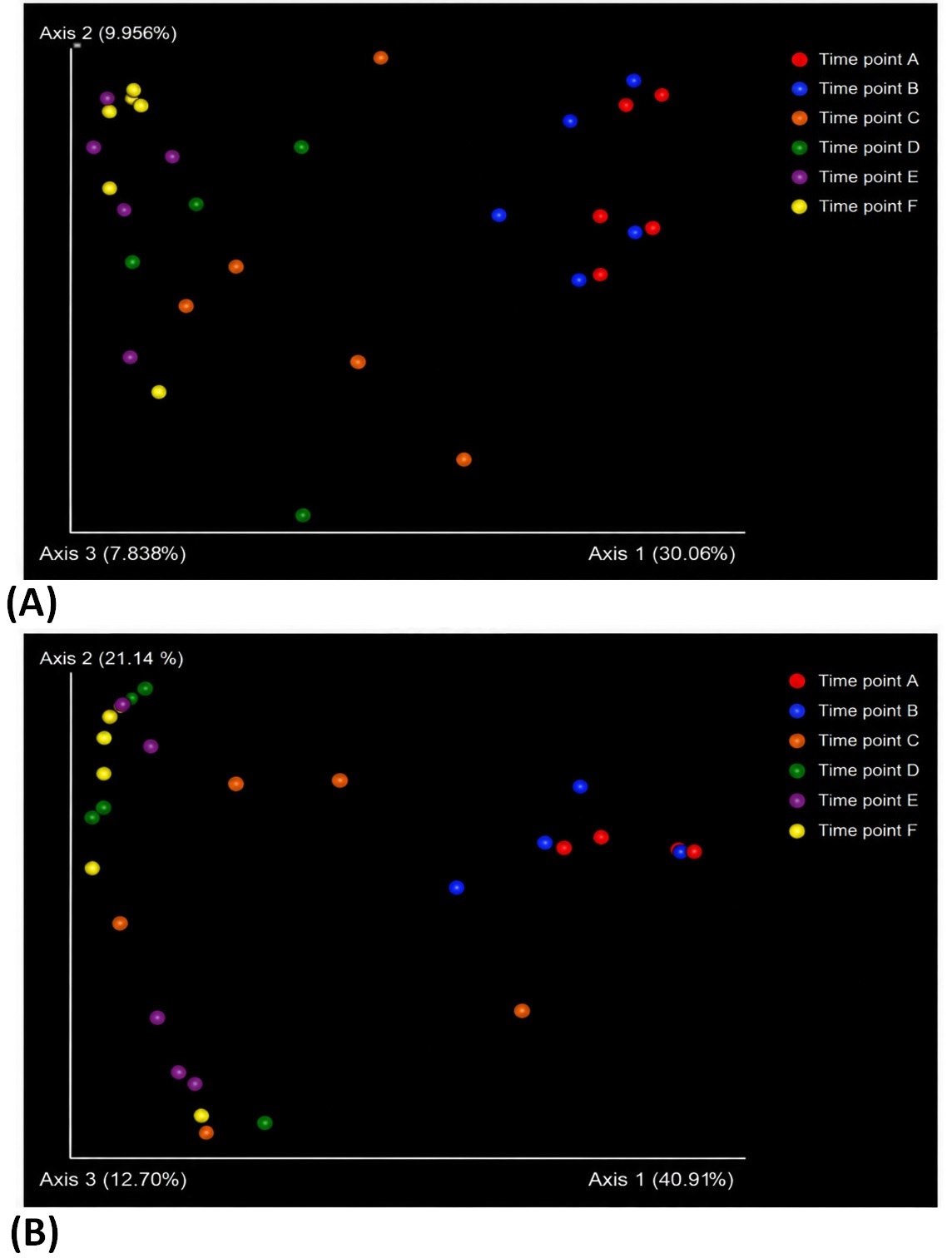
Figure 1. Principal Coordinate Analysis (PCoA) illustrating bacterial community shifts using (A) Jaccard dissimilarity and (B) Bray-Curtis dissimilarity metrics during chilled storage. Time points A, B, C, D, E, and F refer to Days 0, 7, 14, 21, 28 and 35
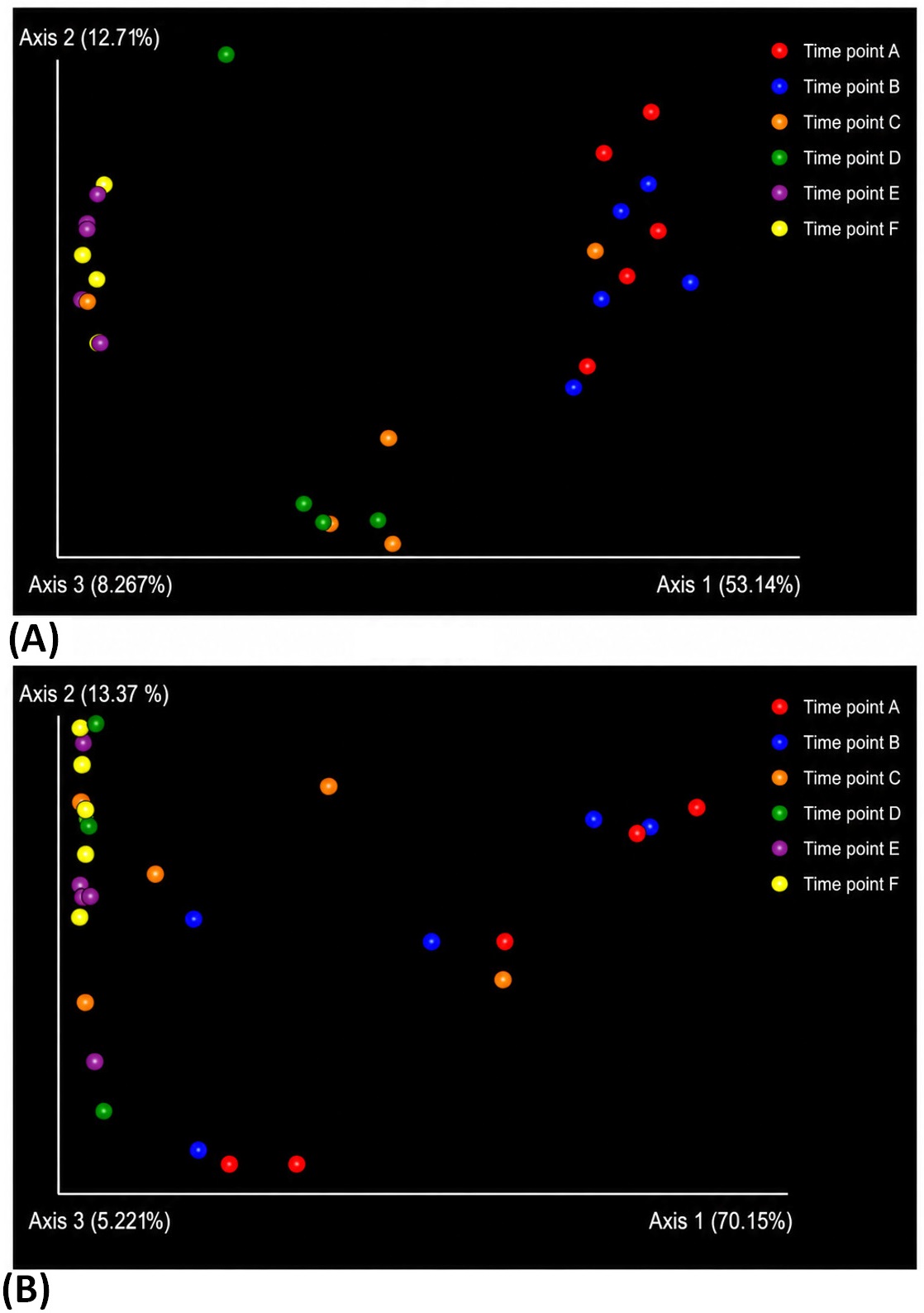
Figure 2. Emperor analysis plots demonstrate bacterial community variation across storage days using (A) unweighted and (B) weighted metrics. Time points A, B, C, D, E, and F refer to Days 0, 7, 14, 21, 28 and 35
Table 1. ANOSIM Pairwise Comparison of R statistics and significance based on Jaccard dissimilarity matrix
| Groups | R statistic | Significance level % | |
|---|---|---|---|
| Day 0 | Day 7 | 0.028 | 126 |
| Day 14 | 0.738 | 0.8 | |
| Day 21 | 0.913 | 0.8 | |
| Day 28 | 1 | 0.8 | |
| Day 35 | 1 | 0.8 | |
| Day 7 | Day 14 | 0.48 | 0.8 |
| Day 21 | 0.669 | 0.8 | |
| Day 28 | 0.956 | 0.8 | |
| Day 35 | 0.956 | 0.8 | |
| Day 14 | Day 21 | -0.066 | 53.2 |
| Day 28 | 0.428 | 1.6 | |
| Day 35 | 0.35 | 4 | |
| Day 21 | Day 28 | 0.208 | 9.5 |
| Day 35 | 0.066 | 27.8 | |
| Day 28 | Day 35 | -0.92 | 69.8 |
Table 2. ANOSIM Pairwise Comparison of R statistics and significance based on a Bray-Curtis dissimilarity matrix
| Groups | R statistic | Significance level % | |
|---|---|---|---|
| Day 0 | Day 7 | -0.076 | 72.2 |
| Day 14 | 0.74 | 0.8 | |
| Day 21 | 0.944 | 0.8 | |
| Day 28 | 1 | 0.8 | |
| Day 35 | 1 | 0.8 | |
| Day 7 | Day 14 | 0.548 | 0.8 |
| Day 21 | 0.844 | 0.8 | |
| Day 28 | 0.944 | 0.8 | |
| Day 35 | 0.944 | 0.8 | |
| Day 14 | Day 21 | 0.094 | 23.8 |
| Day 28 | 0.012 | 42.1 | |
| Day 35 | 0.188 | 13.5 | |
| Day 21 | Day 28 | 0.05 | 28.6 |
| Day 35 | -0.081 | 70.6 | |
| Day 28 | Day 35 | -0.044 | 49.2 |
Bacterial community dynamics
Diversity indices revealed a progressive decrease in Faith’s phylogenetic diversity and evenness over time, particularly after Day 14 (Figure 3). Faith’s PD declined from a median of 0.79 at Day 0 to 0.10 by Day 35, with a corresponding decline also in the interquartile ranges and within timepoint variability at later timepoints. For example, there was a significant difference (decline) between the values on Day 0 and Day 21, Day 0 and Day 28, Day 7 and Day 28, Day 14 and Day 28 and Day 14 and Day 35 (P < 0.05 for all timepoint comparisons). Faith’s phylogenetic diversity (Figure 3A) differed significantly between sampling times (P < 0.05). The significant changes (decline) in community evenness (Pielou J) over time (Figure 3B) started only from Day 14 to Day 35, with a decline in median evenness after Day 14. Significant differences in the evenness of the community were only observed between Day 7 and Day 21, 28 and 35 (P < 0.05).
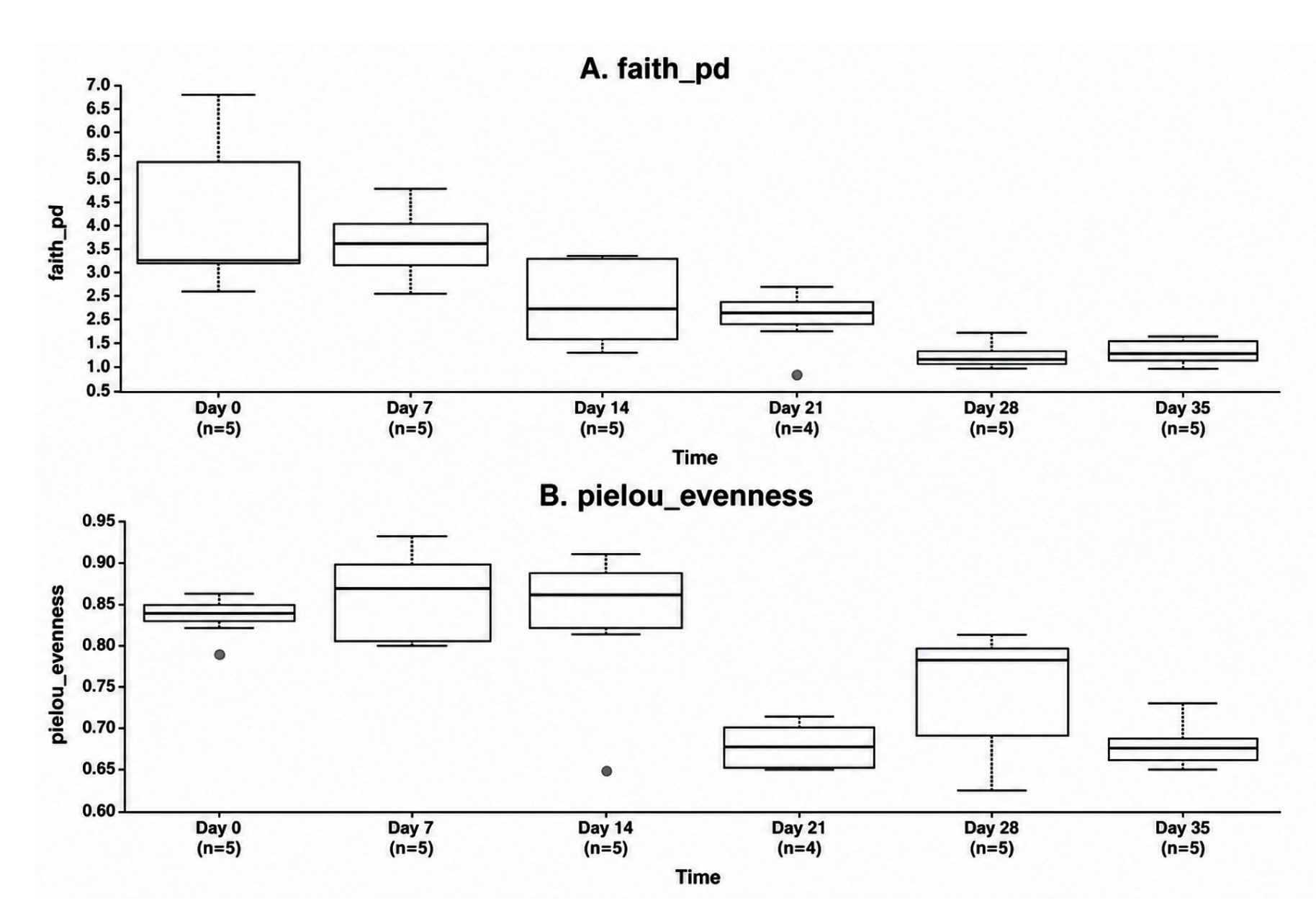
Figure 3. Variation in bacterial community diversity: (A) Faith’s Phylogenetic Diversity and (B) Evenness (Pielou J) over the chilled storage period
The Shannon diversity index remained stable throughout the storage period, with no statistically significant differences observed between samples obtained over the 35 day chilled storage period (Figure 4A). In contrast, species richness, as estimated using the Chao1 index, increased throughout the 35 day chilled storage period. Statistical analysis indicated that there was a statistically significant difference in richness only between Day 0 and Day 28 and between Day 0 and Day 35 (P < 0.05; Figure 4B).
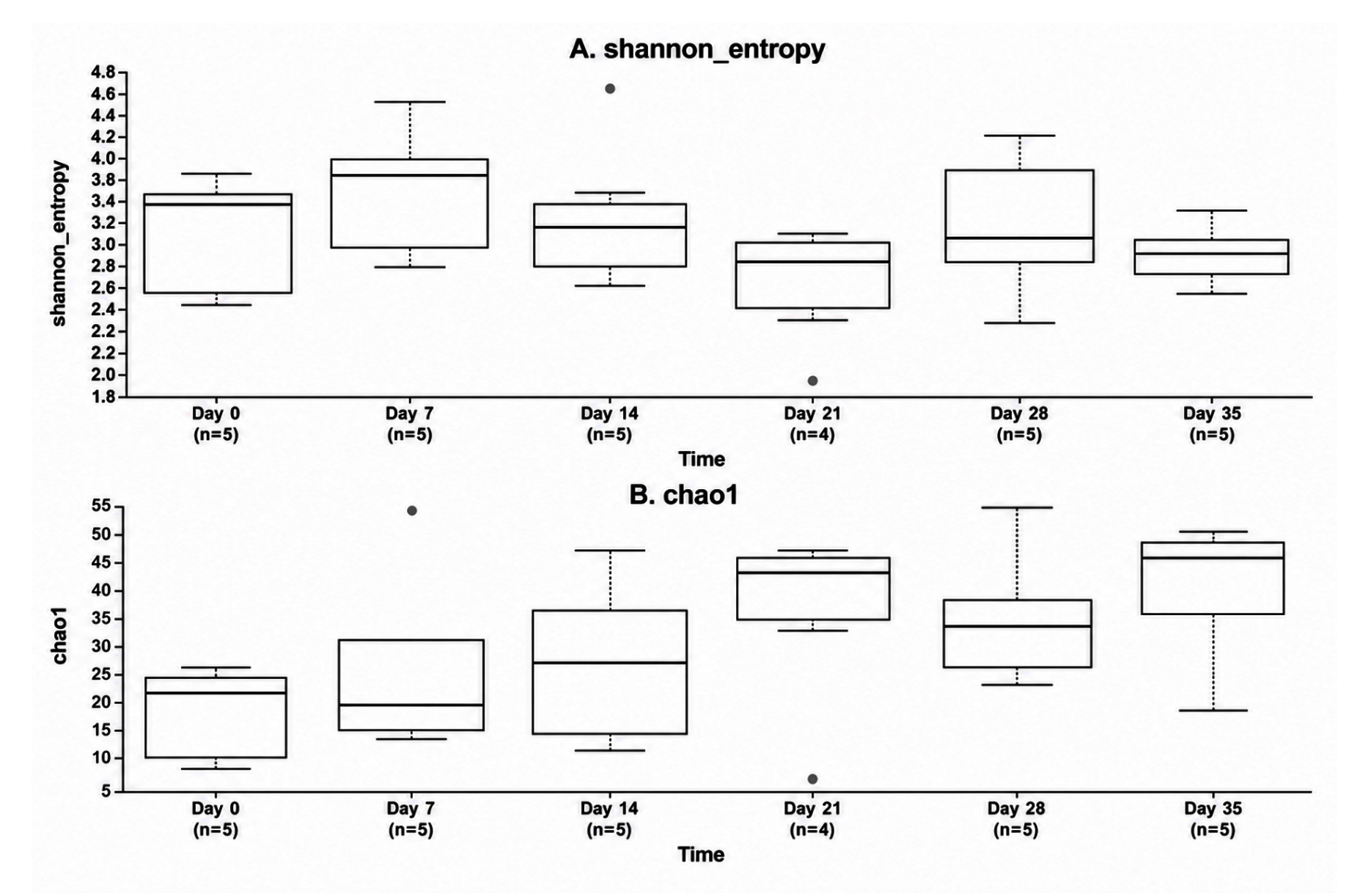
Figure 4. Variation in bacterial community diversity indices: (A) Shannon Diversity and (B) Chao1 species richness throughout the storage period
Taxonomic composition of bacterial communities
Taxonomic analysis at the phylum level showed that the Proteobacteria and Firmicutes predominated across all sampling times (Figure 5A). However, Class-level analysis revealed an increase in the relative abundance of Gammaproteobacteria and Bacilli as storage progressed, particularly during the later stages of chilled storage (Figure 5B). At the family-level profiling showed notable temporal shifts in community composition, with increasing abundances of Carnobacteriaceae and Moraxellaceae over time (Figure 6A). At the species level, known spoilage-associated bacteria, including Carnobacterium divergens, Pseudomonas fragi, and Brochothrix thermosphacta, became dominant from Day 28 onwards (Figure 6B).
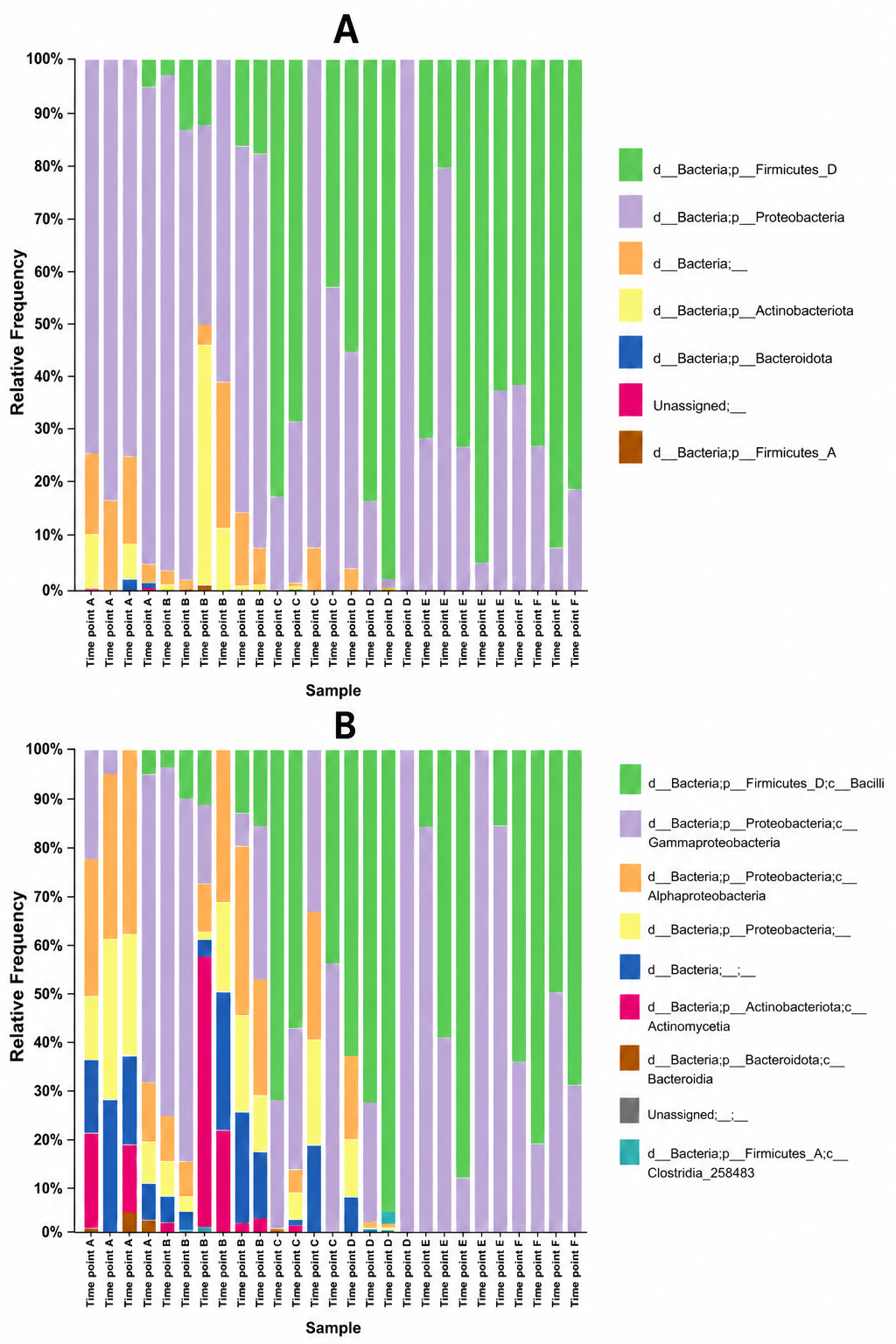
Figure 5. Relative abundance (%) of bacterial taxa at (A) phylum and (B) class levels throughout chilled storage. Time points A, B, C, D, E and F represent Days 0, 7, 14, 21, 28 and 35, respectively
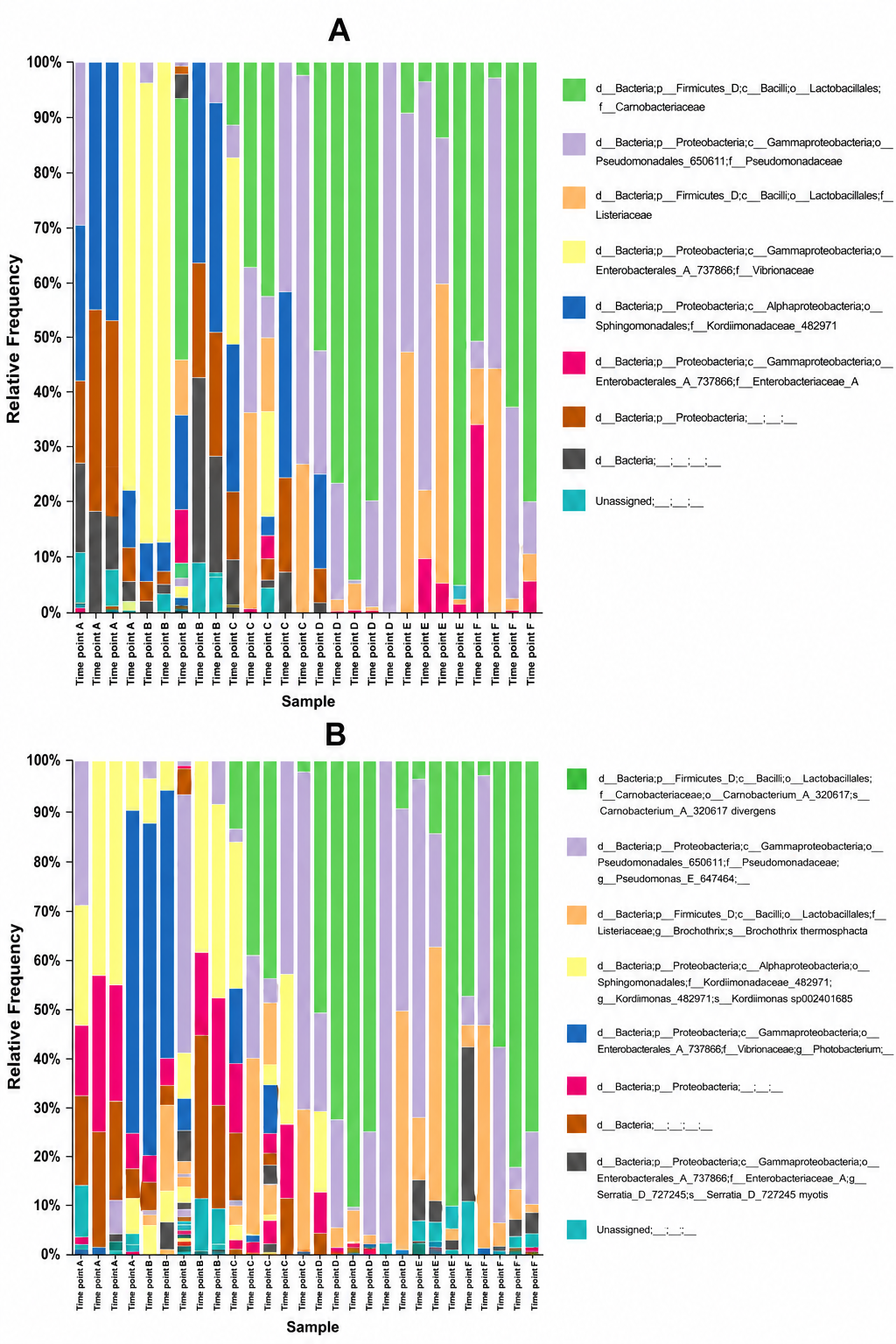
Figure 6. Relative abundance (%) of bacterial taxa at (A) family and (B) species levels throughout chilled storage. The species-level profile demonstrates the emergence and increasing dominance of key spoilage-associated taxa during late chilled storage. Time points A, B, C, D, E and F represent Days 0, 7, 14, 21, 28 and 35, respectively
The 80% O2/20% CO2 modified atmosphere used in this study likely contributed to the selective environment under which the bacterial community developed during chilled storage. Carbon dioxide is commonly used in MAP because of its inhibitory effects on many spoilage microorganisms, whereas a high oxygen concentration can favour the persistence or growth of aerobic and facultatively anaerobic bacteria. Consequently, the combination of high-oxygen MAP and refrigeration may select for bacterial populations capable of tolerating these conditions, contributing to the progressive dominance of spoilage-associated taxa during storage. Similar shifts involving Brochothrix, Pseudomonas and other spoilage-associated bacteria have previously been reported in chilled meat stored under high-oxygen modified atmospheres. However, because the present study did not include an air-packaged, vacuum-packaged, or alternative MAP control, the independent effect of the 80% O2/20% CO2 gas composition cannot be separated from the effects of refrigeration and storage time. Therefore, the observed changes should be interpreted as bacterial succession occurring under 80% O₂/20% CO2 MAP during chilled storage rather than as evidence that this gas composition alone caused the observed community shifts.45
The dissimilarity metrics (Jaccard and Bray-Curtis indices) and ANOSIM indicated distinct temporal changes and significant differences in the beta diversity of the bacterial community structure between Day 0 and Day 35 MAP meat samples (Figures 1 and 2; Tables 1 and 2). These shifts were due to substantial turnover in the bacterial community composition, from initial mesophilic groups in fresh lamb meat samples to psychrophilic or cold-tolerant groups later during chilled storage. These results agree with those from other studies in which successional changes resulted in the replacement of the original meat bacterial population by groups better adapted to the selective pressures associated with MAP conditions and low temperature. For example, an earlier study of chilled MAP lamb shoulder showed a similar trend, with a significant difference between the community at the early stage of chilled storage and samples from the mid and late stages. Day 0 MAP (30% CO2, 70% O2) pork meat samples also reportedly showed a high Bray-Curtis dissimilarity to Day 6 samples during chilled storage, and a similar trend was observed in MAP (80% O2 and 20% CO2) beef longissimus steak at Day 0 compared to Day 20.45
These successional changes were mirrored by the observed decline in Faith’s phylogenetic diversity and Pielou’s evenness over the 35 days of chilled storage (Figures 3 and 4). This suggested that some taxa were becoming progressively dominant over time. However, these changes were not reflected in the Shannon diversity values, which remained stable. Successional changes can lead to a decrease in bacterial community Shannon diversity over time, as reported in super-chilled MAP chicken,24 MAP pork chops36 and MAP beef.45 However, it is possible that in this study, more low-abundance taxa appeared in the MAP meat samples in addition to the dominant species, thereby resulting in a stable Shannon diversity value and the observed increase in the Chao1 index (species richness) over the 35 days of chilled storage. This contrasting trend observed with the two alpha diversity indices reflects the community dynamics and highlights the benefits of using multiple diversity indices in the analysis of microbial communities in MAP meat samples.
As shown in Figures 5 and 6, taxonomic analyses showed that on Day 0 at the phylum level, Proteobacteria and Firmicutes, Gammaproteobacteria, Alphaproteobacteria and Actinomycetia (class level) and Pseudomonas (species level) were dominant. These are the known microflora of fresh meat.10,46 However, the increasing dominance of the Proteobacteria (Gammaproteobacteria) and Firmicutes (Bacilli) at later stages of chilled storage and the dominance of Carnobacterium, Pseudomonas, Brochothrix and Serratia species by day 35 indicated the selection of psychotrophic bacterial groups by the low temperature and the modified atmospheric conditions. The selection of Carnobacterium divergens, Pseudomonas fragi, and Brochothrix thermosphacta by day 35 is especially important, as these are well-known meat spoilage bacterial groups.10,14,47,48 This indicated that the potential for spoilage activities had become established at the end of chilled storage. While the implications of this finding on the shelf life and the quality of the MAP lamb meat remain to be evaluated, their presence at the late stage of chilled storage presents an opportunity for future intervention in studies focused on MAP lamb meat’s shelf-life extension after 35 days.
The study provides robust molecular insights into the bacterial community dynamics during chilled storage of lamb meat, highlighting significant successional changes and the emergence of spoilage taxa. It showed substantial temporal changes in the bacterial communities on MAP lamb meat during chilled storage for 35 days. The initial bacterial community diversity decreased as storage time increased, as assessed by Faith’s phylogenetic diversity and Pielou’s evenness, suggesting progressive dominance by a subset of largely spoilage-associated taxa under the selective pressures of MAP conditions and low temperature. Although species richness increased, the bacterial community at the end of chilled storage was dominated by well-known spoilage bacterial species: Carnobacterium divergens, Pseudomonas fragi, and Brochothrix thermosphacta. These findings improve our understanding of bacterial dynamics and succession in chilled MAP lamb meat, which can be used for shelf-life prediction and improvement. Future research should include NGS-based functional microbial analyses and VOC assays of MAP meat during chilled storage to link taxonomic information with function.
ACKNOWLEDGMENTS
The authors thank the School of Science, RMIT University, for providing the facilities, resources, and research environment that supported this study.
CONFLICT OF INTEREST
The authors declare that there is no conflict of interest.
AUTHORS’ CONTRIBUTION
MA conceptualized the study. MA and MO applied methodology. MA performed Investigation, visualization and data analysis. MO performed supervision and data validation. MA wrote the original draft. MA and MO wrote, reviewed, edited and approved the final manuscript for publication.
FUNDING
None.
DATA AVAILABILITY
The datasets generated and/or analyzed during the current study are available from the corresponding author upon reasonable request.
ETHICS STATEMENT
This article does not contain any studies on human participants or animals performed by any of the authors.
- Stapay PV, Tiutiunnyk OS, Stakhiv NP, Pakholkiv NI. Biological features of meat productivity formation in sheep. Anim Biol. 2023;25(1):46-53.
Crossref - Fu Y, Chen Y, Han X, et al. Effects of muscle fiber composition on meat quality, flavor characteristics, and nutritional traits in lamb. Foods. 2025;14(13):2309.
Crossref - Van Le H, Nguyen DV, Vu Nguyen Q, Malau-Aduli BS, Nichols PD, Malau-Aduli AEO. Fatty acid profiles of muscle, liver, heart and kidney of Australian prime lambs fed different polyunsaturated fatty acids enriched pellets in a feedlot system. Sci Rep. 2019;9(1):1238.
Crossref - Ding W, Lu Y, Xu B, et al. Meat of sheep: Insights into mutton evaluation, nutritive value, influential factors, and interventions. Agriculture. 2024;14(7):1060.
Crossref - Ozdemir FN, Dagdelen U, Turkyilmaz D. Long-term insights into regional trends and forecasting in global sheep meat production. J Anim Plant Sci. 2025;35(4):1164-1174.
Crossref - Organisation for Economic Co-operation and Development, Food and Agriculture Organization of the United Nations. OECD-FAO Agricultural Outlook 2025-2034. OECD Publishing. 2025.
- Snyder AB, Martin N, Wiedmann M. Microbial food spoilage: Impact, causative agents and control strategies. Nat Rev Microbiol. 2024;22(9):528-542.
Crossref - Comi G, Iacumin L. Spoilage of meat and fish. The Microbiological Quality of Food. 2025:221-248.
Crossref - Odeyemi OA, Alegbeleye OO, Strateva M, Stratev D. Understanding spoilage microbial community and spoilage mechanisms in foods of animal origin. Compr Rev Food Sci Food Saf. 2020;19(2):311-331.
Crossref - Pellissery AJ, Vinayamohan PG, Amalaradjou MAR, Venkitanarayanan K. Spoilage bacteria and meat quality. Meat Quality Analysis. 2020:307-334.
Crossref - Pushparaj K, Balasubramanian B, Meyyazhagan A, et al. Advancements in sustainable techniques for dried meat production: An updated review. Food Bioprocess Technol. 2025;18(10):2170-2194.
Crossref - Sokra I, Somaly S, Meta H, Lika R. Advances in packaging technologies for meat preservation: Vacuum, modified atmosphere, and active packaging. Journal of Agriculture and Technology. 2026;2(1):213-227.
Crossref - Habiba U, Bajpai A, Shafi Z, Pandey VK, Singh R. Advancing sustainability through modified atmosphere packaging (MAP) for fresh food preservation: A critical review. J Stored Prod Res. 2025;112:102657.
Crossref - Zhang J, Zhang J, Zhang L, Qin Z, Wang T. Review of recent advances in intelligent and antibacterial packaging for meat quality and safety. Foods. 2025;14(7):1157.
Crossref - Sokra I, Somaly S, Lika R. Meat storage and quality preservation: A comprehensive review of factors and technologies. Figshare. 2025.
Crossref - Chmiel M, Hac-Szymanczuk E, Dasiewicz K, et al. Microbiological and physicochemical quality changes of pork ham slices packed using various methods during long-term refrigerated storage. LWT. 2025;225:117933.
Crossref - Corlett MT, Pethick DW, Kelman KR, et al. Lamb meat colour is minimally affected under reduced oxygen concentration in modified atmosphere packaging. Food Packag Shelf Life. 2024;43:101291.
Crossref - Kandeepan G, Tahseen A. Modified atmosphere packaging (MAP) of meat and meat products: A review. J Packag Technol Res. 2022;6(2):137-148.
Crossref - Lei Y, Zhang Y, Cheng Y, Huang J, Huang M. Monitoring and identification of spoilage-related microorganisms in braised chicken with modified atmosphere packaging during refrigerated storage. Food Sci Hum Wellness. 2023;12(1):28-34.
Crossref - Zouharova A, Bartakova K, Bursova S, et al. Meat and fish packaging and its impact on the shelf life – a review. Acta Vet Brno. 2023;92(1):95-108.
Crossref - Chen JH, Ren Y, Seow J, Liu T, Bang WS, Yuk HG. Intervention technologies for ensuring microbiological safety of meat: Current and future trends. Compr Rev Food Sci Food Saf. 2012;11(2):119-132.
Crossref - McMillin KW. Modified atmosphere packaging. In: Demirci A, Feng H, Krishnamurthy K, eds. Food Safety Engineering. Springer International Publishing. 2020:693-718.
Crossref - Duthoo E, Rasschaert G, Leroy F, Weckx S, Heyndrickx M, De Reu K. The microbiota of modified-atmosphere-packaged cooked charcuterie products throughout their shelf-life period, as revealed by a complementary combination of culture-dependent and culture-independent analysis. Microorganisms. 2021;9(6):1223.
Crossref - Cha H, Liang S, Shi K, et al. Effect of modified atmosphere packaging on the quality characteristics and bacterial community succession of super-chilled chicken meat in biopreservation. LWT. 2023;189(5):115547.
Crossref - Ercolini D. High-throughput sequencing and metagenomics: Moving forward in the culture-independent analysis of food microbial ecology. Appl Environ Microbiol. 2013;79(10):3148-3155.
Crossref - Quijada NM, Hernandez M, Rodriguez-Lazaro D. High-throughput sequencing and food microbiology. Adv Food Nutr Res. 2020;91:275-300.
Crossref - Rovira P, Brugnini G, Rodriguez J, et al. Microbiological changes during long-storage of beef meat under different temperature and vacuum-packaging conditions. Foods. 2023;12(4):694.
Crossref - Sade E, Penttinen K, Bjorkroth J, Hultman J. Exploring lot-to-lot variation in spoilage bacterial communities on commercial modified atmosphere packaged beef. Food Microbiol. 2017;62(1):147-152.
Crossref - Stoops J, Ruyters S, Busschaert P, et al. Bacterial community dynamics during cold storage of minced meat packaged under modified atmosphere and supplemented with different preservatives. Food Microbiol. 2015;48(1):192-199.
Crossref - Yang X, Luo X, Zhang Y, et al. Effects of microbiota dynamics on the color stability of chilled beef steaks stored in high oxygen and carbon monoxide packaging. Food Res Int. 2020;134:109215.
Crossref - Lauritsen CV, Kjeldgaard J, Ingmer H, Bisgaard M, Christensen H. Microbiota encompassing putative spoilage bacteria in retail packaged broiler meat and commercial broiler abattoir. Int J Food Microbiol. 2019;300(1):14-21.
Crossref - Lei Y, Huang J, Cheng Y, Zhang Y, Huang T, Huang M. Changes in bacterial communities and the volatilome of braised chicken with different packaging stored at 4 °C. Food Res Int. 2022;155:111056.
Crossref - Rouger A, Moriceau N, Prévost H, Remenant B, Zagorec M. Diversity of bacterial communities in French chicken cuts stored under modified atmosphere packaging. Food Microbiol. 2018;70(1):7-16.
Crossref - Bassey AP, Chen Y, Zhu Z, et al. Assessment of quality characteristics and bacterial community of modified atmosphere packaged chilled pork loins using 16S rRNA amplicon sequencing analysis. Food Res Int. 2021;145:110412.
Crossref - Cauchie E, Delhalle L, Taminiau B, et al. Assessment of spoilage bacterial communities in food wrap and modified atmosphere-packed minced pork meat samples by 16S rDNA metagenetic analysis. Front Microbiol. 2020;10:3074.
Crossref - Shi Y, Zhao B, Hao J, et al. Exploring the impact of cold and modified atmosphere packaging storage on prepared meat products: Temporal dynamics of the bacterial community and quality analysis. Meat Sci. 2025;225:109824.
Crossref - Wang X, Li P, Chen X, et al. Integrated microbiome and metabolomics analysis of spoilage characteristics of modified atmosphere packaged pork. Food Res Int. 2025;203:115827.
Crossref - Caporaso JG, Lauber CL, Walters WA, et al. Global patterns of 16S rRNA diversity at a depth of millions of sequences per sample. Proc Natl Acad Sci U S A. 2011;108(Suppl 1):4516-4522.
Crossref - Caporaso JG, Lauber CL, Walters WA, et al. Ultra-high-throughput microbial community analysis on the Illumina HiSeq and MiSeq platforms. ISME J. 2012;6(8):1621-1624.
Crossref - Walters W, Hyde ER, Berg-Lyons D, et al. Improved bacterial 16S rRNA gene (V4 and V4-5) and fungal internal transcribed spacer marker gene primers for microbial community surveys. Msystems. 2015;1(1):e00009-15.
Crossref - Kiermeier A, Tamplin M, May D, Holds G, Williams M, Dann A. Microbial growth, communities and sensory characteristics of vacuum and modified atmosphere packaged lamb shoulders. Food Microbiol. 2013;36(2):305-315.
Crossref - Wang T, Zhao L, Sun Y, et al. Changes in the microbiota of lamb packaged in a vacuum and in modified atmospheres during chilled storage analysed by high-throughput sequencing. Meat Sci. 2016;121(1):253-260.
Crossref - Bolyen E, Rideout JR, Dillon MR, et al. Reproducible, interactive, scalable and extensible microbiome data science using QIIME 2. Nat Biotechnol. 2019;37(8):852-857.
Crossref - Edgar RC. Accuracy of microbial community diversity estimated by closed- and open-reference OTUs. Peer J. 2017;5:e3889.
Crossref - Yang X, Zhu L, Zhang Y, Liang R, Luo X. Microbial community dynamics analysis by high-throughput sequencing in chilled beef longissimus steaks packaged under modified atmospheres. Meat Sci. 2018;141(1):94-102.
Crossref - Azad MAK, Rahman MM, Azad MAK. Meat microbiota: A conceptual review. Meat Res. 2022;2(3).
Crossref - Chen L, Ryu R, Kuuliala L, et al. Modeling the growth and volatile metabolite production of spoilage-causing Brochothrix thermosphacta on solid meat substrates under modified atmospheres. Int J Food Microbiol. 2025;434:111150.
Crossref - Cvetanovic J, Knezevic P. Metabolic features of Carnobacterium spp. relevant to food spoilage. Zenodo. 2025;47(1):3-17.
Crossref
© The Author(s) 2026. Open Access. This article is distributed under the terms of the Creative Commons Attribution 4.0 International License which permits unrestricted use, sharing, distribution, and reproduction in any medium, provided you give appropriate credit to the original author(s) and the source, provide a link to the Creative Commons license, and indicate if changes were made.