

ISSN: 0973-7510
E-ISSN: 2581-690X
 , Vaishnavi Rajagopalan2, Niyati Verma3,
Shubhangi Sharma4
, Shilpa Bharti1 and Simran Jit5 The human body and its microbial communities form a ‘holobiont’ or ‘metaorganism’, which acts as a complex and synergistic entity. A disequilibrium in the microbiota component of the human ‘holobiont’ results in the pathogenesis or development of diseases. Microbiome research has revolutionised the field of molecular diagnosis and has introduced new avenues for development of therapeutic measures for the treatment of human diseases. Despite the significance of microbiomes in general and human health in specific, the current textbooks of science curricula in the Indian education system do not explicitly include the concept of ‘microbiomes’. Although efforts have been made to sensitize students about microbiomes in the curriculum framework; but lacunae still exist in the understanding and information related to microbes and microbiomes. To bridge this gap of understanding of the ecological, nutritional, and physiological interactions that shape the microbiomes, we have reviewed and addressed the need to introduce microbiome literacy in school education. We have discussed the importance of microbiomes of the eyes, ears, nose, and hair follicles and their consequences due to dysbiosis in human health and diseases. The objective of the present study was to evaluate and assess the importance of microbiome literacy at the school level. To achieve this objective, we identified the conceptual gaps in existing information documented in science textbooks for inclusion of microbiome literacy. We identified some core concepts or themes in NCERT Biology textbooks which can be extended to inculcate microbiome education. These topics include the understanding of health, hygiene, immunity, antibiotic resistance and environmental sustainability. We have also included some classroom exercises, which can be introduced for students to appreciate the microbiome studies. Thus, by introducing microbiome literacy in the school curriculum using pedagogical interventions, schoolchildren can be trained as educators and stimulants for societal health.
Microbiota, Microbiome, Human Microbiome, Built Microbiomes, Dysbiosis, AMR, Microbiome Literacy, School Textbooks, NCERT, NEP
The human microbiome is a collection of different groups of microorganisms including-bacteria, archaea, eukaryotes, fungi as well as viruses.1 The term microbiome includes these different organisms and their genes or genomes in association with the host ecosystem. The human microbiome is a collective term for all the microbiomes present in different anatomical areas including eye, ear, nose, hair follicles, gut, respiratory tract, urogenital tract, reproductive organs2 (Figure 1). Each anatomical niche harbors its unique microbiome regulated by physiological factors like pH, temperature, oxygen and nutrient availability, moisture, host immune factors. These microbiomes are established early in life and are shaped and influenced by mode of birth, feeding, use of antibiotics, diet, disease and other environmental factors. The human microbiome includes commensals, symbiotic, and opportunistic pathogens living on as well inside the human body.3 Their coexistence may also provide certain benefits. For example, the human gut microbiome consists of many symbiotic bacteria which ferment dietary fibres to short chain fatty acids which are required for growth of colonocytes and modulate the immune responses.3 The opportunistic pathogens, present in less numbers in the human microbiome lead to disease conditions, for example disruption of gut microflora due to use of antibiotics can lead to Clostridioides difficile infection.4 The entire microbiome plays a significant role in maintaining the overall health of the human host.
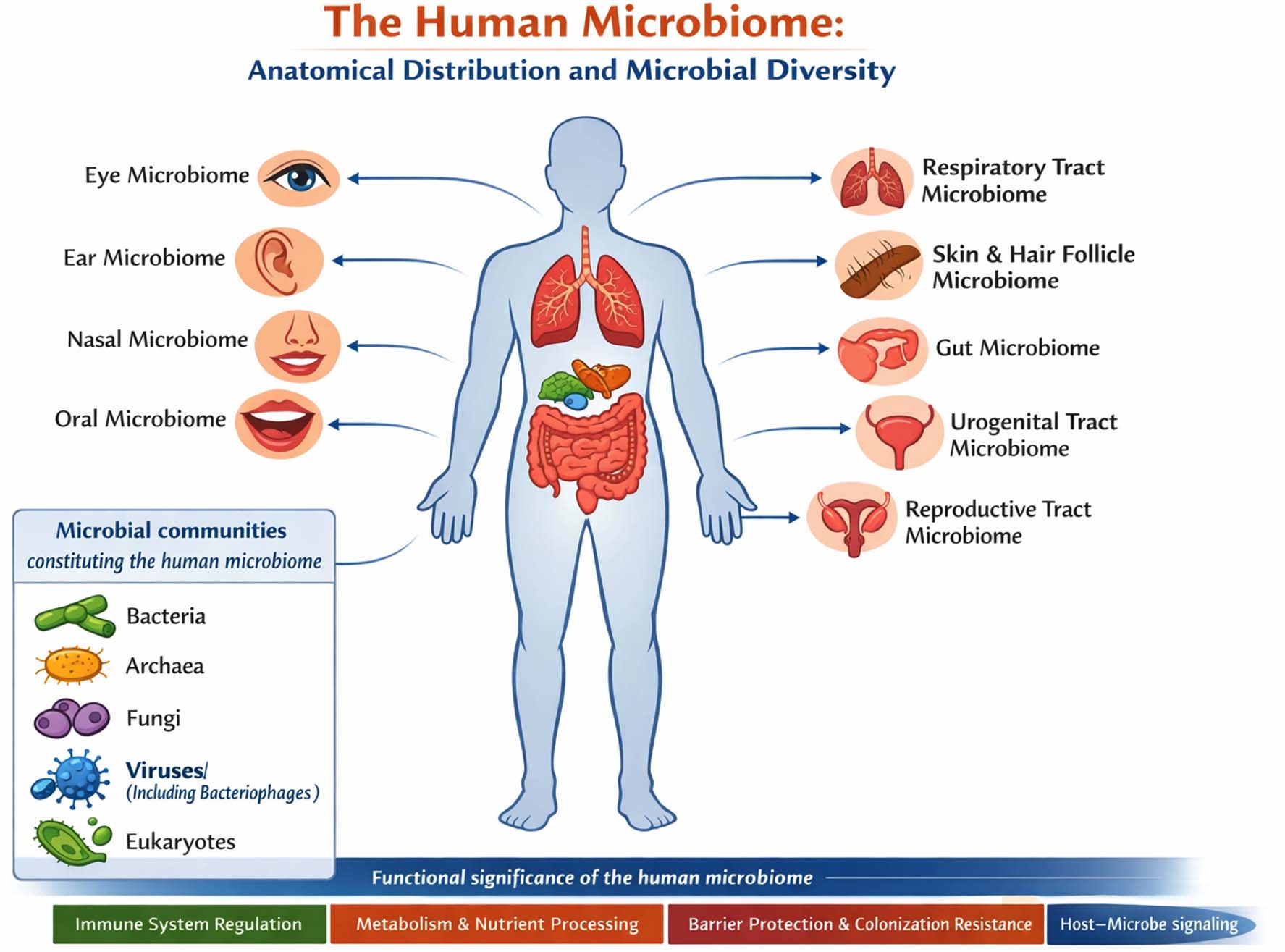
Figure 1. The human microbiome comprises of different anatomical niches. The diversity of each microbiome is shaped by interaction of genetics and environmental factors. Source: https://gemini.google.com/
The relevance of the human microbiome has increased manifold since the Human Microbiome Project was launched by the U.S. National Institutes of Health (NIH) in 2007 as it plays a crucial role in human health and disease resistance.5 It acts as an extensive reference database of the human microbiome in health, offering a starting point for understanding how it contributes to normal human physiology and how it varies in diseased conditions.6,7 The commensal microbes of the human body regulate various mechanisms and physiological processes of the human host including immune response, digestion and respiration. Any alteration in the composition of microbiota found in healthy individuals or microbial dysbiosis can lead to disease states or disorders. This dysbiosis also plays an important role in the spread of AMR or antimicrobial resistance. This further escalates the growing burden of infectious diseases, especially in developing countries like India. The excessive or inappropriate use of antibiotics leads to dysbiosis or alteration of the microbiome. Under antibiotic pressure, the number of drug-resistant microbes increases, which leads to the problem of AMR. Further, the antimicrobial resistance genes (ARGs) can also be transferred to other organisms via HGT or horizontal gene transfer, leading to high prevalence of resistant microbes in the altered microbiome due to antibiotic-induced dysbiosis. The gut microbiota acts as a large reservoir of such resistant strains (‘resistome’).8-11 The cross talks of microbes (bacteria, fungi, viruses) and human hosts are essential for the normal functioning of the body. This communication is hampered by changes in human microbiota composition and can lead to pathological conditions of different body organs. The understanding obtained from changes in the microbiome between healthy individuals and patients suffering from a particular disease also opens up new avenues of treatment strategies. For example, microbiome wide association studies (MWAS) compare the microbiomes of healthy individuals and patients to find out specific features like microbial taxa that are statistically associated or linked with disease states. This enables the identification of biomarkers associated with specific diseases so that precise therapeutic interventions can be provided to the patients as early as possible. Similarly, with such microbiome related studies, an early detection of colonization of Streptococcus in the nasal cavity can indicate the risk of asthma.12 In this manner, custom-fit treatment options can be worked out for many important diseases like asthma.
The study of the human microbiome includes both culture-based and non-culture-based techniques. The former technique provides an approximation of microbial communities in a given sample, while the latter is more specific and has the potential to accurately identify the microbial populations using advanced tools like 16S/18S/ITS gene sequencing, metagenome sequencing, immunoassays, etc. Usually, a combination of both traditional culture-based and non-culture-based methods is applied to unravel the members of the microbiome of specific tissue samples. Often, inconsistencies in the microbial data composition or microbial diversity in different microbiomes like that of ear or eye have been reported possibly due to insufficient sample size or sequencing approach, and varied diagnostic criteria.13 Despite these constraints, dysbiosis in the microbiome of a specific organ is studied from the perspective that it is either the cause or consequence of any pathological state or disorder. Therapeutic solutions rely on development of diagnostic tools and techniques to detect changes in the associated microbiome. Thus, understanding the human microbiome becomes important right at the stage where the microbial world is introduced to the students. In this respect, we have discussed important human microbiomes of ear, eye, nose, hair, and gut microbiomes followed by simple classroom exercises that can help promote microbiome literacy among school students. Figure 2 illustrates the role of microbiome literacy14 in the field of education and research with a specific focus on India.
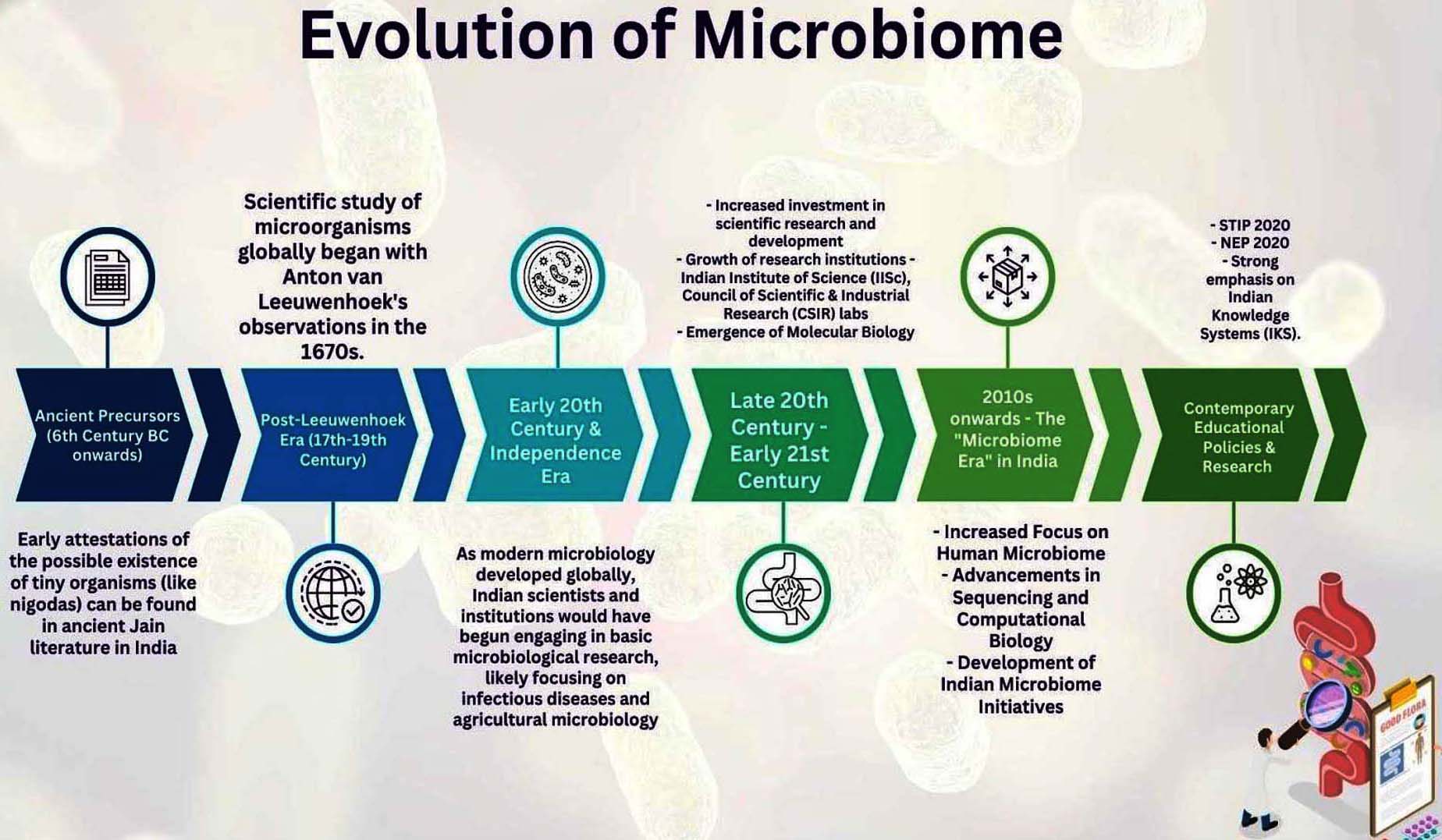
Figure 2. Evolution of microbiome literacy in India. Driven by increased investments and scientific development, significant advancements have been made in the human microbiome research in India. Source: https://www.canva.in/
An attempt is also made to bring out the existing gaps in the NCERT-CBSE Science textbooks related to microbiomes which can be easily filled by discussing and integrating microbiomes in our class discussions. It also becomes relevant to include these discussions as India’s National Education Policy (NEP) 2020 aims to transform the country’s education system by emphasizing interdisciplinary learning, critical thinking, and scientific literacy.15 With a focus on STEM education and research, the policy framework can provide a foundation for incorporating microbiome-related topics. A comparative analysis of education systems in India and other countries offer insights into best practices and areas for improvement. Incorporating microbiome concepts into biology, health, and environmental education can foster a deeper understanding of the human microbiome and its impact on health and disease.16 Encouraging research in microbiome science can help India stay at the forefront of this rapidly evolving field. Incorporating microbiome education into India’s education system will promote scientific literacy, critical thinking, and interdisciplinary learning. By exploring global best practices and comparative perspectives, India can develop effective microbiome education initiatives that align with its education policy and research goals. Also, this work is an attempt to raise awareness among academicians and curriculum framework makers to include and integrate microbiome education in the existing science textbooks and curriculum. The rapidly evolving field of microbiome science has potential consequences for human health, disease, and the environment. The Table 1 provides a comparative overview17 of microbiome education, research, and significant initiatives in South-East Asian countries, India and other countries.
Table (1): Microbiome education across the Globe: Initiatives and Insights
S. No. |
Category |
India |
Other Countries |
South-East Asian countries |
|---|---|---|---|---|
1. |
Microbiome Education and Research Initiatives |
-Indian Human Microbiome Initiative (IHMI),https://ibdc.dbtindia.gov.in/indasecure/humanmicrobiome) -Indian Microbiome Database (IndMDB) – https://sbvu.ac.in/mgmari/indmdb/) -Indian Institute of Science Education and Research (IISER), Bhopal – MetaBioSys Laboratory |
-The Human Microbiome Project (HMP) U.S.A.1, European Human Microbiome -Initiatives (e.g., METAHIT (Metagenomics of the Human Intestinal Tract, http://www.metahit.eu) -China ranking second globally in the number of human microbiome samples in public databases, after U.S.A., Australia, Canada, UK, Denmark, Netherlands, Finland, Italy, Germany, Israel, Japan, Chile, Bangladesh, France, Malawi, New Zealand are the leading nations in microbiome education and research18 |
University programs, trainings and translational microbiome research, e.g. National University of Singapore, Mahidol University) and research institutes (e.g., A*STAR, Pasteur Institute of Laos), ASEAN Microbiome Nutrition Centre (AMNC) https://www.nni.com.sg/research-innovation/research-platforms/AMNC |
2. |
Research Focus Areas |
IndMDB in collaboration with Christian Medical College (CMC), Vellore; Bio-Sciences R&D Division, TCS Research; National Institute of Biomedical Genomics (NIBMG), West Bengal and National Centre for Cell Science (NCCS), Pune, etc. (https://sbvu.ac.in/mgmari/indmdb/) |
Advancements in high-throughput sequencing, multi-OMICS, and artificial intelligence have greatly facilitated understanding of human microbiomes in health and disease.7 |
Primarily focuses on gut microbiome diversity, metabolic diseases, maternal–child health, antimicrobial resistance, and microbiome therapeutics (https://medicine.nus.edu.sg/medi/research/microbiome-medicine.html) |
3. |
Number of human microbiome samples in public databases |
India (0.7% of samples) |
U.S.A. (40.2% of samples) China (8.1% of samples) United Kingdom (3.6% of samples)18 |
Human microbiome datasets from Singapore, Malaysia, Thailand, Indonesia, and Vietnam are deposited in NCBI SRA/ENA; no centralised database |
4. |
Microbiome Education (School Status) |
-Pedagogical methods- experiential and conceptual. -More focus on Ayurveda, yoga and wellness. Gut Microbiota and Probiotic Science Foundation (https://gutfoundation.org.in/, India) fostering collaborative research and education initiatives. |
MOOC courses for students, UK Initiatives: “Belly Bugs” Programme, https://bellybugs.co.uk/: -The “Microbiome & Health” MOOC (Massive Open Online Course, Graz University of Technology, Austria, https://imoox.at/course/microbiome?lang=en) |
Limited modules on microbiome literacy in school curriculum, however microbiology is covered in ASEAN education frameworks. |
5. |
Microbiome Education (Higher Education) |
-Master’s and Ph.D. Programs in microbial fields, Translational Health Science and Technology Institute (THSTI), Faridabad, Indian Microbiome Database, Puducherry, CSIR-Institute of Genomics and Integrative Biology (IGIB), Delhi, The University of Delhi and Jawaharlal Nehru University |
-USA & Europe with dedicated masters and Ph.D programmes in microbial ecology, or host-microbe interactions. |
NUS, Mahidol offer microbiome-focused research programs, postgraduate training, and laboratory capacity building (https://www.si.mahidol.ac.th/th/department/microbiology/microbiology_research_microbiome.asp). |
6. |
Funding and Policies |
-Government bodies like DBT, ICMR, CSIR, and private organizations are increasingly funding microbiome research19.- Rs 150 crore Human Microbiome Initiative, to map the microbiome composition of different Indian communities (https://ibdc.dbtindia.gov.in/indasecure/humanmicrobiome). |
-Significant government funding (e.g., NIH in the US, Horizon Europe in EU) and large private investments drive extensive microbiome research. -USA (over 50%) is the highest contributor, along with China, U.K., Germany, France, Canada, Italy, Japan, and Spain, among others13. |
Financial support on microbiome research from national science funding bodies (e.g., NRF Singapore) |
7. |
Outreach and Public Awareness |
-Growing efforts, often through university programs, awareness days (like Probiotics Awareness Day), and integration with linking with traditional wisdom. |
-Extensive public engagement initiatives, citizen science projects, online resources, and media coverage to educate the general public about the microbiome. |
Regional symposia and public science events (e.g., ILSI Southeast Asia microbiome conferences) for understanding gut health and microbiome. https://ilsisea-region.org/event/microbiome-2024/ |
The rationale of the present study is to identify the knowledge gaps about microbiome research in the biology NCERT textbooks, which are commonly studied by school students and is recommended by UGC (University Grants Commission) for school curriculum. However, limited or exclusion of contemporary topics of resistome; microbiome dysbiosis and emergence of AMR; host-microbe interactions with the holistic concept of human microbiome; disease pathogenesis and molecular diagnostics limit the microbiome literacy at school level. Hence it becomes important to assess current status of microbiome literacy in India and compare across the globe, followed by pedagogical interventions like simple classroom exercises which can be implemented to address the emerging educational and public health needs.20 This will in turn emphasize the growing importance of microbiome ecology to AMR and One-Health priorities.21
Study design and methodology
The present study used qualitative descriptive curriculum analysis. The main objective was to find core themes or topics pertaining to microbes and microbiology which can be further augmented with recent research findings about the human microbiome. This will ensure the promotion of microbiome literacy at the school level education and better understanding of human diseases and diagnostics. The primary data sources included the school curriculum biology NCERT textbooks, peer reviewed studies and reports on microbiome research, curriculum frameworks and education policies related to microbiome studies in different countries like USA, China, Europe, South East Asia and India. The data sources were retrieved from official government websites, university or research institutes and literature databases like PubMed, Scopus, Web of Science. The inclusion criteria were curriculum documents of class 9 to 12 and latest published research papers and review articles in microbiome research. The exclusion criteria included non-official documents, blogs or opinion sources. The methodology flow included firstly, thorough screening of the existing school curriculum and biology textbooks to identify the knowledge gaps to be filled by topics in microbiome research using inclusion and exclusion criteria. After the gaps were identified, we then focused on topics which can be easily extended or elaborated with microbiome studies in classroom settings. In order to effectively communicate the concept of microbiome within the microbiology framework, we have discussed some simple classroom exercises and use of online tools/databases which can be used by students and educators. All these strategic pedagogical measures will help in integration of microbiome literacy at the school level.
Microbiome literacy and its relevance
Microbial colonies are present throughout our food ecosystems; from cultivation and harvesting to processing and packaging. Understanding these microbiomes is essential to address growing societal challenges related to food consumption and climate change. Microorganisms play important roles in ecosystems by impacting soil quality and plant development while also contributing to food production and nutrient circulation systems essential for sustainability, in agriculture where they can influence both crop productivity and resistance to pests and diseases. In the context of climate change, microbiomes are involved in carbon and nitrogen cycling, which impact greenhouse gas emissions. By studying and harnessing microbiomes, more sustainable agricultural practices can be developed, improving food security, and mitigating some effects of climate change.22 The application of new technologies developed from such correlations will hugely impact public health and geopolitics. Consequently, it becomes crucial to introduce and empower students to the benefits and potential applications of microbiomes through scientific communications.
India faces a complex public health challenge, simultaneously combating a high prevalence of infectious diseases and a rising tide of non-communicable, lifestyle-related disorders. In this context, the human microbiome assumes particular significance. Traditional Indian dietary practices, characterized by their abundance of fermented foods and a rich variety of plant-based ingredients, inherently foster a diverse and robust microbial ecosystem, which may offer crucial insights into both disease susceptibility and resilience. Yet, the rapid modernization, urbanization, and shift towards processed foods, coupled with widespread antibiotic use, threaten to disrupt this delicate balance, contributing to the rise of chronic conditions. It is within this context that the urgent need for microbiome literacy in the Indian curriculum emerges as a vital public health and educational imperative.
Currently, the average Indian citizen possesses a limited understanding of the microbiome, which needs to be changed, especially amongst the students. Microorganisms are often predominantly associated with disease-causing “germs”, leading to a fear-based perception rather than an appreciation for their beneficial roles. By educating students about the microbiome, we can promote informed health choices, antibiotic awareness, and a prepared future workforce. A pedagogical approach that emphasizes interdisciplinary learning, hands-on activities, and real-world applications can help nurture a microbiome-literate society that values microbiome health and makes informed decisions about their health.
To enable informed decision-making, citizens need to be educated in microbiome literacy at school education.23 The stubborn ESKAPE pathogens, named as per the first letter of the genera, viz., Enterococcus faecium, Staphylococcus aureus, Klebsiella pneumoniae, Acinetobacter baumannii, Pseudomonas aeruginosa and Enterobacter sp., known to antimicrobial resistance (AMR) and prioritized by WHO can be prevented by following simple hygiene practices.24,25 These follow a global surveillance system to track their spread and genetic changes. Health literacy advocated by WHO considers public health as a social determinant of inequities and economic growth.26
Despite the immense importance and biotechnological advancements for their application, a negative perception prevails of microbes as disease-causing agents.27 The challenges of the COVID-19 outbreak have led to germophobia in the general public though on the other hand, a post-pandemic rise in general hygiene, and awareness programs is also seen.28 The negative prejudice is also supported by the increasing reports of hospital-acquired infections,29 antibiotic and multidrug resistance variants,30 mistrust of vaccines,31 and the ever-expected threat of several infectious diseases and possible pandemics.32 Hence, microbial as well as microbiome literacy programs are essential for developing an understanding as well as their appreciation (Table 2). Globally to educate and promote microbiome and microbial literacy, several science pedagogies have been developed for school children. These can be initiated as classroom discussions, excursions, video clips and followed up by assignments and activities first at family and friends and later at community level. Chen, 2021 have designed a video game “Tiny Biome Tales” to educate about the impact of health behaviour and practices on the human microbiome.33 Education activities designed by Rabelo-Fernandez and Rios-Velazquez (2021) based on a combination of talks, assignments, projects, and assessments showed an increase of more than 40% of microbiome concepts.34
Table (2): Relevance for microbial-microbiome literacy in schools
Feature |
Field of application |
Ref. |
|---|---|---|
Microbes are ubiquitous and are important for human and ecosystem health |
Algal production of oxygen, Degradation of environmental pollutants, Biofuels, and bioplastics |
35-37 |
Application of microbes in industry |
Food processing, textiles, cosmetics, pharmaceuticals |
38, 39 |
Skill, knowledge, and cognitive development in children for civic scientific literacy |
Enabling for informed decisions for science-related issues and social development |
23, 40 |
Professional and economic stability |
Career opportunities |
41 |
So far, gut microbiomes have been the focus for popularizing microbiome literacy majorly through social channels and press releases,42 but there is an emergent need for holistic inclusion of other microbiomes. To widen the unbiased understanding, proactive communications are required. This will ensure increased trust and acceptance of scientific advancements; improve community health; bring transparency in policy processes; and inspire and involve people in health development programs.43,44 School education is an appropriate medium to prevent misinterpretation of findings; understand risks and hazards; and encourage and influence public perception.45,46 Subsequent sections of the present article present a brief discussion of important human microbiomes and the association of dysbiosis or disequilibrium of these microbiomes with pathogenic states or diseases. This can be useful in providing scientific insights about the important human microbiomes, particularly regarding human health.
Know your microbiome
Many recent studies have reported the importance of the human microbiome in improvement of health and disease diagnosis.47,48 Thus, it becomes imperative to understand key anatomical microbiomes of the human host in order to promote microbiome literacy, which will enable the students to appreciate the role of microbiome in human health and disease states. So, in this section, we have discussed six modules on hair follicle, ocular, oral, nasal, ear and gut microbiomes including their brief introduction followed by the microbial diversity and composition in both healthy and diseases states.
Hair follicle microbiome
Hair follicle (HF), as the name suggests is a pouch or tube-like structure present in the outermost layer of skin or epidermis. The root of the hair follicle is formed by cells and blood vessels. They are responsible for the growth, color, and texture of hair. The hair follicles also provide epithelial stem cells for the repair of wounds. They also play a vital role in thermoregulation, tactile sensation, and protection against harmful ultraviolet (UV) radiation.49 There are more than five million human HFs that regulate hair growth throughout our life span.50 Hair follicles have been regarded as one of the human body’s anatomic sites of immune privilege (IP). The understanding of follicular microbiomes is important in the treatment of pathological states like folliculitis, acne vulgaris, alopecia areata, hidradenitis suppurativa, and cicatricial alopecias.51,52
The HF microbiome primarily consists of a large number of actinobacteria, which are also found abundantly in the skin microbiome.53-55 The actinobacteria of HF microbiome majorly belong to members of the genus Propionibacteria and Corynebacteria. The other bacterial groups include Firmicutes, with a predominance of Staphylococci and Streptococci, and Proteobacteria including Pseudomonades, Acinetobacter spp., and Moraxella spp.56,57 The distal epithelium of HF consists of biofilms of Cutibacterium acnes.58 While C. acnes and S. epidermidis are the most common bacteria in the scalp microbiota of healthy subjects,59 there are a few more bacterial members that dwell in a healthy HF. Different eukaryotic DNA viruses, including Adeno-associated virus 2 (AAV2) and human papillomaviruses (HPVs), mainly beta-papilloma viruses57 are also found to populate a healthy HF. These viruses can also turn into opportunistic pathogens in immunocompromised individuals and trigger latent skin infections. It has been shown that these viruses can latch on to the base membrane under immunocompromised conditions and overgrow the scalp and face skin with epithelial hyperplasia and wart-like protrusions.60,61 The HF constitutes a small niche in which the follicle-bacteria-epithelium: tripartite interactions play a crucial role in maintaining skin health.62,63 From the available metagenomic data of HFs, it has been reported that non-viral size fractions of the HF microbiota comprise mainly of bacteria and viruses infecting bacteria have also been reported. The presence of bacteriophages (viruses that infect bacteria) suggests their plausible role as an important regulator of microbial diversity by modifying bacterial populations under homeostatic, as well as unhealthy conditions of the host.64,65
In addition, the HFs are also heavily populated by fungi, particularly lipophilic species belonging to the Malassezia genus, including M. restricta and M. globosa.66 The incidence of both species increases and decreases, respectively in dandruff and patients with seborrheic dermatitis.67,68 While tinea capitis is a fungal infection of scalp hair, an increase in the number of dermatophytes like Trichophyton spp. and Microsporum spp. has also been found.69 The increase in the number of dermatophytes produced a decrease in the number of Malassezia, and it is suggested that dermatophytes regulate the density of Malassezia spp.70 The HF microbiome also harbours small arachnids or commensal mite species, D. brevis and D. folliculorum that inhabit the pilosebaceous unit of facial skin from the very beginning of their life after birth.71
Changes in HF microbiome and scalp or hair-related diseases
The microbiota of HF may get out of order in hair-related disease states or disorders like bacterial or fungal folliculitis, tinea capitis, syphilitic alopecia, and herpes simplex or herpes zoster-associated folliculitis72-78 (Figure 3). The imbalanced state of the HF microbiome is associated with pathological states like acne.79 Dagnelie M-A, 2019 reported a decrease in Staphylococci and Enterococci and an increase in the density of P. acnes in healthy controls compared to acne patients.80 However, Kelhala H-L, 2018 reported the opposite finding with an abundance of Staphylococci and Enterococci and a decrease in P. acnes.81 A similar microbial profile is also observed in another inflammatory disease of HF-Alopecia areata, which is commonly known as spot baldness or patchy hair loss. An increased abundance of P. acnes has been found in androgenetic alopecia.82
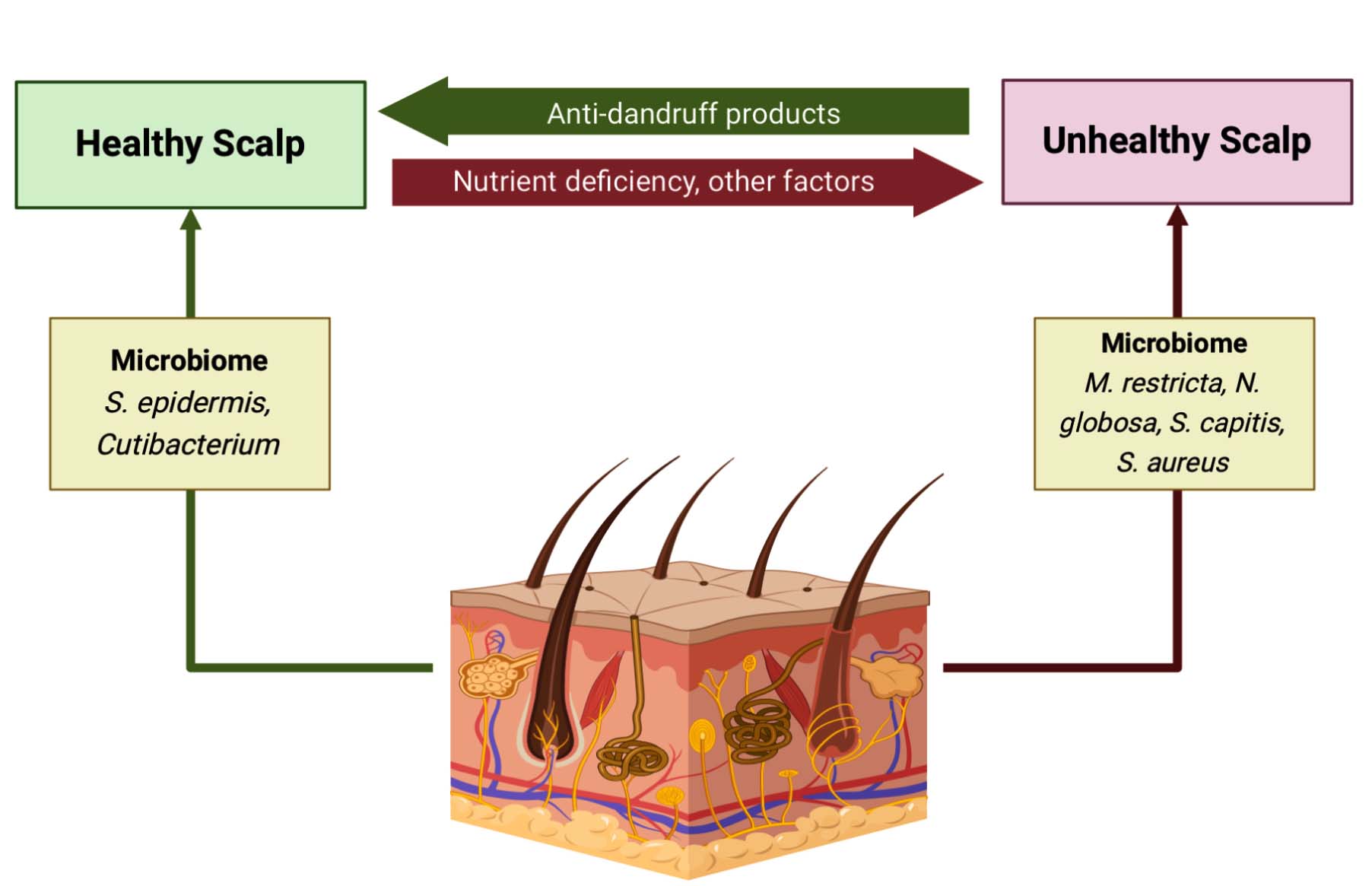
Figure 3. Healthy and unhealthy scalp changes in the hair follicle microbiome. Imbalance in the hair microbiome has been associated with hair related disorders. Source: https://www.biorender.com/
Hidradenitis suppurativa (HS), commonly referred to as acne inversa in which patients develop painful lumps or cysts in armpits, groin and breast areas. The studies have shown that such patients show a high number of bacterial members of genus Staphylococcus aureus and anaerobes belonging to the genus Porphyromonas and Peptoniphilus.83,84 However, the proportion of P. acnes reduces in this inflammatory disease of HFs.56,85,86 The rise of S. aureus is also seen in Folliculitis decalvans (FD), a scalp disease.87 These bacterial species may also cause the release of antimicrobial peptides (AMPs) in large amounts to elicit an inflammatory response. Haemophilus and anaerobic pathogens including Prevotella spp., Anaerococcus spp. and Mobiluncus spp. are also present in HS lesions. M. restricta and M. globosa populations also increased similar to other features of HF microbiome dysbiosis in alopecic areas of the vertex.88
Changes in the scalp microbiome have also been observed in Seborrheic dermatitis, commonly known as dandruff, which is an inflammatory skin condition found in sebaceous areas. This pathological condition is found in its mild form as Dandruff on the scalp in which Cutibacterium spp. decreases while there is an increase in Staphylococcus spp.68,89 Some studies have reported that in cases of Dandruff, the number of Malassezia bacteria double as compared to normal levels90,91 but Soares et al. 2016 found no such difference in healthy controls.92 Also, M. restricta and S. aureus are found predominantly in scalp swabs taken from patients suffering from scalp psoriasis.93,94 Interestingly, alterations in gut microbiome with a decreased abundance of actinobacteria have been found to contribute to scalp psoriasis. This finding has highlighted the role of the ‘gut-skin’ skin axis in psoriasis.94,95 So, understanding of HF microbiome is becoming important in clinical dermatology and is opening new avenues for the management and control of hair-related diseases.96,97
Ocular microbiome
Ocular microbiome refers to all kinds of microbes including commensals as well as pathogenic microorganisms present in the eye. The interface between the eye and the area including cornea, conjunctiva, tear film, and eyelids comprises the ‘ocular’ surface. The maximum number of microbes have been recovered from the conjunctiva and eyelid while the lower abundance of microbial diversity has been found in tears.98 Different species of gram-positive bacteria like Staphylococcus, Streptococcus, Propionibacterium, Diphtheroid, and Micrococcus have been found commonly in the ocular surface with Staphylococcus among the most abundant of all bacteria.99,100 The composition of the ‘core ocular microbiome’ has been reported by many researchers with differences in the bacterial members of different genera.101-104 Recently, Suzuki, reported that Propionibacterium was the most prevalent bacterial species on the ocular surface in the young subjects while Corynebacterium or Neisseriaceae was found in the elderly subjects.105
Changes in ocular microbiome and eye diseases
The ocular microbiota can be shaped or changed by many variables like environmental factors, age, gender and endogenous host factors, and personal habits-like wearing contact lenses or some disease states, infection or use of antibiotics, etc.106 Altered ocular surface microbiota is linked with diseases such as meibomian gland dysfunction or dry eye syndrome and some autoimmune diseases like Behcet’s disease (BD), rheumatoid arthritis, and Sjogren’s syndrome and other diseases like diabetes, high cholesterol, and triglycerides, conjunctivitis.107-115 For some diseases like uveitis, characterized by acute or chronic intraocular inflammation of infectious or non-infectious origin, the linkage between intestinal and ocular microbiota was reported by Horai et al., using the spontaneous uveitis mouse model.116 Also, gut and oral microbiota are found to be associated with glaucoma.117 However, further investigations are required to validate these findings and to further elaborate the cross-talks of gut or oral microbiota with ocular microbiome. These will also help in the treatment of ocular diseases using intra-ocular commensal organisms.118
The oral microbiome
The oral cavity serves as a habitat for a plethora of microbial species, ranking second only to the gastrointestinal system in microbial diversity.119 These microorganisms are dispersed throughout both hard and soft tissues, encompassing the surfaces of teeth and the oral mucosa.120
Healthy oral cavities inhabit bacterial genera, including Gram-positive bacteria namely, Abiotrophia, Peptostreptococcus, Streptococcus, Stomatococcus, Actinomyces, Bifidobacterium, Corynebacterium, Eubacterium, Lactobacillus, Propionibacterium, Pseudoramibacter, Rothia, as well as Gram-negative bacteria like Moraxella, Neisseria, Veillonella, Hemophilus, Campylobacter, Capnocytophaga, Leptotrichia, Desulfobacter, Desulfovibrio, Eikenella, Fusobacterium, Prevotella, Selemonas, Simonsiella, Treponema, Wolinella.119,121 Beyond bacteria, the oral cavity hosts diverse protozoans predominantly Entamoeba gingivalis and Trichomonas tenax, and fungal genera like Candida, Cladosporium, Aureobasidium, Saccharomycetales, Aspergillus, Fusarium, and Cryptococcus.122
Changes in oral microbiome and diseases
Oral lesions have been linked to the DNA viral families Herpesviridae, Papillomaviridae, and Poxviridae. Oral cavity infections can also be caused by RNA viruses, such as enteroviruses and paramyxoviruses. Various herpesviruses, including herpes simplex virus (HSV) and cytomegalovirus (CMV), can be found in the oral cavity.123,124 Streptococcus mutans is known for its role in causing dental caries (cavities) by producing acids that contribute to tooth decay.125 Porphyromonas gingivalis is associated with periodontitis, a severe form of gum disease.126
Nasal microbiome
The nasal cavity harbors many commensal bacteria which protect us from pathogenic microbes. Chronic rhinosinusitis (CRS) has been associated with alterations in the microbiota, it is known that CRS patients may experience qualitative and quantitative shifts in microbes in the nasal cavity.127,128 In patients with chronic rhinosinusitis without nasal polyps, the middle meatus predominantly contained Streptococcus, Haemophilus, and Fusobacterium species, whereas those with nasal polyps had an increased presence of Staphylococcus, Alloiococcus, and Corynebacterium species.129
Changes in nasal microbiome and diseases
In healthy individuals, the presence of Neisseria and Haemophilus in the anterior nares is abundant while it decreases in tissue infections.130,131 Another study that noted differences between the nasal microbiomes of asthmatics and non-asthmatics, found members of the Proteobacteria and Bacteroidetes to be more often present in the microbiota of asthmatics.132-134 For example, Prevotella buccalis and Gardnerella vaginalis were prominent in asthma patients,135 and Sphingomonas and Halomonas were found to be less in number in bronchoalveolar lavage fluid as reported by Sverrild in 2017.136 During older age, a shifted composition of the nasal microbiome was noted, including species from the genera Moraxella, Staphylococcus, Corynebacterium, Haemophilus, Fusobacterium, Prevotella, and Dolosigranulum in asthmatic children in a study by Perez-Losada, 2016.137 Alterations in the nasal microbiome have also been associated with allergic rhinitis (AR), commonly known as hay fever. The swab samples of patients with AR showed enrichment of Propionibacterium and Corynebacterium, but Streptococcus were low in abundance.129 This imbalance in the nasal microbiome dysbiosis may initiate inflammation that eventually leads to the development of neurodegenerative diseases. Increased nasopharyngeal microbe abundance has been identified in the brains of neurodegenerative patients. For example, a high load of C. pneumoniae and P. acnes bacteria was observed in the brain of Alzheimer’s patients.138,139 Other studies indicated that certain strains of Corynebacterium diphtheriae were producing toxins that could also be linked to sporadic Alzheimer’s Disease incidence.140,141
The synergistic relationship of different microbes also helps shape the nasal microbiome. For example, in patients infected with the influenza A virus, high abundance of Streptococcus (S. pneumoniae and S. aureus), Phyllobacterium, Moraxella, Staphylococcus, Corynebacterium, and Dolosigranulum has been identified in nasopharyngeal microbiota. Similarly, infections with adenovirus or rhinovirus have been associated with elevated levels of S. pneumoniae. Some microorganisms located in the upper respiratory tract (nose and pharynx) including species belonging to Streptococcus like S. pneumoniae cause pneumococcal infections taking the prevalence of these diseases with the age.141,142 Furthermore, the combined effect of both the nasal and gut microbiota helps to shape the microbial community of mucosal areas, making it an area that can experience dysfunction when its microbiome is perturbed or into a state of dysbiosis.
Ear microbiome
The ear canal in humans is around 2.5 to 3 cm in length and is composed of two main sections: the distal cartilaginous canal and the proximal bony canal.143 The histology of the distal canal is quite similar to the outer skin and consists of sebaceous and ceruminous glands and a large number of hair follicles.144 The microbiota of healthy individuals is mainly dominated by bacterial members from two major groups- Firmicutes and Actinobacteria.145 Among the bacterial members, Staphylococcus auricularis and Cutibacterium acnes, Corynebacterium otitidis are present in large numbers.146
Changes in ear microbiome and ear diseases
The ecosystem of the ear is affected by the presence and absence of different bacteria. The changes in ear microbiota are seen in ear infections such as otitis media (OM) or middle ear infection and otitis externa (OE) or Swimmer’s Ear, in which Proteobacteria and Bacteroides have been detected in patients with otitis.145 The increased abundance of Proteobacteria has also been detected in patients with Generalized anxiety disorder, thereby suggesting a microbiota-ear-brain interaction.147
There are substantial differences in microbiome diversity and biomass between healthy and diseased ears. Studies indicate that the diseased otitis externa (OE) comprises fungal pathogens like ascomycetes (Candida sp. and Aspergillus sp.) and bacterial pathogens including Staphylococcus aureus, Staphylococcus haemolyticus, Klebsiella, Pseudomonas aeruginosa, and Cutibacterium acnes.145,148 In people with otitis media (OM), the ears harbored an elevated number of fungal microorganisms like Candida parapsilosis and bacterial species such as Turicella otitidis, Alloiococcus otitidis, Staphylococcus auricularis, Moraxella catarrhalis, Haemophilus influenzae, Streptococcus pneumoniae, C. jeikeium, C. striatum, S. marcescens, Streptococcus agalactiae, and Achromobacter xylosoxidans.149,150
Gut microbiome
Gut microbiome is home to a vast community of microorganisms, including bacteria, viruses, and fungi, all living in the digestive system. These tiny beings play a crucial role in keeping us healthy: by helping with digestion, supporting our immune system, and more.151 But when this delicate balance is disrupted, it can lead to a range of health problems.3
Compared to other body parts, the gut microbiome is incredibly diverse, with a unique mix of microorganisms in each healthy person. In healthy adults, the most common bacterial groups are Firmicutes, Bacteroidetes, Actinobacteria, Proteobacteria, Fusobacteria, and Verrucomicrobia.152 Within the Firmicutes group alone, there are over 200 different types, with Clostridium being the most common in the healthy gut.153,154 Along with bacteria, the gut also contains viruses (like bacteriophages), fungi (such as Candida and Saccharomyces), and archaea.155,156 These microorganisms interact in complex ways, affecting our health and how diseases develop.
Changes in the gut microbiome and dysbiosis
The interplay between the gut microbiota- comprising bacteria, fungi, and viruses- and the host’s immune system is a critical factor contributing to dysbiosis, which is linked to various diseases. When this microbiome balance is disturbed, a condition called dysbiosis can occur, it can cause various diseases. Chronic digestive conditions like Irritable Bowel Syndrome (IBS) and ulcerative colitis, are closely tied to changes in the gut microbiome.157,158 Inflammatory Bowel Diseases, such as Crohn’s disease and IBD, are often associated with an increase in microorganisms like Candida and Streptococcus, as well as viruses like Caudovirales phages.159,160 Research has shown that people with Crohn’s disease tend to have higher levels of C. albicans and Malassezia, but lower levels of Saccharomyces.159
Changes in the gut’s viral population have also been linked to diseases like IBD, colorectal cancer, and other gastrointestinal disorders.161,162 For example, repeated rotavirus infections have been associated with the development of celiac disease.163 Gut viruses can influence bacterial behavior, affecting both viral infections and how viruses spread.164 In terms of metabolic health, shifts in the gut microbiome have been connected to obesity and Type 2 Diabetes.165,166 Numerous studies have also linked the onset of type 1 diabetes to alterations in the enteric virome, such as the development of early-life infection with DNA viruses from the Circoviridae family.167 Additionally, obesity has also been associated with an imbalance in the ratio of Firmicutes to Bacteroidetes, with metabolically obese individuals often showing a microbiota composition skewed towards Firmicutes.151,168 Additionally, gut viruses like rotaviruses and reoviruses have been implicated in the occurrence and progression of Type 2 Diabetes.99,169
To conclude, Figure 4 illustrates the disequilibrium of the five human microbiomes as discussed above. As can be seen, the dysbiosis of microbiome can result in development of different diseases which can be included to signify the relevance of microbiome literacy in science education.
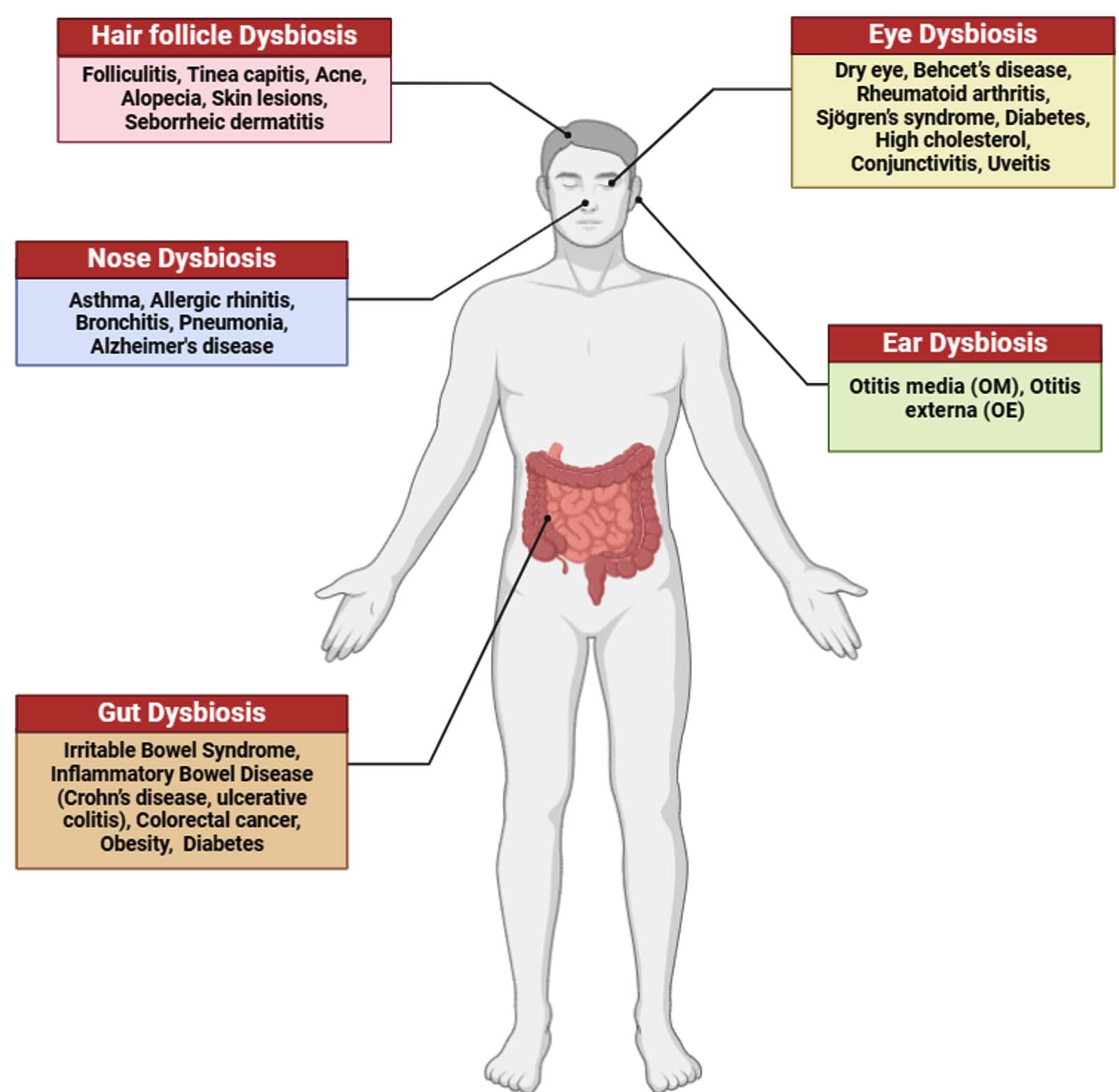
Figure 4. Common health conditions that arise due to microbial dysbiosis in different parts of the human body, specifically hair follicles, eyes, nose, ears, and gut. The interplay between the microbiota and the host’s immune system often lead to metabolic disequilibrium and inflammatory responses. Source: https://www.biorender.com/
Gaps in microbiome literacy: Present status and future in India
The present Indian school curriculum introduces students with microorganisms and their purpose; however, a more comprehensive understanding of microbiology in terms of complexity with a focus on human microbial communities, their interactions and intra-individual variations can also be included.23,170 This information will help in understanding the overall impact of microbes on human health, disease susceptibility, immune development, effects of environmental factors (antibiotics and pollutants) on the human microbiota, cancer, neurological diseases, fetal development, childhood and growth. Discussions can further be extended to include the relationship between microorganisms and non-communicable diseases such as diabetes mellitus, obesity and mental illness. Integrating microbiome literacy into the existing Indian school curriculum requires careful, phased, age appropriate and progressive approach to raise awareness based on the diverse educational landscape.15,21,23,171,172 Primary School discussions can focus more on using captivating tales, illustrations, and easy exercises to introduce fundamental ideas of microbes, emphasizing the existence of “good germs” in our bodies and in traditional foods, with a balanced emphasis on hygiene and health.173 While the Middle School exercises can describe in further detail about the various microbial communities, their function in digestion, and the influence of dietary choices with basic fermentation experiments (NEP 2020). The Senior Secondary School students can learn more about the composition and roles of the human microbiome, how it relates to different illnesses, and how antibiotics work. At higher education and further research level, current studies on the microbiome and ethical issues can be discussed by providing the potential for research projects and real-world applications in biology, microbiology, biochemistry, nutrition, public health courses and incorporating current microbiome science. The undergraduate students can use computational biology tools for microbiome analysis.174,175
A brief synopsis of applications of various microorganisms presented in the National Council of Educational Research and Training (NCERT) textbook of Science and Biology (https://ncert.nic.in/textbook.php?iesc1=0-12), which can be further extended to include microbiomes is presented below:
Microbiome in food production
In food production, the application of microorganisms extends beyond fermentation. Probiotics are healthy microorganisms embedded in fermented food products176 while inulin, the synthetic polymer, is a non-digestible food that helps these good microorganisms to grow.177,178 The presence and the amount of microbial diversity influence the safety, preservation and the nutritional value of food. Therefore, it is necessary to present details on the role of microbial populations in food flavoring and safety as well as food storage.179 In addition, the textbook can include such aspects as the influence of probiotics and prebiotics on the gut microbiome through food, which nourishes the gut microbiome.
While the NCERT book describes the ways how fermentation is employed in some foods including curd, dosa, idli and cheese, it however does not take into account the potential contribution of the microbiome in food safety and preservation aspects.180,181 In order to upgrade its content, the text book can include the importance of probiotic administration to obtain beneficial properties for the gut microbiota along with diet and dietary factors affecting gut microflora and their retention.
Microbiome in healthcare and medicine
The microorganisms are introduced as Friend and Foe in relation to the production of antibiotics in Indian science textbooks (NCERT Science – Class 8 Chapter 2: Microorganisms: Friend and Foe; NCERT Biology – Class 12, Chapter 10: Microbes in Human Welfare). These books discuss how microbes are used in household products, industrial products, biogas production, biocontrol agents and biofertilizers. However, it does not discuss the wider role of the human microbiome in maintaining sound physical and mental health. Teaching about microbiomes shall give students a broader understanding of how essentially microbes affect overall human health.5 The gut microbiome during digestion breaks down the carbohydrates, proteins and fats through various processes to essential nutrient elements which get absorbed to be used as building blocks for the human body and overall human health.182 The human microbiome helps in distinguishing between harmful bacteria and beneficial microorganisms to prevent autoimmune diseases. A balanced microbiome protects against pathogens causing infections and gastrointestinal disorders.183 It is also important to understand that microbiome imbalance is associated with a variety of conditions, including inflammatory bowel disease, constipation, obesity, anxiety, depression and even mental illness.184,185 Medical treatments like Fecal microbial transplantation (FMT) are used in which fecal matter from a healthy donor is transferred to the stomach of a patient with a variety of serious illnesses to revitalise the gut microbiome. FMT has shown efficacy in conditions such as Clostridium difficile infection and may hold promise for other related bacterial infections.186 Thus, teaching microbiomes by different school programs shall help students understand the role played by microorganisms in maintaining a good physical and mental health.
Microbiome in sewage treatment
The NCERT textbook mentions heterotrophic microbes but does not discuss details about the diverse microbial communities involved (Class 12 biology textbook-Chapter 10, section 10.3: Microbes in Sewage Treatment). The biodiversity of wastewater organisms, including bacteria, archaea, and fungi, needs to be highlighted to better understand their specific role in breakdown of organic matter, pollutants and sewage.187 Moreover, the curriculum should include information on emerging microbial technology, which uses bacteria to convert wastewater organic matter into electricity, like microbial fuel cells (MFCs) as well as bio-electrochemical systems for nutrient recovery.188-191
Microbiome in environmental welfare
Environmental microbiomes comprise of soil microbes which contribute to nutrient cycling and plant health, while aquatic microbes play a role in water quality. Recent advances in microbial research, including metagenomics, have changed our understanding of microbe groups, opening the way for new applications in bioremediation and sustainable agriculture.192-194 The concept of the environment microbiomes should be introduced in the textbook, emphasizing their important role of nutrient cycling, soil fertility, and litter decomposition.
Microbiome in agriculture
The synergy between soil microorganisms and plants is vital in determining the development, growth, resilience and overall health of crops against biotic and abiotic stress. It is important to revisit the basics and learn the cooperation of plants and soil microbiomes for sustainable agriculture practices.195-198 Facilitating soil properties for nitrogen-fixing bacteria, phosphate-solubilizing microorganisms, etc., can help to increase crop yields as well as reduce the use of synthetic fertilizers that might be environmentally damaging.199 Some microbial communities also improve nutrient availability, enhance resistance against diseases and help plants tolerate drought conditions in various crops. Microbial based strategies are being used to restore the health of soil by reintroducing microbial communities that have been depleted due to intensive farming.38 As we expand our understanding of plants and soil microbes, these insights can lead to more efficient and environmentally friendly agricultural systems, meeting global challenges such as food security and environmental issues managing environmental pollution. The application of these microbial-driven approaches or plant microbiome research would align with wider initiatives (second green revolution) aimed at shifting towards sustainable agriculture.200,201 Hence, inclusion of such concepts is equally important in science textbooks to highlight the importance of plant microbiomes.
Microbiome research and future applications
Future applications of microbial research could include advanced personalized medicine driven by microbiome data,202 improving agricultural productivity through optimizing plant-microbial interactions and understanding plant microbiomes,203 and promoting environmental sustainability through microbial technology to reduce pollution for waste management.204,205 Current research is already focusing on developing personalized treatments that consider an individual’s microbiome composition,206 offering more effective therapies for various diseases, including metabolic disorders and cancers.206,207 This growing body of work lays the foundation for transformative advances in many areas and include techniques like fecal microbiota transplantation (FMT), engineered microbial consortia, probiotics and other microbiome-based therapies.208,209
There are various pedagogical opportunities for enhancing microbiome education. Integrating real-world examples can make microbial concepts more relevant and interesting to students. To improve future editions of the textbook, various modifications can be made, for example, a separate section on role of human microbiome in health and medicine can be added in NCERT Class 12 Biology chapter “Microbes in Human Welfare”. A chapter devoted to the human microbiome should thoroughly discuss its diversity, function, and significance. Real-world case studies and models can illustrate the impact of microorganisms on human health and the environment. Incorporating recent research findings and emerging resources into microbiology research will keep the content relevant, while providing interactive and engaging features such as quizzes, visuals and graphical activities can enhance student engagement and understanding. By addressing these gaps and incorporating suggested improvements, future NCERT textbooks can provide students with a comprehensive understanding of microorganisms and microbiomes as well as their relevance in our daily lives.21,210
Indian initiatives towards promoting microbial and microbiome literacy
Advancements over the past two decades in microscopy and sequencing techniques with algorithms and data analysis have generated huge database resources for applied research. Limitations still exist to classify and characterize the unculturable diversity. However, novel culture-free techniques have provided advanced ecological understandings of unknown phylogenies.211,212 Considering the impact of microbes on our well-being and bioeconomy, a global school literacy program International Microbiology Literacy Initiative (IMiLI), has been launched.23,210 The program aims to generate a teaching topic framework on various topics of microbial literacy for the school curriculum by integrating learning resources, experiments, and excursions.213 In alignment with the global initiative to promote microbiome literacy, several Indian schools have implemented programs focused on community-relevant microbial activities. These initiatives aim to educate students about the impact of microorganisms on the environment and explore ways to harness their potential for environmental benefits (https://imili.org/concept). The Department of Biotechnology, Government of India promotes innovation through its “Microbial and Natural Science Programme”, which supports advanced biotech research in basic and translational studies. The program aims to promote knowledge and innovation in microbial and natural sciences, addressing key challenges in biotechnology. This program focuses on the use of basic research to understand interactions with their environment, and translate scientific discoveries into practical outcomes like development of eco-science tools, novel technologies and bioprocesses that boost economic growth, improve human health, and promote environmental sustainability (https://dbtindia.gov.in/ microbial-and-natural-sciences). The key areas include Terrestrial Ecology and Bioprocesses, the integration of Biotechnology with Indian Traditional Medicine, Marine-resource Technologies, and Post-Harvest and Food Processing Technologies. The aim is to promote environmentally friendly utilization of biological resources while gaining a comprehensive understanding of their mechanisms and ecological interactions. National-level microbial repositories, National Centre for Microbial Resource (NCMR, http://ncmr.nccs.res.in/ncmr/home) have been curated for bioprospecting purposes and biotechnological assessments. Several community outreach programs are conducted for researchers, the agriculture sector, and women empowerment (https://dbtindia.gov.in/publications). India’s National Biotechnology Development Strategy (NBDS) for 2021-2025 aims to foster a knowledge-driven bioeconomy through innovation and social responsibility. To achieve broader outreach, the strategy emphasizes integrating biotechnology resources and opportunities into school education, complementing existing undergraduate, postgraduate, and doctoral research programs. This integration will promote societal growth and career guidance among students. To realize this vision, the Department of Biotechnology will establish DNA Clubs, or Natural Resource Awareness clubs, in aspirational districts’ schools, catering to grades 6-10. These clubs will provide hands-on science education and training for teachers and students through practical instruction in basic science programs (https://dbtindia.gov.in/sites/default/files/NBDS_March%202021.pdf).
A notable example of this initiative is the DBT-Foldscope Programme, which has successfully introduced an ultra-affordable paper microscope to over 400 schools nationwide. Through workshops and training, the program encourages research, scientific curiosity among students and educators, paving the way for future generations who are not only ‘microbial’ literates but also ‘microbiome’ literates (https://www.biotech.co.in/en/dbt-foldscope-programme). India’s 2017 National Health Policy (NHP) emphasized the importance of school health programs, aiming to integrate health and hygiene into the curriculum. The program expands reproductive and sexual health education to include nutrition, calorie consumption and psychological well-being. In addition, it recommends upgrading traditional medicine and yoga through the ministry of AYUSH (Ayurveda, Yoga & Naturopathy, Unani, Siddha, Homeopathy), as well as ensuring quality infrastructure development and building workforce capacity.214 Introducing microbial and microbiome knowledge into classrooms aligns with these objectives by fostering a comprehensive understanding of health and wellness. By incorporating microbiome literacy, students can acquire essential skills for preventive and promotive healthcare, ultimately contributing to the establishment of a healthier society.
Integrating microbiology into the curriculum offers many benefits. First, it helps students understand the interactions between microbial communities and their impact on life, health, and the environment. Second, they gain a comprehensive view of how microbes impact health, food production, and sustainability. Additionally, a strong foundation in biology will enable students to choose their wellness skills appropriately. They will also be well-equipped for the future, ready to embrace the scientific and medical advances that result from ongoing microbiological research. Ultimately, this will empower students with the knowledge of how their microbial allies shape their health and future.20,215-217 This “microbial compass” exemplifies how understanding our microbiome can serve as a guide for what students need to live healthier, more sustainable lives and have an even greater connection with the nature around them.
Suggested discussions and exercises to study microbiomes in the classroom
Human microbiome studies are often abstract, making it challenging for students to understand different microbial processes and their effects on the human body. The integration of visual aids such as detailed drawings, schematic diagrams, flowcharts and concept maps helps students to relate to the concepts of complex microbial interactions.218,219 However, visualization alone is not sufficient for deep learning. Encouraging critical thinking through discussions (Figure 5) and exercises (Figure 6) fosters analytical reasoning and scientific inquiry, further strengthening the understanding of microbiomes.220 Educators can also plan lessons and experiments to help students appreciate various human microbiomes (Table 3). Following a thorough explanation of the fundamentals of microbiome concepts, the learning process can be improved by combining the concepts of microbial biology with chemistry, environmental sciences, and social sciences. This integrative approach will not only deepen content mastery but also cultivate the ability to apply microbial thinking to real-life challenges such as pandemics. Therefore, combining visual aids, critical inquiry, and interdisciplinary learning creates a dynamic, holistic educational model that empowers students to engage deeply with the microbial world.
Table (3): Suggested lessons and experiments to understand human microbiome
S. No. |
Experiments/Investigative Question/Lesson |
Student Activities |
Learning Objectives/Outcomes |
|---|---|---|---|
1. |
To understand scalp microbiome |
Isolation and visualization of microbes found in dandruff by isolating microbial colonies from hair samples, culturing them using streak plate technique followed by gram-staining. |
To help students understand the use of basic cell and molecular biology techniques used in microbiome studies. |
2. |
To reinforce understanding of ear microbiome among students |
a) Classroom activity such as crossword puzzles and quizzes on key concepts, terms involving the ear and microbial population forming the ecology of ear.
b) Student led survey designed to explore ear hygiene practices among peers that involves data collection on practices such as frequency of ear cleaning, methods of ear cleaning, frequency of earbud usage, awareness of cerumen function and history of ear infection followed by data analysis. |
a) To help students recall foundational knowledge about microbial diversity, anatomical features of the ear, and the beneficial roles microbes play in maintaining ear health. b) To enable students to identify trends or patterns, such as whether those who frequently use earbuds report more cases of ear irritation, or if excessive cleaning correlates with ear infections, encouraging them to think critically about how daily habits may influence the balance of microbial communities in the ear. |
3. |
To foster curiosity and analytical thinking among students, related to the ocular microbiome. |
Exploring whether contact lens wearers have a distinct microbial profile compared to non-wearers. |
To enable students to formulate scientific questions about the microbial diversity of ocular microbiome and appreciate the changes in the microbiome profile accompanied with certain habits like wearing contact lenses. |
4. |
To understand oral microbiome, specifically its role in maintaining oral health. |
Modelling of microorganisms found in the oral cavity in 3-D using colorful play dough. Free and open source digital tools such as Blender (https://www.blender.org/) and Tinkercad (https://www.tinkercad.com/) can be used for virtual model creation, or paper, markers, and colored pencils for 2D models can also be incorporated in this exercise. |
To help students learn more effectively by allowing them to express themselves creatively while also enabling them to understand various microbial interactions in the oral cavity. |
5. |
To study the effect of antibiotics on gut microbiome. |
Non-pathogenic bacteria commonly found in the gut can be grown on nutrient agar plates followed by placing different antibiotic discs on the culture plate (disc-diffusion assay). After this, students can observe zones of inhibition and can perform comparative analysis of results. Furthermore, discussion on different mechanisms of antibiotic action and their effect of gut microbiome can be done to add on to the existing knowledge of students. |
To enable students to connect this activity to real world issues such as rise in antibiotic resistance strains and understand the importance of proper use of antibiotics in clinical settings. |
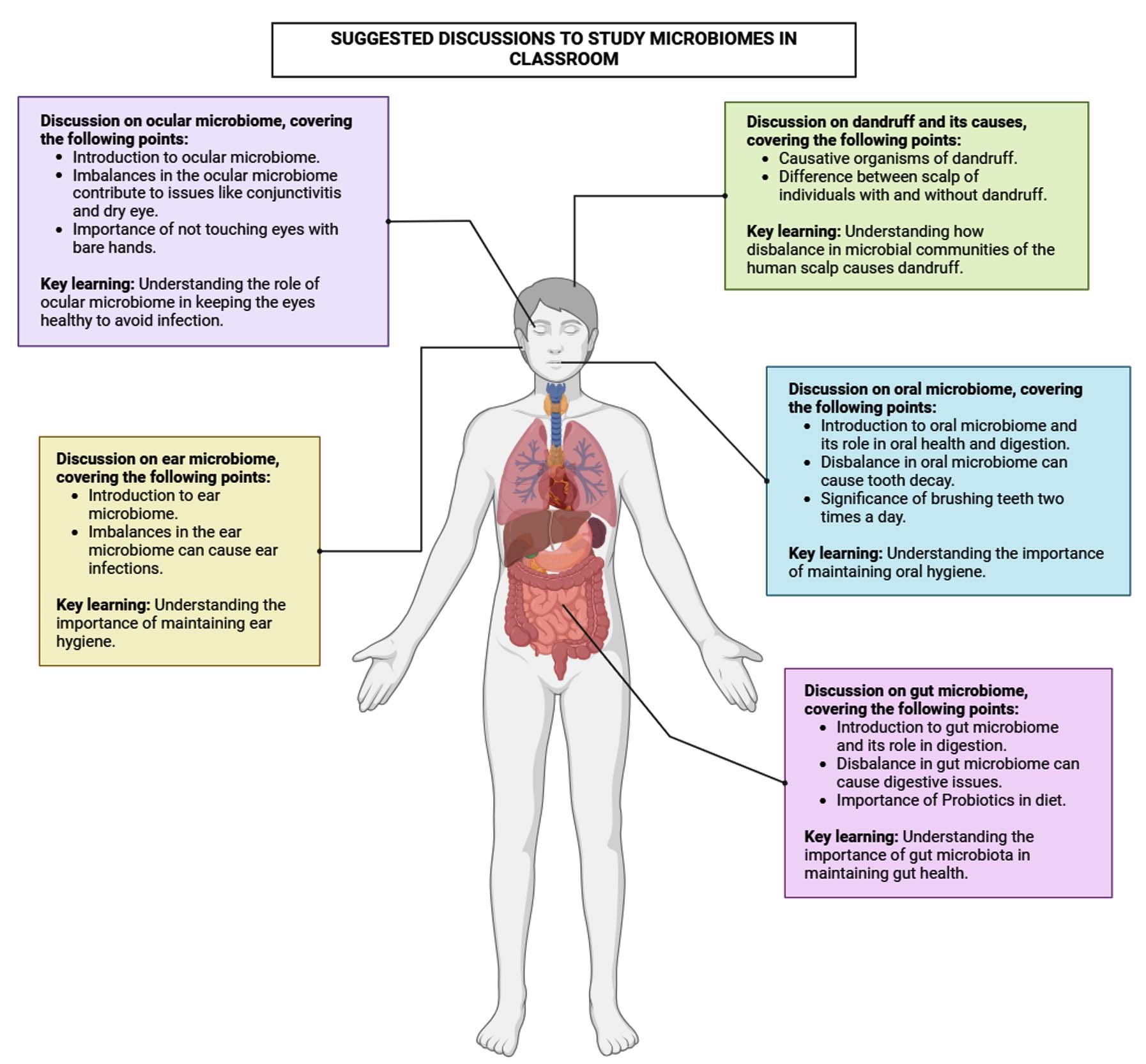
Figure 5. Suggested discussions to study microbiomes in classroom. Different multimedia aids can be used to introduce and educate on the causes and prevention strategies. These may also encourage general hygiene practices among students. Source: https://www.biorender.com/
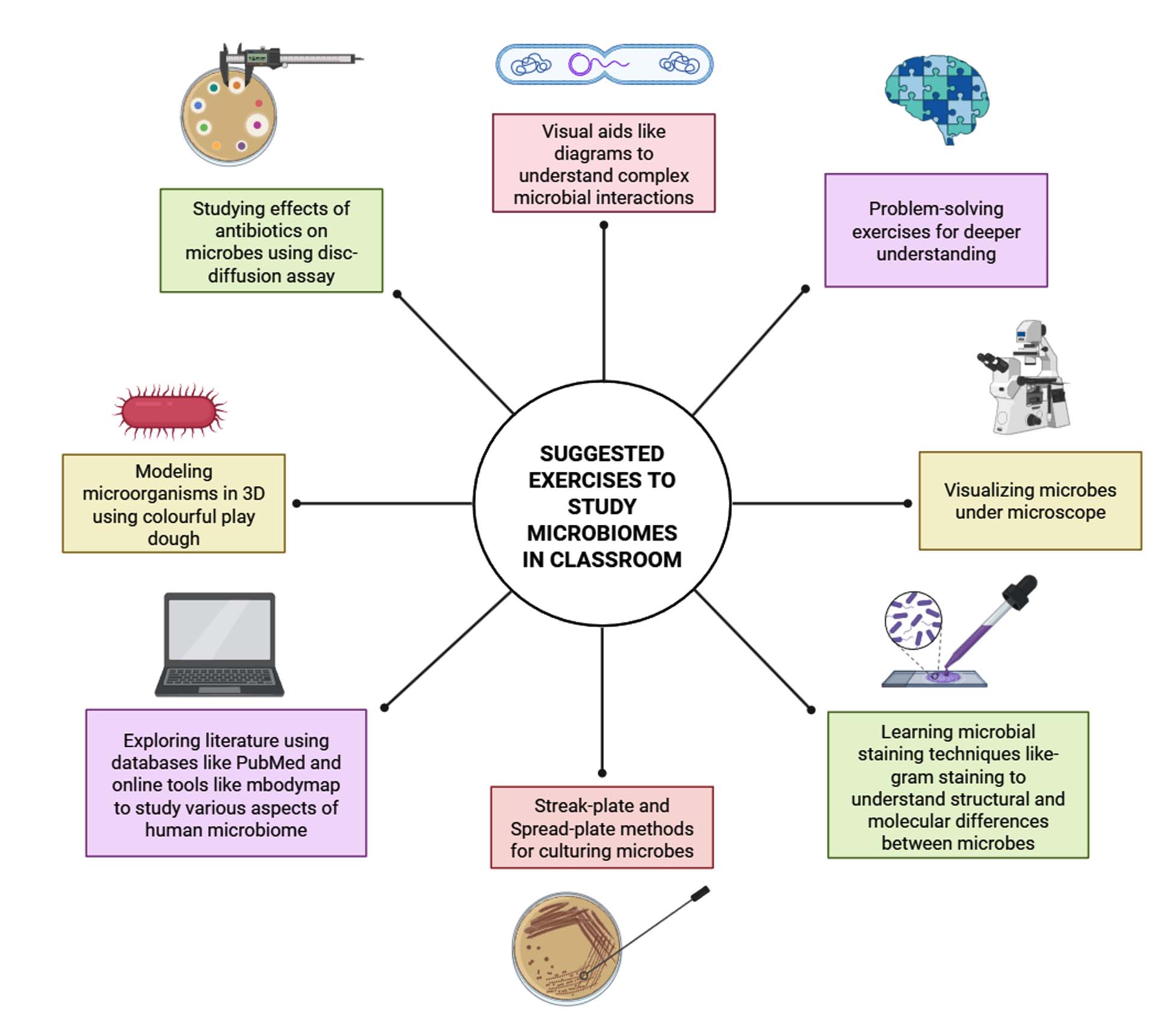
Figure 6. A few probable exercises to study microbiomes in classroom. These include both offline and online classroom exercises to introduce the importance of different anatomical microbiomes of human body and their associated dysbiosis. Source: https://www.biorender.com/
Importance of bioinformatics tools to study human microbiomes
Using bioinformatics tools at the undergraduate level can augment educational value, especially when dealing with complex topics like human microbiome.221 The microbiome of humans harbors a variety of microorganisms. Bioinformatics tools allow students to explore real-world microbiome data, such as identifying which microbes are present in different parts of the body and what their roles are.222,223 Therefore, they begin to understand how researchers make sense of the invisible microbial world. Instead of just reading about the microbiome in textbooks, students can see how microbiome data is collected, analyzed and turned into meaningful conclusions. For example, initiatives like the PUMAA project (Platform for Accessible Microbiome Analysis),224 Microbiomes for All initiative, supported by the American Society for Microbiology (ASM) help in promoting microbiome literacy to students in an easy, creative and interactive manner.225
Some simple web-based tools that can be easily used by teachers and students at the undergraduate and even at Senior Secondary level to gain critical insight and understanding about various aspects of the human microbiome.226 Here, we present a step-through approach for two such open access tools: HMDAD (Human microbe-disease association database)227 and AMADIS228: A Comprehensive Database for Association Between Microbiota and Disease for developing an understanding about human microbiome.
(A) Use of HMDAD (Human microbe–disease association database)
Procedure for Exercise 1
- Go to the website- http://www.cuilab.cn/hmdad
- Click on browse (given on the top row).
- Two icons will appear- diseases and microbes.
- Click on Diseases.
- A list of diseases will be displayed.
- Click on Cystic fibrosis.
- It will display the number of microorganisms affected by the disease along with their status in the disease condition.
Based on the exercise above, it can be inferred that microbes-Burkholderia, Coxiellaceae, Lactobacillus, Lysobacter, Rickettsiales, Staphylococcus aureus, Stenotrophomonas maltophilia, Streptococcus mitis and Xanthomonas are associated with cystic fibrosis. While the incidence of all the other bacteria listed rises during cystic fibrosis, the prevalence of Streptococcus mitis alone decreases in the human body (Figures 7 and 8).
Procedure for Exercise 2
- Go to the website- http://www.cuilab.cn/hmdad
- Click on browse (given on the top row)
- Two icons will appear- diseases and microbes.
- Click on microbes.
- A list of microbes will be displayed.
- Click on Shigella.
- It will display by which disease condition it is affected and its status in different disease conditions.
Based on the exercise above, it can be concluded that Shigella is linked to type 1 diabetes mellitus and that its prevalence rises in people with type 1 diabetes.
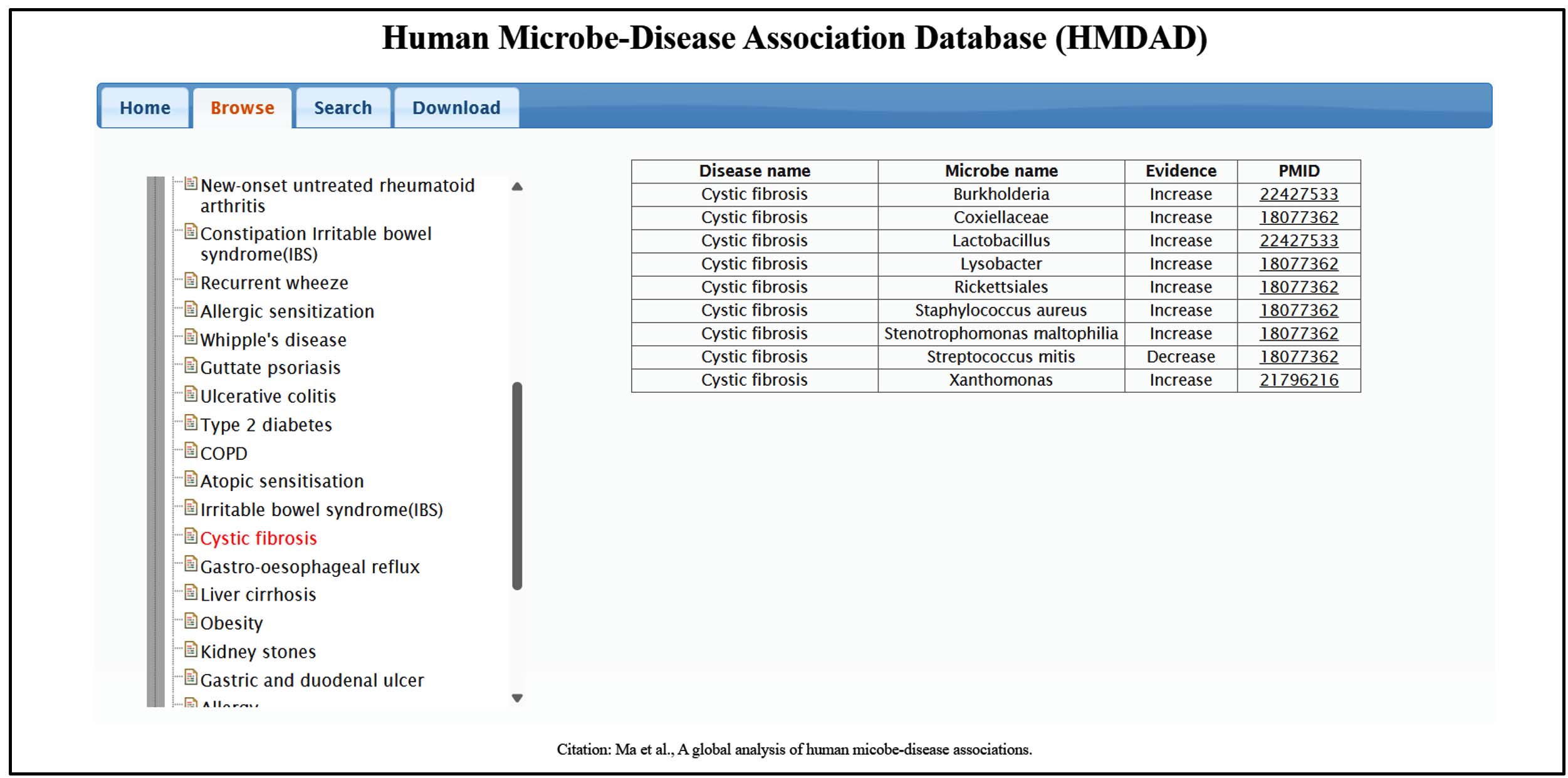
Figure 7. Screenshot of the homepage of the Human Microbe-Disease Association Database (HMDAD), showing its user interface and available features for exploring microbe–disease associations. Source: http://www.cuilab.cn/hmdad
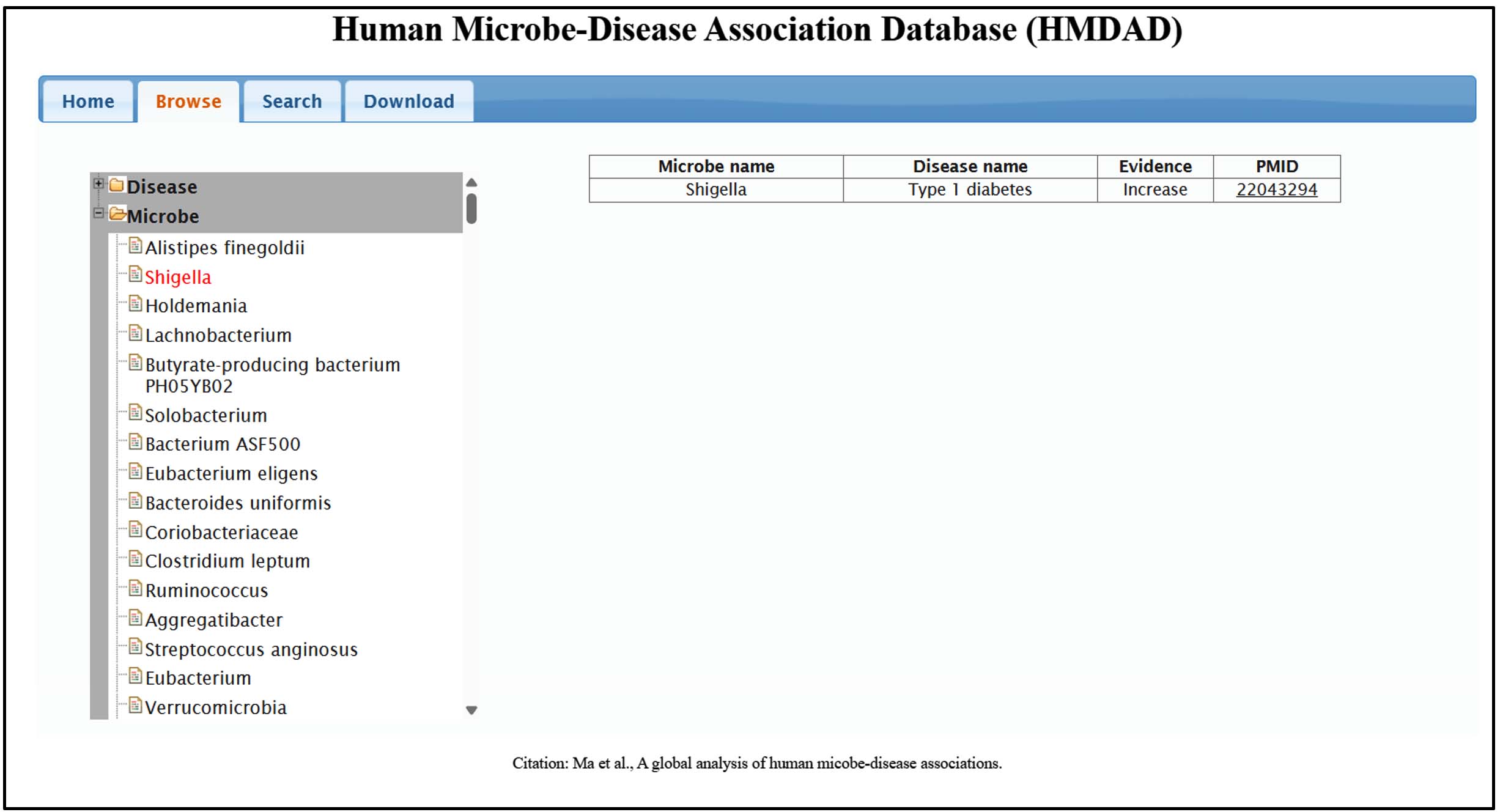
Figure 8. Screenshot showing user interface of the Human Microbe-Disease Association Database (HMDAD) displaying curated associations of the microbe Shigella with human disease. Source: http://www.cuilab.cn/hmdad
(B) Use of AMADIS: A Comprehensive Database for Association Between Microbiota and Disease
Procedure for Exercise 1:
- Go to the website- https://gift2disease.net/GIFTED/network.jsp
- Click on browse (given on the top row).
- Five options will appear- Gut Microbiota, Diseases, Sample type, System and Mechanism
- Click on Diseases.
- A list of diseases will be displayed.
- Click on Alzheimer’s Disease.
- It will display the number of microorganisms affected by the disease along with other information such as sample type, omics, mechanisms, genes and more complete details to enrich your query results.
So, using this simple exercise, students will be able to visualize the microbial composition in a disease state like Alzheimer’s Disease. In the same way, this exercise can be used to explore microbes affected by diseases and their details during the disease (Figures 9, 10 and 11).
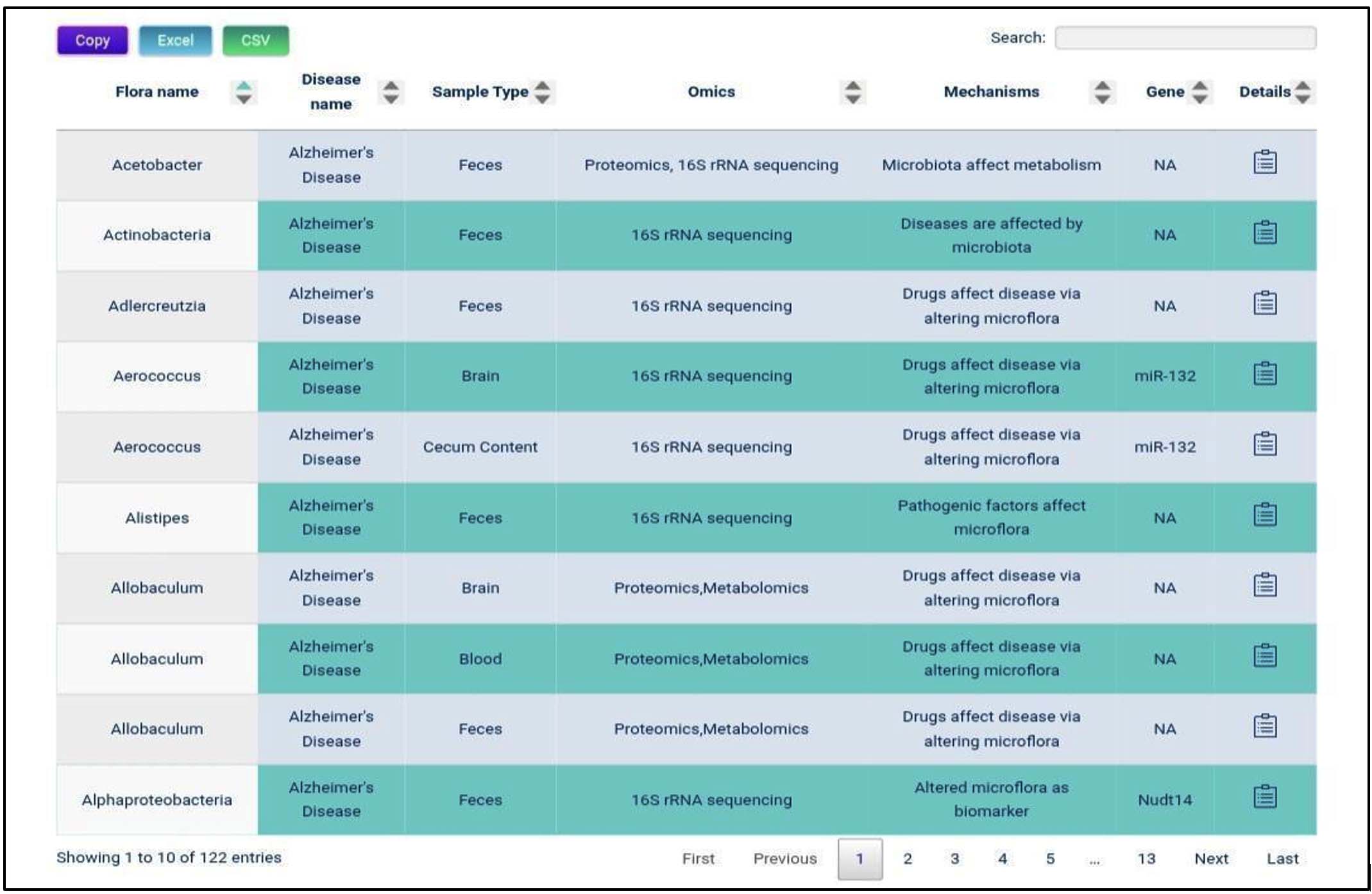
Figure 9. Screenshot depicting the AMADIS: A Comprehensive Database for Association Between Microbiota and Disease. Source: https://gift2disease.net/GIFTED/network.jsp
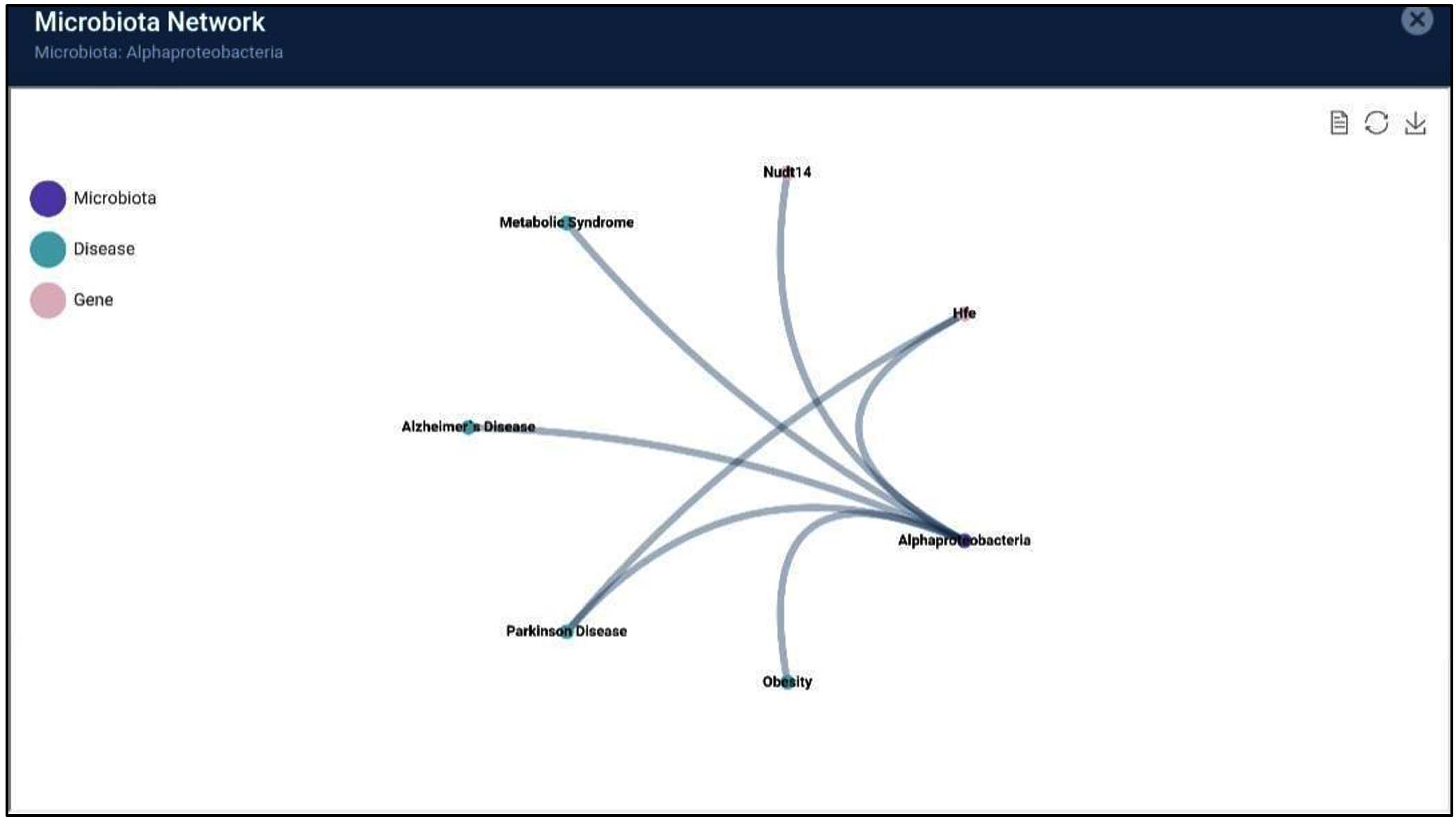
Figure 10. Network view from the HMDAD showing associations of Alphaproteobacteria with diseases and related genes. Source: https://gift2disease.net/GIFTED/network.jsp
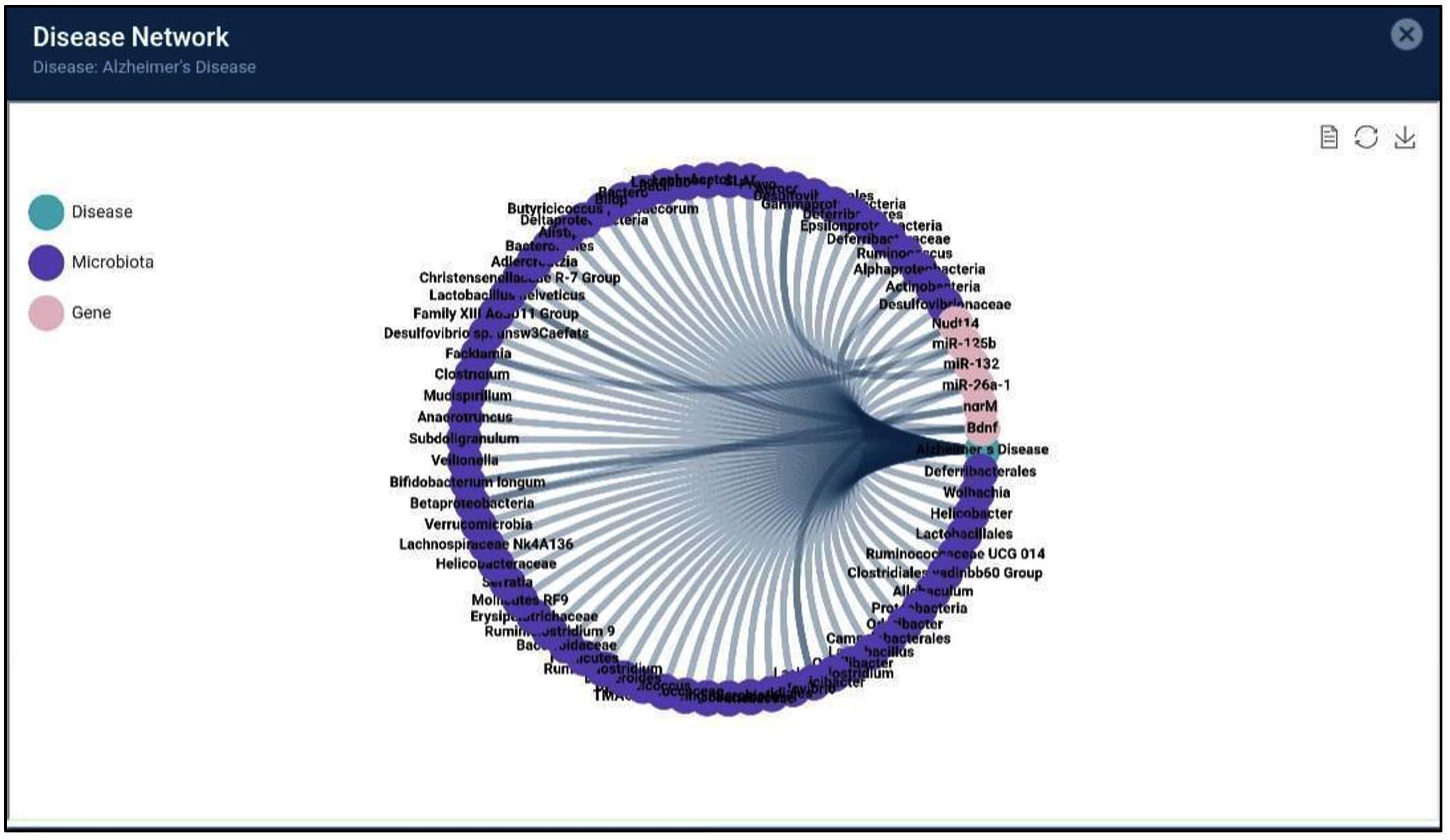
Figure 11. Disease network from the HMDAD depicting associations between Alzheimer’s disease, multiple microbiota, and related genes. (Source: https://gift2disease.net/GIFTED/network.jsp)
In addition to these tools, a list of other useful tools and databases to study microbiomes is given in Table 4. These tools have an easy user interface and can be easily accessed and used by educators and students in the classroom easily using desktops, laptops or even smartphones.
Table (4): List of databases and tools to study the human microbiome
S.No. |
Name of the Tool |
Description |
URL |
Ref. |
|---|---|---|---|---|
1. |
mBodyMap |
It is an open source, curated database for a comprehensive compilation of microbes found in association with the human body and their possible link with health and diseases. |
https://mbodymap.microbiome.cloud/ |
229 |
2. |
Disbiome |
Disbiome is maintained by Ghent University and covers changes in the microbial composition of various disorders. You can use disease names, detection techniques, or organism names as search queries to find all the information you need for the experiment, including related disease/bacteria, abundance subject/control, control type, detection technique, and other relevant data. |
https://disbiome.ugent.be/ |
230 |
3. |
HMDAD (Human microbe–disease association database) |
Human microbe-disease association data from microbiota research was gathered and organized by the Human Microbe-Disease Association Database (HMDAD). Users are currently able to browse and search the database. |
http://www.cuilab.cn/hmdad |
227 |
4. |
MiMeDB (The Human Microbial Metabolome Database) |
It is a comprehensive, multi-omic, microbiome resource that links: (i) microbes to microbial genomes; (ii) microbial genomes to microbial metabolites; (iii) microbial metabolites to the human exposome and (iv) all of these to human health. In order to compile the increasing amount of information linking the human microbiome and the compounds that it produces to both health and disease, MiMeDB was created. |
https://mimedb.org/ |
231 |
5. |
MicroPhenoDB |
Microbe-disease association data is manually curated in MicroPhenoDB. Covering more than 22 human body locations, MicroPhenoDB offers 5677 non-redundant correlations between 1781 microorganisms and 542 human disease phenotypes. |
http://www.liwzlab.cn/microphenodb |
232 |
6. |
GMrepo v2 (data repository for Gut Microbiota) |
The Gut Microbiota Data Repository (GMrepo) is a library of human gut metagenomes that have been carefully curated and regularly annotated. Facilitating the reusability and availability of the rapidly expanding human metagenomic data is its primary goal. |
https://gmrepo.humangut.info/ |
233 |
7. |
HOMD (Human Oral Microbiome Database) |
Comprehensive, carefully curated information about bacteria in the human mouth and aerodigestive tract is available on HOMD. Of the 834 taxa in the database, 523 are primarily oral and 22 primarily nasal. |
http://www.homd.org |
234 |
8. |
AMADIS: A Comprehensive Database for Association Between Microbiota and Disease |
AMADIS is a comprehensive database for the association between microbiota and disease and offers thorough experimentally substantiated connections between human diseases and the gastrointestinal flora, with 774 microbiota, 221 diseases and 20,167 associations. |
https://gift2disease.net/GIFTED/network.jsp |
228 |
9. |
GMrepo |
GMrepo is a curated database of human gut metagenomes and contains 71,642 human gut runs/samples from 353 projects and they are associated with 132 human phenotypes. |
https://gmrepo.humangut.info/home |
233 |
10. |
MicrobiomeDB |
MicrobiomeDB is a microbiome data mining platform. It is a robust platform for data discovery and analysis, made specifically for analyzing microbiome datasets. |
https://microbiomedb.org/mbio/app |
235 |
The growing importance of microbiome research has been witnessed in various important applications including disease diagnosis, therapeutics like drug designing, and environment sustainability (waste management). Several microbiome-based studies have demonstrated significant improved diagnosis of chronic and infectious diseases by identifying potent biomarkers or microbial signatures.236 This in turn has opened new avenues for new and improved methods of targeted drug design and therapies driven by pharmacomicrobiomics and engineered microbes.237 Further, microbiome data has provided promising solutions for waste management for environment sustainability.238 Interestingly, ‘built-environment’ microbiomes like hospitals and crime scenes can give important clues about infection control, AMR as well as forensic applications respectively.239,240 Given the importance of microbiomes, it becomes imperative to provide complete understanding of microbiomes of humans and other organisms to the students at school level. As discussed by Schweitzer et al., we also emphasize the importance of inclusion of microbiome studies in school education.21 Hence, it is desirable that microbial as well as microbiome literacy becomes an important component of school curriculum. As emphasized by Timmis et al., and Timmis, microbiology education is critical to enable students to gain key insights about the functioning of organisms and their vital processes.23,210 Also, microbial activities are essential for the promotion of global wellbeing. The new and improved technologies and bioprocesses require an understanding about microbes and microbial interactions among them as well as their environment and host. These dynamics form an integral component of microbiome studies. However, adolescents have limited microbiome awareness and lack of updated curriculum to discuss microbiome in classrooms.241
To address the existing gaps in academic knowledge about microbiomes, different initiatives have been done. For example, the microbiome-related educational needs in food systems have been discussed by Olmo et al.242 These studies have also helped in clearing out the misconceptions about microbes being only pathogenic in nature. At present, the Indian current school science curriculum includes microbiology and its applications in alignment with objectives of NEP 2020 has also advocated the addition of microbiology in undergraduate curriculum, but the holistic concept of microbiome has not been emphasized. The pressing need to include microbiome education in the curriculum and biology textbooks has been witnessed through international initiatives like International Microbiology Literacy Initiative (IMiLI), which provides free teaching resources to learn about microbiology and microbiome. Microbiome literacy has direct implications for public health and environmental sustainability. It helps us to understand and combat the growing concern of AMR or multidrug-resistance (MDR). To summarise, the present study presents the scope of adding microbiome related topics in the existing curriculum and textbooks at the school level with some suggested classroom exercises which can be effectively implemented.
For biology educators, microbiome literacy is a critical necessity and a recent demand in pedagogical approach. The latest scientific innovations including personalized medical care, microbial forensics, and drug and vaccine development require the understanding of microbiomes. This will strengthen the understanding of students for key topics including health, hygiene, immunity, nutrition, drug development, environment sustainability. In the present study, the analysis of existing academic curricula and the standard NCERT biology textbooks of grade 9 to 12 was done to find out knowledge gaps and areas lacking integration with recent microbiome research findings. We found that although the microbial world is introduced at these academic grades, the concept and importance of microbiomes of humans and other organisms and their interaction with the environment is fragmented and needs to be updated with contemporary scientific evidence or reports. The proposed integration of microbiome literacy framework in school curricula aims to provide increased microbial awareness using suggested classroom activities, low-cost laboratory activities and discussions. The discussions can include real world examples and case studies like linkage of gut health and diet, excessive use of antibiotics, etc. This will help to understand the intricate relationships of microbiomes with antimicrobial resistance (AMR), lifestyle diseases, and One Health perspectives at the senior secondary level. This will also enable students to understand and differentiate between microbial and microbiome literacy as well as the intricate relationship between them. We propose the shift from ‘microbes as friends or foes’ towards ‘microbiomes as dynamic ecological systems’ in the existing curriculum.
These activities can use the existing exercises aimed at understanding the microbial world with an added extension on microbiome studies for a holistic teaching-learning process. Also, the curriculum mapping with existing themes or core topics on microbes has been suggested in the present study to align the content on microbes such as microbial diversity, pathogenic microbes, and industrial applications with recent advances on microbiomes, host–microbe interactions, and ecological significance. The educators can be trained for usage of databases and bioinformatic tools to allow an easy integration of microbes and microbiome discussions in the classrooms. However, the study has some limitations as it proposes a theoretical curriculum framework for promoting microbiome literacy in Indian school education. It does not include any classroom data or feedback analysis from the stakeholders-students and educators or teachers, hence effectiveness of the proposed changes are required to be tested. Further, we have screened the central board textbook only, thus disparity in the syllabus content of different education boards across India (State and Central Boards) may present challenges or bottlenecks for integration or implementation of microbiome studies. Lastly, differences in classroom settings and school facilities at urban and rural areas will require careful and strategic planning before implementation. To conclude, we have highlighted the need to integrate microbiomes in the microbial world and to include microbiome literacy in the school curriculum.
ACKNOWLEDGMENTS
The authors acknowledge the Principal, Maitreyi College, and Principal, Miranda House, Delhi University, India, for their administrative, logistic support and institutional permissions to conduct the study.
CONFLICT OF INTEREST
The authors declare that there is no conflict of interest.
AUTHORS’ CONTRIBUTION
JK conceptualized the study. JK, SB, NV, SS, VR and SJ performed literature review. JK wrote the original draft. NV, VR and SS preparation of figures. SB, NV, SS, VR and SJ wrote the manuscript. JK, SB, NV, SS, VR and SJ revised the manuscript. All authors read and approved the final manuscript for publication.
FUNDING
None.
DATA AVAILABILITY
All datasets generated or analyzed during this study are included in the manuscript.
ETHICS STATEMENT
Not applicable.
- Aggarwal N, Kitano S, Puah GRY, Kittelmann S, Hwang IY, Chang MW. Microbiome and human health: current understanding, engineering, and enabling technologies. Chem Rev. 2023;123(1):31-72.
Crossref - Dekaboruah E, Suryavanshi MV, Chettri D, Verma AK. Human microbiome: an academic update on human body site specific surveillance and its possible role. Arch Microbiol. 2020;202(8):2147-2167.
Crossref - Hou K, Wu ZX, Chen XY, et al. Microbiota in health and diseases. Sig Transduct Target Ther. 2022;7:135.
Crossref - Ramirez J, Guarner F, Fernandez LB, Maruy A, Sdepanian VL, Cohen H. Antibiotics as major disruptors of gut microbiota. Front Cell Infect Microbiol. 2020;10:572912.
Crossref - Abt MC, Osborne LC, Monticelli LA, et al. Commensal bacteria calibrate the activation threshold of innate antiviral immunity. Immunity. 2012;37(1):158-170.
Crossref - John HT, Thomas TC, Chukwuebuka EC, et al. The microbiota–human health axis. Microorganisms. 2025;13(4):948.
Crossref - Ma Z, Zuo T, Frey N, et al. A systematic framework for understanding the microbiome in human health and disease: from basic principles to clinical translation. Signal Transduct Target Ther. 2024;9(1):237.
Crossref - Cunningham-Oakes E, Price V, Mphasa M, et al. Quantifying the bystander effect of antimicrobial use on the gut microbiome and resistome in Malawian adults. Nat Commun. 2026;17(1):954.
Crossref - Fri J, Raphalalani M, Mavhandu-Ramarumo LG, Bessong PO. Exploring the potential influence of the human gut microbiota on the gut resistome: a systematic review. Microbiol Res. 2024;15(3):1616-1633.
Crossref - Deshpande SP, Sujith S, Jobby R, Rajasekharan SK, Ravichandran V, Solomon AP. The gut microbiome: an emerging epicenter of antimicrobial resistance? Front Microbiol. 2025;16:1593065.
Crossref - Sharma I, Sudarsanan D, Moonah S. The gut microbiome as a major source of drug-resistant infections: emerging strategies to decolonize and target the gut reservoir. Front Cell Infect Microbiol. 2025;15:1692582.
Crossref - Teo SM, Mok D, Pham K, et al. The infant nasopharyngeal microbiome impacts severity of lower respiratory infection and risk of asthma development. Cell Host Microbe. 2015;17(5):704-715.
Crossref - Li D, Gao C, Zhang F, Yang R, Lan C, Ma Y, Wang J. Seven facts and five initiatives for gut microbiome research. Protein Cell. 2020;11(6):391-400.
Crossref - Berg G, Rybakova D, Fischer D, et al. Microbiome definition re-visited: old concepts and new challenges. Microbiome. 2020;8(1):103.
Crossref - Ministry of Education, Government of India. National education policy 2020. Published 2020. Accessed September 17, 2025. https://www.education.gov.in/sites/upload_files/mhrd/files/NEP_Final_English_0.pdf
- Cho I, Blaser MJ. The human microbiome: at the interface of health and disease. Nat Rev Genet. 2012;13(4):260-270.
Crossref - Porras AM, Brito IL. The internationalization of human microbiome research. Current Opinion in Microbiology. 2019;50:50-55.
Crossref - Abdill RJ, Adamowicz EM, Blekhman R. Public human microbiome data are dominated by highly developed countries. PLoS Biol. 2022;20(2):e3001536.
Crossref - Indian Biological Data Centre (IBDC). Department of Biotechnology (DBT), Ministry of Science and Technology, Government of India. Indian Human Microbiome Initiative. https://ibdc.dbtindia.gov.in. Accessed on February 10, 2026
- Amorim L, Santos C, Timmis K. Prioritising microbiology in secondary education addresses emerging scientific-social-educational challenges and competency needs. Microb Biotechnol. 2025;18(9):e70224.
Crossref - Schweitzer M, Wassermann B, Abdelfattah A, Cernava T, Berg G. Microbiome literacy: enhancing public and academic understanding through the “Microbiome & Health” online course. Microb Biotechnol. 2025;18(2):e70094.
Crossref - Schelkle B, Galland Q. Microbiome research: open communication today, microbiome applications in the future. Microorganisms. 2020;8(12):1960.
Crossref - Timmis K, Cavicchioli R, Garcia JL, et al. The urgent need for microbiology literacy in society. Environ Microbiol. 2019;21(5):1513-1528.
Crossref - Santajit S, Indrawattana N. Mechanisms of antimicrobial resistance in ESKAPE pathogens. Biomed Res Int. 2016;2016:2475067.
Crossref - Kumar R, Sood U, Kaur J, et al. The rising dominance of microbiology: what to expect in the next 15 years? Microb Biotechnol. 2022;15(1):110-128.
Crossref - Nutbeam D, Lloyd JE. Understanding and responding to health literacy as a social determinant of health. Annu Rev Public Health. 2021;42(1):159-173.
Crossref - Karayanni H, Motsiou E, Sapountzi V, et al. Microbes and us: microbiology literacy in Greece. FEMS Microbiol Lett. 2024;371:fnae008.
Crossref - Carvalho GS, Lima N. Importance of microbiology teaching and microbial resource management for sustainable futures. In: Timmis K, ed. Handbook of Microbial Ecology Research for Sustainable Futures. Elsevier; 2022:31-45.
Crossref - Huttner A, Harbarth S, Carlet J, et al. Antimicrobial resistance: a global view from the 2013 World Healthcare-Associated Infections Forum. Antimicrob Resist Infect Control. 2013;2(1):31.
Crossref - Cox JL, Simpson MD. Microbiology education and infection control competency: offering a new perspective. J Microbiol Biol Educ. 2018;19(2):19.
Crossref - Barello S, Nania T, Dellafiore F, Graffigna G, Caruso R. Vaccine hesitancy among university students in Italy during the COVID-19 pandemic. Eur J Epidemiol. 2020;35(8):781-783.
Crossref - Oliver SL, Ribeiro H. Zika virus syndrome, lack of environmental policies and risks of worsening by cyanobacteria proliferation in a climate change scenario. Rev Saude Publica. 2020;54:83.
Crossref - Chen CX, Carpenter JS, Murphy T, Brooks P, Fortenberry JD. Engaging adolescent and young adults in microbiome sample self-collection: strategies for success. Biol Res Nurs. 2021;23(3):402-407.
Crossref - Rabelo-Fernandez RJ, Rios-Velazquez C. Microbial model construction activity for introducing students to microbiome and metagenomic fields. J Microbiol Biol Educ. 2021;22(2):22.
Crossref - Mavriou Z, Alexandropoulou I, Melidis P, Karpouzas DG, Ntougias S. Biotreatment and bacterial succession in an upflow immobilized cell bioreactor fed with fludioxonil wastewater. Environ Sci Pollut Res Int. 2021;28(4):3774-3786.
Crossref - Kour D, Rana KL, Yadav N, et al. Technologies for Biofuel Production: Current Development, Challenges, and Future Prospects. In: Rastegari A, Yadav A, Gupta A. (eds) Prospects of Renewable Bioprocessing in Future Energy Systems. Biofuel and Biorefinery Technologies, vol 10. Springer, Cham.
Crossref - Carlozzi P, Touloupakis E. Bioplastic production by feeding the marine Rhodovulum sulfidophilum DSM-1374 with four different carbon sources under batch, fed-batch and semi-continuous growth regimes. New Biotechnol. 2021;62:10-17.
Crossref - Liu X, Kokare C. Microbial enzymes of use in industry. In: Brahmachari G, ed. Biotechnology of Microbial Enzymes: Production, Biocatalysis and Industrial Applications. Academic Press; 2017:267-298.
Crossref - Bustamante-Torres M, Romero-Fierro D, Estrella-Nuñez J, Cuadros-Buenaventura E, Bucio E. Application of microbes in biotechnology, industry, and medical field. In: Inamuddin, Ahamed MI, Prasad R, eds. Application of Microbes in Environmental and Microbial Biotechnology. Environmental and Microbial Biotechnology. Springer; 2022.
Crossref - Siarova H, Sternadel D, Szynyi E. Research for CULT committee—science and scientific literacy as an educational challenge. 2019. https://www.europarl.europa.eu/RegData/etudes/STUD/2019/629188/
IPOL_STU(2019)629188_EN.pdf Accessed on February 10, 2026 - Fidiastuti HR, Lestari SR, Suhadi, Prabaningtyas S. Developing microbiology literacy in biology education college: future teacher candidates. J Microbiol Biol Educ. 2024;25(2):25.
Crossref - Shan Y, Segre JA, Chang EB. Responsible stewardship for communicating microbiome research to the press and public. Nat Med. 2019;25(6):872-874.
Crossref - Parsons K, Hawkes C, Wells R. Brief 2: understanding the food system: why it matters for food policy. 2019.
- Ishaq SL, Rapp M, Byerly R, et al. Framing the discussion of microorganisms as a facet of social equity in human health. PLoS Biol. 2019;17(11):e3000536.
Crossref - Bavel J, Baicker K, Boggio PS, et al. Using social and behavioural science to support COVID-19 pandemic response. Nat Hum Behav. 2020;4:460-471.
- Chaigneau T, Coulthard S, Daw TM, et al. Reconciling well-being and resilience for sustainable development. Nat Sustain. 2021;5(4):287-293.
Crossref - Bautista J, Echeverrםa CE, Maldonado-Noboa I, et al. The human microbiome in clinical translation: from bench to bedside. Front Microbiol. 2025;16:1632435.
Crossref - Loh JS, Mak WQ, Tan LKS, et al. Microbiota–gut–brain axis and its therapeutic applications in neurodegenerative diseases. Signal Transduct Target Ther. 2024;9(1):37.
Crossref - Brown TM, Krishnamurthy K. Histology, hair and follicle. In: StatPearls. StatPearls Publishing. 2023.
- Blume-Peytavi U, Hillmann K, Guarrera M. Hair growth assessment techniques. Hair Growth and Disorders. 2008:125-157.
- Paul JK, Azmal M, Talukder OF, et al. Unlocking the secrets of the hair microbiome: from scalp health to therapeutic advances. Microbe. 2025;7:100353.
Crossref - Carrington AE, Maloh J, Nong Y, et al. The gut and skin microbiome in alopecia: associations and interventions. J Clin Aesthet Dermatol. 2023;16(10):59-64.
- Bay L, Barnes CJ, Fritz BG, et al. Universal dermal microbiome in human skin. mBio. 2020;11(1):e02945-19.
Crossref - Grice EA, Segre JA. The skin microbiome. Nat Rev Microbiol. 2011;9(4):244-253.
Crossref - Byrd AL, Belkaid Y, Segre JA. The human skin microbiome. Nat Rev Microbiol. 2018;16(3):143-155.
Crossref - Ring HC, Thorsen J, Saunte DM, et al. The follicular skin microbiome in patients with hidradenitis suppurativa and healthy controls. JAMA Dermatol. 2017;153(9):897-905.
Crossref - Hall JB, Cong Z, Imamura-Kawasawa Y, et al. Isolation and identification of the follicular microbiome: implications for acne research. J Invest Dermatol. 2018;138(9):2033-2040.
Crossref - Jahns AC, Alexeyev OA. Three-dimensional distribution of Propionibacterium acnes biofilms in human skin. Exp Dermatol. 2014;23(9):687-689.
Crossref - Polak-Witka K, Rudnicka L, Blume-Peytavi U, Vogt A. The role of the microbiome in scalp hair follicle biology and disease. Exp Dermatol. 2020;29(3):286-294.
Crossref - Hazard K, Karlsson A, Andersson K, et al. Cutaneous human papillomaviruses persist on healthy skin. J Invest Dermatol. 2007;127(1):116-119.
Crossref - Weissenborn S, Neale RE, Waterboer T, et al; EPI-HPV-UV-CA Group. Beta-papillomavirus DNA loads in hair follicles of immunocompetent people and organ transplant recipients. Med Microbiol Immunol. 2012;201(2):117-125.
Crossref - Lai X, Huang J, Li Y, Dong L. Symbiotic bacteria-mediated imbalance and repair of immune homeostasis: exploring novel mechanisms of microbiome-host interactions in atopic dermatitis. Front Immunol. 2025;16:1649857.
Crossref - Suri H, Nagda N, Misra T, Vuppu S. Current perspectives on the human skin microbiome: functional insights and strategies for therapeutic modulation. Biomed Pharmacother. 2025;193:118655.
Crossref - Paul JK, Akter A, Jewel NA, et al. Exploration of human skin phageome to reveal endolysins and novel antimicrobial peptides for therapeutic applications. MicrobiologyOpen. 2025;14(6):e70115.
Crossref - Schommer NN, Gallo RL. Structure and function of the human skin microbiome. Trends Microbiol. 2013;21(12):660-668.
Crossref - Gaitanis G, Magiatis P, Hantschke M, Bassukas ID, Velegraki A. The Malassezia genus in skin and systemic diseases. Clin Microbiol Rev. 2012;25(1):106-141.
Crossref - Grimshaw SG, Smith AM, Arnold DS, et al. The diversity and abundance of fungi and bacteria on the healthy and dandruff-affected human scalp. PLoS One. 2019;14(12):e0225796.
Crossref - Park T, Kim HJ, Myeong NR, et al. Collapse of human scalp microbiome network in dandruff and seborrhoeic dermatitis. Exp Dermatol. 2017;26(9):835-838.
Crossref - John AM, Schwartz RA, Janniger CK. The kerion: an angry tinea capitis. Int J Dermatol. 2018;57(1):3-9.
Crossref - Garg AP, M ller J. Fungitoxicity of fatty acids against dermatophytes. Mycoses. 1993;36(1-2):51-63.
Crossref - Desch CE. Human hair follicle mites and forensic acarology. Exp Appl Acarol. 2009;49(1-2):143-146.
Crossref - Laureano AC, Schwartz RA, Cohen PJ. Facial bacterial infections: folliculitis. Clin Dermatol. 2014;32(6):711-714.
Crossref - Wendrock-Shiga G, Mechtel D, Uhrla S. Tinea barbae profunda due to Trichophyton mentagrophytes after journey to Thailand: case report and review. Hautarzt. 2017;68:639-648.
- Nowicka D, Grywalska E. Staphylococcus aureus and host immunity in recurrent furunculosis. Dermatology. 2019;235(4):295-305.
Crossref - Tognetti L, Cinotti E, Perrot JL, Campoli M, Rubegni P. Syphilitic alopecia: uncommon trichoscopic findings. Dermatol Pract Concept. 2017;7(3):55-59.
Crossref - Ferguson L, Fuller LC. Spectrum and burden of dermatophytes in children. J Infect. 2017;74(suppl 1):S54-S60.
Crossref - El Hayderi L, R bben A, Nikkels AF. The alpha-herpesviridae in dermatology: herpes simplex virus types I and II. Hautarzt. 2017;68:181-186.
- Hay RJ. Tinea capitis: current status. Mycopathologia. 2017;182(1-2):87-93.
Crossref - Melnik BC. Acne vulgaris: the metabolic syndrome of the pilosebaceous follicle. Clin Dermatol. 2018;36(1):29-40.
Crossref - Dagnelie MA, Corvec S, Saint-Jean M, et al. Cutibacterium acnes phylotypes diversity loss: a trigger for skin inflammatory process. J Eur Acad Dermatol Venereol. 2019;33(12):2340-2348.
Crossref - Kelhala HL, Aho VTE, Fyhrquist N, et al. Isotretinoin and lymecycline treatments modify the skin microbiota in acne. Exp Dermatol. 2018;27(1):30-36.
Crossref - Ho BSY, Ho EXP, Chu CW, et al. Microbiome in the hair follicle of androgenetic alopecia patients. PLoS One. 2019;14(5):e0216330.
Crossref - Queirףs C, Lisboa C, Magina S. Unveiling the microbiome’s role in hidradenitis suppurativa: a comprehensive review of pathogenetic mechanisms. Int J Mol Sci. 2025;26(19):9542.
Crossref - wierczewska Z, Lewandowski M, Surowiecka A, Baraסska-Rybak W. Microbiome in hidradenitis suppurativa—what we know and where we are heading. Int J Mol Sci. 2022;23(19):11280.
Crossref - Jorgensen AHR, Thomsen SF, Karmisholt KE, Ring HC. Clinical, microbiological, immunological and imaging characteristics of tunnels and fistulas in hidradenitis suppurativa and Crohn’s disease. Exp Dermatol. 2020;29(2):118-123.
Crossref - Ring HC, Sigsgaard V, Thorsen J, et al. The microbiome of tunnels in hidradenitis suppurativa patients. J Eur Acad Dermatol Venereol. 2019;33(9):1775-1780.
Crossref - Matard B, Donay JL, Resche-Rigon M, et al. Folliculitis decalvans is characterized by a persistent, abnormal subepidermal microbiota. Exp Dermatol. 2020;29(3):295-298.
Crossref - Huang J, Ran Y, Pradhan S, Yan W, Dai Y. Investigation on microecology of hair root fungi in androgenetic alopecia patients. Mycopathologia. 2019;184(4):505-515.
Crossref - Xu Z, Wang Z, Yuan C, et al. Dandruff is associated with the conjoined interactions between host and microorganisms. Sci Rep. 2016;6:24877.
Crossref - Park HK, Ha MH, Park SG, et al. Characterization of the fungal microbiota (mycobiome) in healthy and dandruff-afflicted human scalps. PLoS One. 2012;7(2):e32847.
Crossref - McGinley KJ, Leyden JJ, Marples RR, Kligman AM. Quantitative microbiology of the scalp in non-dandruff, dandruff, and seborrheic dermatitis. J Invest Dermatol. 1975;64(6):401-405.
Crossref - Soares RC, Camargo-Penna PH, de Moraes VCS, et al. Dysbiotic bacterial and fungal communities not restricted to clinically affected skin sites in dandruff. Front Cell Infect Microbiol. 2016;6:157.
Crossref - Gomez-Moyano E, Crespo-Erchiga V, Martםnez-Pilar L, et al. Do Malassezia species play a role in exacerbation of scalp psoriasis? J Mycol Med. 2014;24(2):87-92.
Crossref - Sikora M, Chrabaszcz M, Maciejewski C, et al. Intestinal barrier integrity in patients with plaque psoriasis. J Dermatol. 2018;45(12):1468-1470.
Crossref - Yan D, Issa N, Afifi L, Jeon C, Chang HW, Liao W. The role of the skin and gut microbiome in psoriatic disease. Curr Dermatol Rep. 2017;6(2):94-103.
Crossref - Lousada MB, Lachnit T, Edelkamp J, et al. Exploring the human hair follicle microbiome. Br J Dermatol. 2021;184(5):802-815.
Crossref - Constantinou A, Kanti V, Polak-Witka K, Blume-Peytavi U, Spyrou GM, Vogt A. The potential relevance of the microbiome to hair physiology and regeneration: the emerging role of metagenomics. Biomedicines. 2021;9(3):236.
Crossref - Willcox MDP. Characterization of the normal microbiota of the ocular surface. Exp Eye Res. 2013;117:99-105.
Crossref - Graham KL, Sanders N, Tan Y, Allison J, Kay TWH, Coulson BS. Rotavirus infection accelerates type 1 diabetes in mice with established insulitis. J Virol. 2008;82(13):6139-6149.
Crossref - Miller D, Iovieno A. The role of microbial flora on the ocular surface. Curr Opin Allergy Clin Immunol. 2009;9(5):466-470.
Crossref - Dong Y, Yang Y, Wang Z, et al. Inaccessibility to double-stranded RNAs in plastids restricts RNA interference in Bemisia tabaci (whitefly). Pest Manag Sci. 2020;76(9):3168-3176.
Crossref - Zhou Y, Holland MJ, Makalo P, et al. The conjunctival microbiome in health and trachomatous disease: a case-control study. Genome Med. 2014;6(11):99.
Crossref - Huang Y, Yang B, Li W. Defining the normal core microbiome of conjunctival microbial communities. Clin Microbiol Infect. 2016;22(7):643.e7-643.e12.
Crossref - Doan T, Akileswaran L, Andersen D, et al. Paucibacterial microbiome and resident DNA virome of the healthy conjunctiva. Invest Ophthalmol Vis Sci. 2016;57(13):5116-5126.
Crossref - Suzuki T, Sutani T, Nakai H, Shirahige K, Kinoshita S. The microbiome of the meibum and ocular surface in healthy subjects. Invest Ophthalmol Vis Sci. 2020;61(2):18.
Crossref - Lu LJ, Liu J. Human microbiota and ophthalmic disease. Yale J Biol Med. 2016;89(3):325-330.
- Li S, Yi G, Peng H, et al. How ocular surface microbiota debuts in type 2 diabetes mellitus. Front Cell Infect Microbiol. 2019;9:202.
Crossref - Markoulli M, Flanagan J, Tummanapalli SS, Wu J, Willcox M. The impact of diabetes on corneal nerve morphology and ocular surface integrity. Ocul Surf. 2018;16(1):45-57.
Crossref - Shivaji S. We are not alone: a case for the human microbiome in extra-intestinal diseases. Gut Pathog. 2017;9(1):13.
Crossref - Thomason CA, Leon A, Kirkpatrick LT, Belden LK, Hawley DM. Eye of the finch: characterization of the ocular microbiome of house finches in relation to mycoplasmal conjunctivitis. Environ Microbiol. 2017;19(4):1439-1449.
Crossref - Consolandi C, Turroni S, Emmi G, et al. Behcet’s syndrome patients exhibit specific microbiome signature. Autoimmun Rev. 2015;14(4):269-276.
Crossref - Terzulli M, Contreras-Ruiz L, Kugadas A, Masli S, Gadjeva M. TSP-1 deficiency alters ocular microbiota: implications for Sjogren’s syndrome pathogenesis. J Ocul Pharmacol Ther. 2015;31(7):413-418.
Crossref - de Paiva CS, Jones DB, Stern ME, et al. Altered mucosal microbiome diversity and disease severity in Sjצgren syndrome. Sci Rep. 2016;6(1):23561.
Crossref - Tsigalou C, Stavropoulou E, Bezirtzoglou E. Current insights in microbiome shifts in Sjogren’s syndrome and possible therapeutic interventions. Front Immunol. 2018;9:1106.
Crossref - Zaheer M, Wang C, Bian F, et al. Protective role of commensal bacteria in Sjogren syndrome. J Autoimmun. 2018;93:45-56.
Crossref - Horai R, Zarate-Blades CR, Dillenburg-Pilla P, et al. Microbiota-dependent activation of an autoreactive T cell receptor provokes autoimmunity in an immunologically privileged site. Immunity. 2015;43(2):343-353.
Crossref - Astafurov K, Elhawy E, Ren L, et al. Oral microbiome link to neurodegeneration in glaucoma. PLoS One. 2014;9(9):e104416.
Crossref - Li JJ, Yi S, Wei L. Ocular microbiota and intraocular inflammation. Front Immunol. 2020;11:609765.
Crossref - Deo PN, Deshmukh R. Oral microbiome: unveiling the fundamentals. J Oral Maxillofac Pathol. 2019;23(1):122-128.
Crossref - Zaura E, Nicu EA, Krom BP, Keijser BJF. Acquiring and maintaining a normal oral microbiome: current perspective. Front Cell Infect Microbiol. 2014;4:85.
Crossref - Marsh PD. Dental biofilms in health and disease. In: Understanding Dental Caries. Springer International Publishing.2016:41-52.
- Aggarwal P. Enhancing student engagement through learning science principles: a research-based approach using a classroom management tracking tool and video analysis. Metrop Univ. 2025;36(3):56-79.
Crossref - Banks JM, Capistrano KJ, Brandini DA, et al. Herpesviruses and SARS-CoV-2: viral association with oral inflammatory diseases. Pathogens. 2024;13(1):58.
Crossref - Ruiz-Mojica CA, Brizuela M. Viral infections of the oral mucosa. StatPearls [Internet]. StatPearls Publishing; 2025.
- Fang Y, Chen X, Chu CH, et al. Roles of Streptococcus mutans in human health: beyond dental caries. Front Microbiol. 2024;15:1503657.
Crossref - Ghaouas S, Chala S. The oral bacteriome. Microbiol Res. 2025;16(9):194.
Crossref - Liang Y, Xie R, Xiong X, et al. Alterations of nasal microbiome in eosinophilic chronic rhinosinusitis. J Allergy Clin Immunol. 2023;151(5):1286-1295.e2.
Crossref - Fischer JL, Lee JT. Update on the role of the microbiome in chronic rhinosinusitis. Curr Treat Options Allergy. 2024;11:17-33.
Crossref - Lal D, Keim P, Delisle J, et al. Mapping and comparing bacterial microbiota in the sinonasal cavity of healthy, allergic rhinitis, and chronic rhinosinusitis subjects. Int Forum Allergy Rhinol. 2017;7(6):561-569.
Crossref - van den Munckhof EHA, Hafkamp HC, de Kluijver J, et al. Nasal microbiota dominated by Moraxella spp is associated with respiratory health in the elderly population: a case-control study. Respir Res. 2020;21(1):181.
Crossref - Bomar L, Brugger SD, Lemon KP. Bacterial microbiota of the nasal passages across the span of human life. Curr Opin Microbiol. 2017;41:8-14.
Crossref - Losol P, Choi J, Kim S, Chang Y. The role of upper airway microbiome in the development of adult asthma. Immune Netw. 2021;21(3):e19.
Crossref - Chen M, He S, Miles P, et al. Nasal bacterial microbiome differs between healthy controls and those with asthma and allergic rhinitis. Front Cell Infect Microbiol. 2022;12:841995.
Crossref - Losol P, Park HS, Song WJ, et al. Association of upper airway bacterial microbiota and asthma: systematic review. Asia Pac Allergy. 2022;12(3):e32.
Crossref - Fazlollahi M, Lee TD, Andrade J. The nasal microbiome in asthma. J Allergy Clin Immunol. 2018;142:834-843.
- Sverrild A, Kiilerich P, Brejnrod A, et al. Eosinophilic airway inflammation in asthmatic patients is associated with an altered airway microbiome. J Allergy Clin Immunol. 2017;140(2):407-417.e11.
Crossref - Pיrez-Losada M, Crandall KA, Freishtat RJ. Two sampling methods yield distinct microbial signatures in the nasopharynges of asthmatic children. Microbiome. 2016;4(1):170.
Crossref - Subedi L, Gaire BP, Koronyo Y, Koronyo-Hamaoui M, Crother TR. Chlamydia pneumoniae in Alzheimer’s disease pathology. Front Neurosci. 2024;18:1393293.
Crossref - Emery DC, Shoemark DK, Batstone TE, et al. 16S rRNA next generation sequencing analysis shows bacteria in Alzheimer’s post-mortem brain. Front Aging Neurosci. 2017;9:195.
Crossref - Mohammadi-Pilehdarboni H, Shenagari M, Joukar F, Naziri H, Mansour-Ghanaei F. Alzheimer’s disease and microorganisms: the non-coding RNAs crosstalk. Front Cell Neurosci. 2023;17:1256100.
Crossref - Thangaleela S, Sivamaruthi BS, Kesika P, Bharathi M, Chaiyasut C. Nasal microbiota, olfactory health, neurological disorders and aging: a review. Microorganisms. 2022;10(7):1405.
Crossref - Scelfo C, Menzella F, Fontana M, et al. Pneumonia and invasive pneumococcal diseases: the role of pneumococcal conjugate vaccine in the era of multi-drug resistance. Vaccines (Basel). 2021;9(5):420.
Crossref - Alvord LS, Farmer BL. Anatomy and orientation of the human external ear. J Am Acad Audiol. 1997;8(6):383-390.
- Kelly KE, Mohs DC. The external auditory canal. Otolaryngol Clin North Am. 1996;29(5):725-739.
Crossref - Burton M, Krumbeck JA, Wu G, et al. The adult microbiome of healthy and otitis patients: definition of the core healthy and diseased ear microbiomes. PLoS One. 2022;17(1):e0262806.
Crossref - Lee S, Ding N, Sun Y, et al. Single C-to-T substitution using engineered APOBEC3G-nCas9 base editors with minimum genome- and transcriptome-wide off-target effects. Sci Adv. 2020;6(29):eaba1773.
Crossref - Feng R, Zhu Q, Li Q, et al. Microbiota-ear-brain interaction is associated with generalized anxiety disorder through activation of inflammatory cytokine responses. Front Immunol. 2023;14:1117726.
Crossref - Krasnozhen VN, Andreeva IG, Mamleev RN, Evdokimova AD. Analysis of causes of developing complicated forms of acute otitis media in children. Ross Vestn Perinatol Pediatr. 2018;63(5):202-206.
Crossref - Ruohola A, Meurman O, Nikkari S, et al. Microbiology of acute otitis media in children with tympanostomy tubes: prevalences of bacteria and viruses. Clin Infect Dis. 2006;43(11):1417-1422.
Crossref - Sillanpהה S, Kramna L, Oikarinen S, et al. Next-generation sequencing combined with specific PCR assays to determine the bacterial 16S rRNA gene profiles of middle ear fluid collected from children with acute otitis media. mSphere. 2017;2(2):e00006-17.
Crossref - Bull MJ, Plummer NT. Part 1: the human gut microbiome in health and disease. Integr Med (Encinitas). 2014;13(6):17-22.
- Rinninella E, Cintoni M, Raoul P, et al. Food components and dietary habits: keys for a healthy gut microbiota composition. Nutrients. 2019;11(10):2393.
Crossref - Lloyd-Price J, Arze C, Ananthakrishnan AN, et al. Multi-omics of the gut microbial ecosystem in inflammatory bowel diseases. Nature. 2019;569(7758):655-662.
Crossref - Lozupone CA, Stombaugh JI, Gordon JI, Jansson JK, Knight R. Diversity, stability and resilience of the human gut microbiota. Nature. 2012;489(7415):220-230.
Crossref - Hallen-Adams HE, Suhr MJ. Fungi in the healthy human gastrointestinal tract. Virulence. 2017;8(3):352-358.
Crossref - Hoffmann C, Dollive S, Grunberg S, et al. Archaea and fungi of the human gut microbiome: correlations with diet and bacterial residents. PLoS One. 2013;8(6):e66019.
Crossref - Cheng X, Ren C, Mei X, Jiang Y, Zhou Y. Gut microbiota and irritable bowel syndrome: status and prospect. Front Med (Lausanne). 2024;11:1429133.
Crossref - Xie H, Yu S, Tang M, et al. Gut microbiota dysbiosis in inflammatory bowel disease: interaction with intestinal barriers and microbiota-targeted treatment options. Front Cell Infect Microbiol. 2025;15:1608025.
Crossref - Iliev ID, Cadwell K. Effects of intestinal fungi and viruses on immune responses and inflammatory bowel diseases. Gastroenterology. 2021;160(4):1050-1066.
Crossref - Sokol H, Leducq V, Aschard H, et al. Fungal microbiota dysbiosis in IBD. Gut. 2017;66(6):1039-1048.
Crossref - Ho S, Law JH, Png CW, et al. Alterations in colorectal cancer virome and its persistence after surgery. Sci Rep. 2024;14(1):2819.
- Tian X, Li S, Wang C, et al. Gut virome-wide association analysis identifies cross-population viral signatures for inflammatory bowel disease. Microbiome. 2024;12(1):130.
Crossref - Stene LC, Honeyman MC, Hoffenberg EJ, et al. Rotavirus infection frequency and risk of celiac disease autoimmunity in early childhood: a longitudinal study. Am J Gastroenterol. 2006;101(10):2333-2340.
Crossref - Norman JM, Handley SA, Baldridge MT, et al. Disease-specific alterations in the enteric virome in inflammatory bowel disease. Cell. 2015;160(3):447-460.
Crossref - Hur KY, Lee MS. Gut microbiota and metabolic disorders. Diabetes Metab J. 2015;39(3):198-203.
Crossref - Zhang L, Wang P, Huang J, et al. Gut microbiota and therapy for obesity and type 2 diabetes. Front Endocrinol (Lausanne). 2024;15:1333778.
Crossref - Kim KW, Allen DW, Briese T, et al; ENDIA Study Group. Higher frequency of vertebrate-infecting viruses in the gut of infants born to mothers with type 1 diabetes. Pediatr Diabetes. 2020;21(2):271-279.
Crossref - Turnbaugh PJ, Ley RE, Mahowald MA, Magrini V, Mardis ER, Gordon JI. An obesity-associated gut microbiome with increased capacity for energy harvest. Nature. 2006;444(7122):1027-1031.
Crossref - Wetzel JD, Barton ES, Chappell JD, et al. Reovirus delays diabetes onset but does not prevent insulitis in nonobese diabetic mice. J Virol. 2006;80(6):3078-3082.
Crossref - National Research Council. Framework for K–12 Science Education: Practices, Crosscutting Concepts, and Core Ideas. National Academies Press; 2012.
- Farber P. Teaching Evolution & the Nature of Science. The American Biology Teacher. 2003;65(5):347-354.
Crossref - World Health Organization. Implementation Guidance for Health Promoting Schools; Draft for consultation, September 2020. https://www.who.int/docs/default-source/mca-documents/adolescents/adolescents-and-youth/hps-implementation-guidance/hps-implementation-guidance-part3-%281%29.pdf Accessed on February 10, 2026
- Forrest H. SchoolZone: Teaching the human microbiome in schools. Microbiol Today. Microbiology Society. 2017. Accessed January 30, 2026. https://microbiologysociety.org/static/uploaded/6b9a6f09-00e8-441c-976ee34f4b9a796f.pdf
- Knight R, Vrbanac A, Taylor BC, et al. Best practices for analysing microbiomes. Nat Rev Microbiol. 2018;16(7):410-422. doi: 10.1038/s41579-018-0029-9.
- Lu Y, Zhou G, Ewald J, Pang Z, Shiri T, Xia J. MicrobiomeAnalyst 2.0: comprehensive statistical, functional and integrative analysis of microbiome data. Nucleic Acids Res. 2023;51(W1):W310-W318.
Crossref - Zavisic G, Ristic S, Petricevic S, Jankovic D, Petkovic B. Microbial contamination of food: probiotics and postbiotics as potential biopreservatives. Foods. 2024;13(16):2487.
Crossref - Singh B, Kaur A. Control of insect pests in crop plants and stored food grains using plant saponins: a review. LWT. 2018;87:93-101.
Crossref - Walsh AM, Crispie F, Kilcawley K, et al. Microbial succession and flavor production in the fermented dairy beverage kefir. mSystems. 2016;1(5):e00052-16.
Crossref - Guo T, Zhou X, Zhao S, et al. Microbiota interactions as critical determinants of flavor development in fermented foods. Trends Food Sci Technol. 2025;164:105218.
Crossref - Manoharan S, Iyappan O, Prabahar A, et al. Gut-lung axis microbiome: towards precision medicine in respiratory disorders (review). World Acad Sci J. 2025;7(5):1-15.
Crossref - Iqbal B, Alabbosh KF, Raheem A, et al. Microbial transformation: the role of fermentation in advancing nutritional quality and human health. Arch Microbiol. 2025;207(9):228.
Crossref - Rowland I, Gibson G, Heinken A, et al. Gut microbiota functions: metabolism of nutrients and other food components. Eur J Nutr. 2018;57(1):1-24.
Crossref - Wu HJ, Wu E. The role of gut microbiota in immune homeostasis and autoimmunity. Gut Microbes. 2012;3(1):4-14.
Crossref - Shreiner AB, Kao JY, Young VB. The gut microbiome in health and in disease. Curr Opin Gastroenterol. 2015;31(1):69-75.
- Clapp M, Aurora N, Herrera L, et al. Gut microbiota’s effect on mental health: the gut-brain axis. Clin Pract. 2017;7(4):987.
Crossref - Gupta S, Allen-Vercoe E, Petrof EO. Fecal microbiota transplantation: in perspective. Ther Adv Gastroenterol. 2016;9(2):229-239.
Crossref - Plaza G, Jalowiecki L, Glowacka D, et al. Insights into the microbial diversity and structure in a full-scale municipal wastewater treatment plant with particular regard to archaea. PLoS One. 2021;16(4):e0250514.
Crossref - Roy H, Rahman TU, Tasnim N, et al. Microbial fuel cell construction features and application for sustainable wastewater treatment. Membranes. 2023;13(5):490.
Crossref - Obileke K, Onyeaka H, Meyer EL, Nwokolo N. Microbial fuel cells, a renewable energy technology for bio-electricity generation: a mini-review. Electrochem Commun. 2021;125:107003.
Crossref - Abonyi MN, Obi CC, Nwabanne JT, et al. Emerging and ecofriendly biological methods for agricultural wastewater treatment. Environ Syst Res. 2024;13:45.
Crossref - Jatoi AS, Nguyen HM, Jeyapaul AS. From waste to resource: microbial pathways for sustainable food production. Sustain Food Technol. 2026;4(1):448-469.
Crossref - Garg D, Patel N, Rawat A, Rosado AS. Cutting edge tools in the field of soil microbiology. Curr Res Microb Sci. 2024;6:100226.
Crossref - Wani AK, Qadir F, Elboughdiri N, et al. Metagenomics and plant-microbe symbioses: microbial community dynamics and functional roles for sustainable soil health. Biotechnol Adv. 2025;82:108580.
Crossref - Chettri D, Verma AK, Chirania M, Verma AK. Metagenomic approaches in bioremediation of environmental pollutants. Environ Pollut. 2024;363(pt 2):125297.
Crossref - Pandey K, Saharan BS. Soil microbiomes: a promising strategy for boosting crop yield and advancing sustainable agriculture. Discov Agric. 2025;3:54.
Crossref - Hanif MS, Tayyab M, Baillo EH, et al. Plant microbiome technology for sustainable agriculture. Front Microbiol. 2024;15:1500260.
Crossref - Ahmed N, Li J, Li Y, et al. Symbiotic synergy: how arbuscular mycorrhizal fungi enhance nutrient uptake, stress tolerance, and soil health. IMA Fungus. 2025;16:e144989.
Crossref - Ansabayeva A, Makhambetov M, Rebouh NY, et al. Plant growth-promoting microbes for resilient farming systems: mitigating environmental stressors and boosting crop productivity. Horticulturae. 2025;11(3):260.
Crossref - Prasanna R, Nain L, Rana A, Shivay YS. Biofortification with microorganisms: present status and future challenges. Biofortification of Food Crops. 2016:249-262.
- Sharma SB, Raverkar KP, Wani SP, et al. Role of the Plant–Microbiome Partnership in environmentally harmonious 21st century agriculture. Microorganisms. 2025;13(12):2839.
Crossref - Lugtenberg B, Kamilova F. Plant-growth-promoting rhizobacteria. Annu Rev Microbiol. 2009;63:541-556.
Crossref - Gilbert JA, Azad MB, Bהckhed F, Blaser MJ, Byndloss M, Chiu CY, et al. Clinical translation of microbiome research. Nat Med. 2025;31(4):1099-1113.
Crossref - Semwal P, Dave A, Israr J, et al. Exploring microbial ecosystem services for environmental stress amelioration: a review. Int J Mol Sci. 2025;26(10):4515.
Crossref - Mishra T, Tiwari PB, Kanchan S, Kesheri M. Advances in microbial bioremediation for effective wastewater treatment. Water. 2025;17(22):3196.
Crossref - Bi W, Butardo V, Sha G, et al. Microbial degradation and pollutant control in aerobic composting and anaerobic digestion of organic wastes: a review. Waste Manag. 2025;204:114894.
Crossref - Kashyap PC, Chia N, Nelson H, Segal E, Elinav E. Microbiome at the frontier of personalized medicine. Mayo Clin Proc. 2017;92(12):1855-1864.
Crossref - Jotshi A, Sukla KK, Haque MM, et al. Exploring the human microbiome—a step forward for precision medicine in breast cancer. Cancer Rep. 2023;6(11):e1877.
Crossref - Shukla V, Singh S, Verma S, et al. Targeting the microbiome to improve human health with the approach of personalized medicine: latest aspects and current updates. Clin Nutr ESPEN. 2024;63:813-820.
Crossref - Mousa WK, Ali AA. The gut microbiome advances precision medicine and diagnostics for inflammatory bowel diseases. Int J Mol Sci. 2024;25(20):11259.
Crossref - Timmis K. Microbiology education: a significant path to sustainably improve the human and biosphere condition. microLife. 2023;4:uqad013.
Crossref - Agustinho DP, Fu Y, Menon VK, et al. Unveiling microbial diversity: harnessing long-read sequencing technology. Nat Methods. 2024;21:954-966.
Crossref - Yadav A, Ahlawat S, Sharma KK. Culturing the unculturables: strategies, challenges, and opportunities for gut microbiome study. J Appl Microbiol. 2023;134(12):lxad280.
Crossref - McGenity TJ, Gessesse A, Hallsworth JE, et al. Visualizing the invisible: class excursions to ignite children’s enthusiasm for microbes. Microb Biotechnol. 2020;13(4):844-887.
Crossref - Ministry of Health and Family Welfare (MoHFW), Government of India. National Health Policy. 2017. New Delhi: MoHFW. 2017. Available from: https://www.mohfw.gov.in/sites/default/files/9147562941489753121.pdf
- Hauptmann AL, Maroney S, Bissett Perea J, Marco ML. Growing microbiology literacy through interdisciplinary approaches to food fermentations and an Indigenous peoples’ rights framework. J Microbiol Biol Educ. 2025;26:e00152-24.
Crossref - Lloyd-Price J, Abu-Ali G, Huttenhower C. The healthy human microbiome. Genome Med. 2016;8(1):51.
Crossref - Fatton M, Schneiter A, Allisiardi M, et al. Microbes go to school: using microbiology and service-learning to increase science awareness and foster the relationship between universities and the general public. Front Educ. 2021;6:735297.
Crossref - Westenberg DJ. The engaged microbiologist: bringing the microbiological sciences to the K–12 community. J Microbiol Biol Educ. 2016;17(1):29-31.
Crossref - Ainsworth S. DeFT: a conceptual framework for considering learning with multiple representations. Learn Instr. 2006;16(3):183-198.
Crossref - Freeman S, Eddy SL, McDonough M, et al. Active learning increases student performance in science, engineering, and mathematics. Proc Natl Acad Sci U S A. 2014;111(23):8410-8415.
Crossref - Adenaike O, Olabanjo OE, Adedeji AA. Integrating computational skills in undergraduate microbiology curricula in developing countries. Biol Methods Protoc. 2023;8(1):bpad008.
Crossref - Williams JJ, Drew JC, Galindo-Gonzalez S, et al. Barriers to integration of bioinformatics into undergraduate life sciences education: A national study of US life sciences faculty uncover significant barriers to integrating bioinformatics into undergraduate instruction. PLoS One. 2019;14(11):e0224288.
Crossref - Mukherjee S, Palaniappan K, Seshadri R, et al. Bioinformatics analysis tools for studying microbiomes at the DOE Joint Genome Institute. J Indian Inst Sci. 2023;103(3):857-875.
Crossref - Mitchell K, Ronas J, Dao C, et al. PUMAA: a platform for accessible microbiome analysis in the undergraduate classroom. Front Microbiol. 2020;11:584699.
Crossref - Muth TR, Caplan AJ. Microbiomes for all. Front Microbiol. 2020;11:593472.
Crossref - Rosen GL, Hammrich P. Teaching microbiome analysis: from design to computation through inquiry. Front Microbiol. 2020;11:528051.
Crossref - Ma W, Zhang L, Zeng P, et al. An analysis of human microbe–disease associations. Brief Bioinform. 2017;18(1):85-97.
Crossref - Li L, Jing Q, Yan S, et al. Amadis: a comprehensive database for association between microbiota and disease. Front Physiol. 2021;12:697059.
Crossref - Jin H, Hu G, Sun C, et al. mBodyMap: a curated database for microbes across human body and their associations with health and diseases. Nucleic Acids Res. 2022;50(D1):D808-D816.
Crossref - Janssens Y, Nielandt J, Bronselaer A, et al. Disbiome database: linking the microbiome to disease. BMC Microbiol. 2018;18(1):50.
Crossref - Wishart DS, Oler E, Peters H, et al. MiMeDB: the human microbial metabolome database. Nucleic Acids Res. 2023;51(D1):D611-D620.
Crossref - Yao G, Zhang W, Yang M, et al. MicroPhenoDB associates metagenomic data with pathogenic microbes, microbial core genes, and human disease phenotypes. Genomics Proteomics Bioinformatics. 2020;18(6):760-772.
Crossref - Dai D, Zhu J, Sun C, et al. GMrepo v2: a curated human gut microbiome database with special focus on disease markers and cross-dataset comparison. Nucleic Acids Res. 2022;50(D1):D777-D784.
Crossref - Chen T, Yu WH, Izard J, et al. The Human Oral Microbiome Database: a web accessible resource for investigating oral microbe taxonomic and genomic information. Database (Oxford). 2010;2010:baq013.
Crossref - Oliveira FS, Brestelli J, Cade S, et al. MicrobiomeDB: a systems biology platform for integrating, mining and analyzing microbiome experiments. Nucleic Acids Res. 2018;46(D1):D684-D691. doi: 10.1093/nar/gkx1027. PMID: 29106667; PMCID: PMC5753346.
- Yarbrough ML, Dumm RE, Bry L, Kelly BJ, Schwartz DJ, Uberoi A. Microbiome-based diagnostics for disease: where are we now and where are we headed? Clin Chem. 2024;70(6):792-797.
Crossref - Jain MS, Prasanthi S, Bommala ND, Goudanavar P, Naveen NR. Harnessing the human microbiome for innovative drug delivery systems: exploring pharmacomicrobiomics and targeted therapies. Curr Pharm Des. 2025;31(37):2959-2971.
Crossref - Idowu OS, Ayoola VO, Adegbola F, Adeyeye Y. Air, water, and soil microbiomes as catalysts for smart agriculture, urban ecosystem revitalization, climate adaptation, and public health advancements. Int J Sci Res Mod Technol. 2024;3(5):1-20.
Crossref - McCallum GE, Hall JPJ. The hospital sink drain microbiome as a melting pot for AMR transmission to nosocomial pathogens. NPJ Antimicrob Resist. 2025;3(1):68.
Crossref - Suvitha MR, Sona ASA, Jose L, Priyatha CV, Prasad MSS. Application of microbiome in forensics: a critical review. J Pure Appl Microbiol. 2025;19(4):2441-2456.
Crossref - Hayes CV, Eley CV, Wood F, Demirjian A, McNulty CAM. Knowledge and attitudes of adolescents towards the human microbiome and antibiotic resistance: a qualitative study. JAC Antimicrob Resist. 2021;3(2):dlab039.
Crossref - Olmo R, Wetzels SU, Berg G, et al. Food systems microbiome-related educational needs. Microb Biotechnol. 2023;16(7):1412-1422.
Crossref
© The Author(s) 2026. Open Access. This article is distributed under the terms of the Creative Commons Attribution 4.0 International License which permits unrestricted use, sharing, distribution, and reproduction in any medium, provided you give appropriate credit to the original author(s) and the source, provide a link to the Creative Commons license, and indicate if changes were made.