

ISSN: 0973-7510
E-ISSN: 2581-690X
 , Fatma Maruddin and Wahniyathi Hatta
Biodegradable edible films are increasingly used to extend food shelf life while reducing dependence on synthetic plastics. Casein, a milk protein, exhibits excellent film-forming characteristics, and its performance can be improved by incorporating plant-based antioxidants. Basil (O. basilicum) leaves are known to contain phenolic and flavonoid compounds with strong antioxidant potential. This study investigated how varying levels of basil leaf extract (5%, 6%, and 7%) influence the antioxidant and physical properties of casein-based edible films. Film-forming solutions were prepared from 3% (w/v) casein and 1.5% (w/v) konjac flour, heated at 80 °C for 30 minutes, poured into molds, and dried at 50 °C for eight hours. Antioxidant activity was assessed using the DPPH radical scavenging method at 515 nm, while film thickness, gelation time, and dissolution time were measured using standard procedures. The results revealed that increasing basil extract concentration enhanced both the thickness and antioxidant activity of the films. At 7% extract, film thickness reached 0.133 mm, antioxidant activity increased to 17.93%, and gelation and dissolution times decreased to 10.65 sec and 6.50 min, respectively. These outcomes indicate that basil leaf extract improves the functional and physical qualities of casein-based edible films. The findings highlight the potential of basil as a natural additive for developing active, eco-friendly food packaging materials.
Basil Leaf Extract, Edible Film, Antioxidant, Gelation Time, Dissolution Time, Thickness
Packaging serves as a critical component in preserving food safety, freshness, and quality throughout storage and distribution. Nevertheless, the majority of conventional packaging materials are derived from petroleum-based plastics that are non-biodegradable and accumulate in the environment. Their persistence in landfills and aquatic ecosystems has become a growing environmental concern, contributing to global pollution and threatening both marine organisms and terrestrial biodiversity.1,2 Consequently, there has been an increasing research and industrial focus on designing sustainable packaging systems. Among the most promising innovations are biodegradable and edible films, which present eco-friendly alternatives to synthetic plastics.3,4
Edible films are thin layers composed of natural ingredients that can either be safely consumed or degrade harmlessly after disposal. They are commonly made from hydrocolloids, lipids, or their mixtures.1,5 Hydrocolloid-based films originating from polysaccharides and proteins are particularly valued for their excellent mechanical strength and their ability to act as effective barriers to gases and moisture.2,6,7 Among these, casein, a major milk protein, has received attention due to its remarkable film-forming properties and water solubility.8 Casein-derived films are flexible, biodegradable, and possess good tensile strength and adhesiveness, positioning them as strong candidates for next-generation food packaging materials.
Despite their advantages, protein-based films often require functional enhancement, particularly in terms of antioxidant and antimicrobial performance. The incorporation of plant-derived extracts rich in bioactive compounds offers a promising strategy to address these limitations. Basil (O. basilicum) leaves are abundant in phenolic acids, flavonoids, and terpenoids, which are recognized for their antioxidant, antibacterial, and anti-inflammatory effects.9 When integrated into edible films, these compounds can inhibit lipid oxidation and microbial growth, thereby prolonging the shelf life of packaged foods.10,11 In addition, basil’s distinct aroma and flavor may enhance the sensory acceptance of food products.12
Previous investigations have demonstrated that natural plant extracts such as those derived from ginger can improve the mechanical and functional properties of both starch- and protein-based edible films.13 However, studies examining the effect of basil leaf extract within a casein-based matrix remain limited. This formulation is particularly attractive because casein provides a stable structural framework, while basil extract contributes antioxidant and antimicrobial properties. Examining this combination may help determine whether the inclusion of basil extract enhances film functionality without adversely affecting its structural or mechanical characteristics.
Accordingly, the present study aimed to determine how different concentrations of basil (O. basilicum) leaf extract (5%, 6%, and 7%) influence the antioxidant potential and selected physical attributes specifically thickness and solubility of casein-based edible films. The findings are anticipated to contribute to the development of biodegradable packaging materials that not only extend food shelf life but also mitigate environmental pollution associated with plastic waste.
Experimental design
The experiment was conducted using a completely randomized design (CRD) involving a single factor: the proportion of basil (O. basilicum) leaf extract incorporated into the edible film formulation. Four treatment levels were tested 0% (control), 5%, 6%, and 7% (v/v) with each treatment replicated four times. Each film sheet represented one experimental unit. Measurements such as film thickness and dissolution time were taken at several points across each sheet, and the mean of these measurements was used as the replicate value for analysis.
Preparation of basil leaf extract
Fresh basil leaves were carefully washed to remove surface debris and then dried in an oven at 40 °C for 6-10 hours. Once fully dried, they were ground into a fine powder. Extraction was carried out by macerating the powdered basil in warm distilled water (50 °C) at a ratio of 1:20 (w/v) for 15 minutes, with gentle stirring throughout the process. The mixture was subsequently filtered through filter paper to obtain the aqueous basil extract. This extraction approach followed the method proposed by Kumalasari and Andiarna.14
Edible film formulation
A 3% (w/v) casein solution was first prepared by dissolving casein in distilled water using a blender at 12 °C.15 Next, 1.5% (w/v) konjac flour was added, and the mixture was heated on a hot plate stirrer at 90 °C for 30 minutes. A plasticizer (Polyethylene Glycol (PEG) was introduced when the temperature reached 70 °C, after which the heating process continued as planned. Basil leaf extract was then incorporated at concentrations of 5%, 6%, and 7%. The pH of the resulting film-forming solution was adjusted to between 7 and 8 using 2-3 mL of NaOH.
Approximately 30 mL of the prepared solution was poured evenly into 12 × 12 cm glass molds lined with plastic sheets. The films were dried at 50 °C for eight hours.16 After drying, the films were carefully removed and allowed to condition on food-grade paper for 24 hours prior to testing. A representative image of the prepared edible film is presented in Figure.
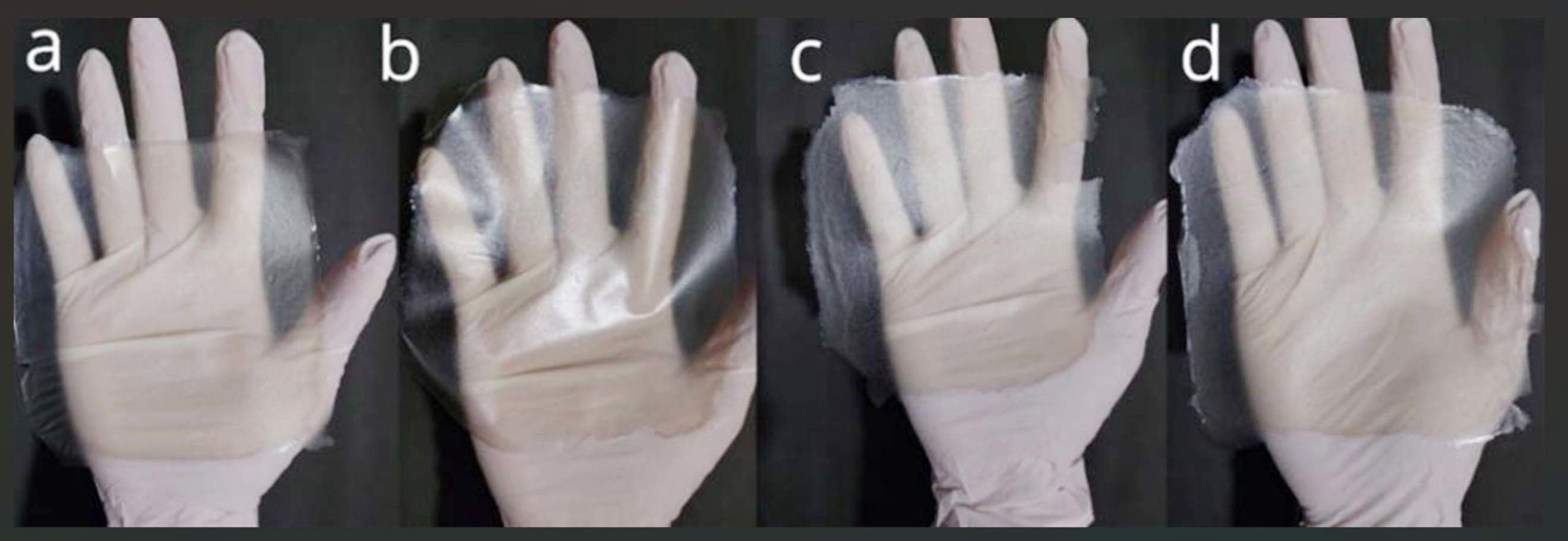
Figure. Appearance of dry casein-konjac edible film incorporating basil leaf extract: (a) Control (0% extract); (b) 5% extract; (c) 6% extract; (d) 7% extract
Antioxidant activity analysis
To determine antioxidant activity, a stock DPPH solution was prepared by dissolving 0.008 g of DPPH in 50 mL of methanol. Control absorbance was obtained by diluting different volumes (50-100 µL) of the DPPH solution in 9 mL of methanol. For sample analysis, 1 mL of film extract was serially diluted in methanol (10-1 – 10-5 M). From each dilution, 0.2 mL of the sample was mixed with 3.8 mL of DPPH solution and 0.2 mL of methanol. The mixture was vortexed and incubated for 30 minutes in the dark. Absorbance was measured at 515 nm using a UV-VIS spectrophotometer (Shimadzu UV-1800, Japan). Antioxidant activity (%) was calculated using a modified formula from Mangalisu et al.17
Antioxidant Activity (%) = Blank absorbance – Sample absorbance / Blank absorbance × 100%
Physical characterization
Gelation time
Gelation time was measured as the period between pouring the film-forming solution into the mold and the moment it transformed into a gel. The timing was recorded with a stopwatch following the procedure described by Fahrullah et al.18
Dissolution time
To assess dissolution, film samples (3 × 2 cm2) were immersed in 10 mL of distilled water under continuous stirring until fully dissolved. The time required for complete dissolution was recorded with a stopwatch.19 Each test was repeated three times to ensure reproducibility.
Film thickness
Film thickness was measured with a micrometer (MDC-25M, Mitutoyo, Japan) with an accuracy of 0.01 mm. Five points on each film sheet (center point and four points at the edges) were measured, and the mean was taken as the representative value for that replicate. Measurements for each treatment were performed in triplicate.15,20,21
Data analysis
All experimental data regarding the effects of basil leaf extract on edible film properties were subjected to One way Analysis of Variance (ANOVA). Significant differences between means were determined using Duncan’s Multiple Range Test. Statistical analyses were conducted using SPSS version 16.0 and Microsoft Excel software packages.
Antioxidant activity of edible film
Antioxidants are fundamental in maintaining food quality by inhibiting oxidative degradation, particularly in lipid-rich products.22 During food processing and storage, both synthetic and naturally derived antioxidants are used to suppress lipid peroxidation, which contributes to flavor preservation, nutrient stability, and extended shelf life.23 The antioxidant capacity of the edible films produced in this study, either with or without basil (O. basilicum) extract, is summarized in Table 1.
Table (1):
Antioxidant activity of edible film with and without basil leaf extracts addition
Treatment |
Antioxidant Activity (%) |
|---|---|
0% |
9.93 ± 0.81a |
5% |
11.79 ± 4.48a |
6% |
16.91 ± 4.74b |
7% |
17.93 ± 0.25b |
Notes: Different superscripts in the same column indicate significant differences (P < 0.05)
Statistical analysis (ANOVA) revealed that the addition of basil extract significantly influenced (P < 0.05) the antioxidant activity of the edible films. The control sample, prepared without extract, exhibited 9.93% antioxidant activity, whereas films supplemented with 5%, 6%, and 7% basil extract displayed progressively higher activities, reaching 17.93% at the highest concentration. This positive correlation between extract concentration and antioxidant response indicates a dose-dependent enhancement of radical scavenging potential.
The increase in activity at 7% extract concentration likely results from the higher presence of phenolic and flavonoid compounds such as rosmarinic acid, caffeic acid, and quercetin known for their strong radical-scavenging abilities. These molecules neutralize reactive oxygen species (ROS) by donating hydrogen atoms and stabilizing free radicals through resonance mechanisms. As the extract concentration rises, the density of these compounds within the film matrix increases, resulting in stronger collective antioxidant action.14,17
The observed antioxidant enhancement mainly stems from the phytochemical profile of basil leaves, which includes flavonoids, saponins, tannins, alkaloids, and terpenoids all contributing to antioxidative potential. According to Nguyen et al., aqueous and ethanolic basil extracts exhibit significant antioxidant activity due to their high phenolic and flavonoid content.24 Among these, rosmarinic acid serves as a potent phenolic antioxidant capable of terminating lipid peroxidation chains, while eugenol a phenolic compound containing a methoxy group-stabilizes reactive oxygen intermediates via resonance. Together, these constituents form an effective antioxidant network that protects the film from oxidative deterioration.
Similar findings were reported by Alexandre et al., who showed that the inclusion of basil extract in alginate-based films significantly enhanced antioxidant capacity and reduced lipid oxidation in meat products.11 This improvement maintained sensory attributes such as color and flavor and prolonged storage stability. Hence, the current findings suggest that basil extract effectively improves the antioxidant and protective functions of casein-based edible films, supporting its potential as a natural additive in eco-friendly packaging systems.
Gelation time
Gelation time represents the duration required for the film-forming solution to transition from a liquid state to a semi-solid gel after being poured into molds. A shorter gelation period is favorable, as it reduces air exposure and potential microbial contamination during production. The data presented in Table 2 indicate that basil extract addition had a highly significant (P < 0.01) effect on gelation time.
Table (2):
Gelation time of edible film solution with and without basil leaf extract addition
Treatment |
Gelation Time (Seconds) |
|---|---|
0% |
22.89 ± 1.70c |
5% |
14.38 ± 1.88b |
6% |
11.86 ± 2.26ab |
7% |
10.65 ± 0.44a |
Notes: Different superscripts in the same column indicate highly significant differences (P < 0.01)
The control film (0% extract) required 22.89 seconds for gel formation, whereas the 7% extract treatment gelled in 10.65 seconds. This consistent reduction in gelation time with increased extract levels demonstrates that basil extract accelerates the gelation process.
This acceleration is likely associated with the compositional characteristics of basil leaves, which contain carbohydrates (approximately 2.65%), dietary fiber (1.6%), and starch-like fractions that behave as natural binders. Upon heating, these starch components undergo gelatinization, reinforcing polymer interactions within the matrix. Additionally, the polysaccharides present may reduce solution viscosity, facilitating faster molecular alignment and gel network formation.25,26 This behavior supports the known function of gelatinized starches as effective film-binding agents.
Dissolution time
The dissolution time of an edible film reflects its solubility and degree of biodegradability key indicators for evaluating suitability in various food packaging contexts.27 Films that dissolve quickly are advantageous for single-use or ready-to-eat food applications, whereas slower-dissolving films are preferable for moisture-sensitive products that require stable protection.28
As summarized in Table 3, dissolution times varied between 6.50 and 13.05 minutes, depending on basil concentration. ANOVA followed by Duncan’s test indicated significant differences (P < 0.01) among treatments. The control film exhibited the longest dissolution time (13.05 min), while films containing 7% extract dissolved fastest (6.50 min). Beyond 6% extract, further increases had no statistically significant effect, suggesting solubility stabilization at higher concentrations.
Table (3):
Dissolution time values of edible film with and without basil leaf extracts addition
Treatment |
Dissolution Time (Minutes) |
|---|---|
0% |
13.05 ± 0.41c |
5% |
9.50 ± 3.11b |
6% |
6.75 ± 0.96a |
7% |
6.50 ± 1.29a |
Notes: Different superscripts in the same column indicate highly significant differences (P < 0.01)
This improvement in solubility can be linked to the essential oils and hydroxyl-bearing functional groups in basil, which enhance hydrogen bonding with water, thus promoting faster matrix disintegration.29 Giyatmi et al. similarly reported that basil extract incorporation into alginate films disrupted polymer networks and altered hydrogen-bonding interactions, increasing porosity and reducing structural cohesion.30 In the present study, this mechanism likely explains the shorter dissolution times observed with higher basil concentrations.
Although konjac- and alginate-based films share similar uses, their matrix compositions differ. Konjac starch generally yields more elastic and flexible films due to its high viscosity, and it also offers greater resistance to water vapor transmission than alginate, despite having slightly lower tensile strength.31
Thickness
Film thickness is a vital property influencing mechanical strength, barrier performance, and overall applicability in food packaging. Thicker films typically provide better mechanical protection, although excessive thickness may compromise flexibility.32 The thickness results for all formulations are shown in Table 4.
Table (4):
Thickness of edible film with without basil leaf extract addition
Treatment |
Thickness (mm) |
|---|---|
Control 0% |
0.090 ± 0.022a |
5% |
0.095 ± 0.006a |
6% |
0.123 ± 0.010b |
7% |
0.133 ± 0.005b |
Notes: Different superscripts in the same column indicate highly significant differences (P < 0.01)
Statistical analysis confirmed that basil extract concentration had a significant effect (P < 0.01) on film thickness. Measured thickness increased from 0.090 mm (control) to 0.133 mm at 7% extract, indicating a consistent upward trend with extract addition. This pattern likely reflects an increase in solid content within the film-forming solution as more extract is incorporated, resulting in denser and thicker films after drying.6
All the obtained films met the Japanese Industrial Standard (JIS) specification, which limits edible film thickness to 0.25 mm. Thus, the values recorded here are within the acceptable range for food applications. The gradual increase in thickness with extract concentration suggests higher retention of non-volatile materials during drying, reducing pore formation and enhancing structural compactness.33-35
Overall, basil leaf extract enhanced functional and biodegradable qualities of the casein-based films, making them viable candidates for environmentally sustainable packaging. However, this study was limited to casein-basil formulations within a specific concentration range. Future research should expand to other bioactive additives, investigate antimicrobial potential, and test film behavior under real packaging conditions to confirm industrial applicability.
Incorporating basil (O. basilicum) leaf extract at concentrations of 5%-7% into casein-based edible films markedly enhanced their antioxidant potential and increased film thickness, while simultaneously reducing gelation and dissolution times. These outcomes demonstrate that basil extract not only strengthens the functional attributes of the films but also facilitates faster formation and improved biodegradability. Among the tested treatments, the 7% extract concentration provided the most favorable balance between structural integrity and functional performance. Overall, the findings highlight the promise of basil-enriched casein films as environmentally friendly, bioactive packaging materials that align with the growing demand for sustainable food preservation technologies. This work contributes to advancing biodegradable film development and supports future efforts to design active packaging systems that protect food quality while minimizing environmental impact.
ACKNOWLEDGMENTS
The authors thank the Laboratory of Dairy Processing Biotechnology, Faculty of Animal Science, Universitas Hasanuddin, for supporting this research.
CONFLICT OF INTEREST
The authors declare that there is no conflict of interest.
AUTHORS’ CONTRIBUTION
WTH, FM and WH conceptualized the study. FM collected resources. WTH and FM applied methodology. WTH performed data curation, investigation and visualization. FM and WTH performed formal analysis. WH and FM performed supervision. WTH wrote the manuscript. FM and WH reviewed and revised the manuscript. All authors read and approved the final manuscript for publication.
FUNDING
None.
DATA AVAILABILITY
The datasets generated and/or analysed during the current study are available from the corresponding author on reasonable request.
ETHICS STATEMENT
Not applicable.
- Shaikh S, Yaqoob M, Aggarwal P. An overview of biodegradable packaging in food industry. Curr Res Food Sci. 2021;4:503-520.
Crossref - Ncube LK, Ude AU, Ogunmuyiwa EN, Zulkifli R, Beas IN. Environmental impact of food packaging materials: a review of contemporary development from conventional plastics to polylactic acid based materials. Materials. 2020;13(21):4994.
Crossref - Moshood TD, Nawanir G, Mahmud F, Mohamad F, Ahmad MH, AbdulGhani A. Sustainability of biodegradable plastics: new problem or solution to solve the global plastic pollution? Curr Res Green Sustain Chem. 2022;5:100273.
Crossref - Fahrullah F, Noersidiq A, Maruddin F. Effects of glycerol plasticizer on physical characteristic of whey-konjac films enriched with clove essential oil. J Food Qual Hazards Control. 2022;9(4):226-233.
Crossref - Fahrullah F, Noersidiq A, Kisworo D, Maruddin F. Evaluating physicochemical properties of whey-chia seed edible films for biodegradable packaging. Trop Anim Sci J. 2024;47(4):519-528.
Crossref - Jorge AMS, Gaspar MC, Henriques MHF, Braga MEM. Edible films produced from agrifood by-products and wastes. Innov Food Sci Emerg Technol. 2023;88:103442.
Crossref - Oliveira I, Pinto T, Afonso S, et al. Sustainability in bio-based edible films, coatings, and packaging for small fruits. Appl Sci. 2025;15(3):1462.
Crossref - Sabil S, Maruddin F, Wahyuni T, Taufik M. Edible film characteristics at different casein concentrations. IOP Conf Ser Earth Environ Sci. 2021;788(1):012115.
Crossref - Kamelnia E, Mohebbati R, Kamelnia R, ElSeedi HR, Boskabady MH. Anti-inflammatory immunomodulatory and anti-oxidant effects of Ocimum basilicum L. and its main constituents: a review. Iran J Basic Med Sci. 2023;26(6):617-627.
Crossref - Sukmawati S, Kosman R, Saharuddin N. Kombinasi ekstrak etanol daun kemangi (Ocimum bacilicum L.) dan daun salam (Syzygium polyanthum (Wight) Walp) sebagai antiinflamasi pada tikus jantan (Rattus norvegicus) jantan yang diinduksi karagen [The combination of ethanol extract of basil leaves (Ocimum bacilicum L.) and bay leaves (Syzygium polyanthum (Wight) Walp) as an anti-inflammatory in male rats (Rattus norvegicus) induced by carrageenan]. J Ilm Syifaa. 2018;10(1):1-10.
Crossref - Alexandre S, Vital ACP, Mottin C, et al. Use of alginate edible coating and basil (Ocimum spp) extracts on beef characteristics during storage. J Food Sci Technol. 2021;58(10):3835-3843.
Crossref - Tursun AO. Impact of soil types on chemical composition of essential oil of purple basil. Saudi J Biol Sci. 2022;29(7):103314.
Crossref - Putri MK, Karyantina M, Suhartatik N. Aktivitas antimikrobia edible film pati kimpul (Xanthosma sagittifolium) dengan variasi jenis dan konsentrasi ekstrak jahe (Zingiber officinale) [Antimicrobial activity of edible film of kimpul starch (Xanthosma sagittifolium) with various types and concentrations of ginger extract (Zingiber officinale)]. Agrointek J Teknol Ind Pertan. 2021;15(1):15-24.
Crossref - Kumalasari MLF, Andiarna F. Uji fitokimia ekstrak etanol daun kemangi (O. basilicum L) [Phytochemical test of ethanol extract of basil leaves (O. basilicum L)]. Indones J Health Sci. 2020;4(1):39.
Crossref - Maruddin F, Malaka R, Baba S, Amqam H, Taufik M, Sabil S. Brightness, elongation and thickness of edible film with caseinate sodium using a type of plasticizer. IOP Conf Ser Earth Environ Sci. 2020;492(1):012043.
Crossref - Husnaeni, Maruddin F, Hatta W, Sabil S, Taufik M. Effects of plasticizer on swelling and color of casein-based edible film. AIP Conf Proc. 2023;2628(1):050020.
Crossref - Mangalisu A, Abustam E, Nahariah N. The antioxidant value of chicken eggs subjected to the fermentation using Lactobacillus plantarum at different temperature and incubation time. IOP Conf Ser Earth Environ Sci. 2020;492(1):012055.
Crossref - Fahrullah, Febryanti F, Anita C, et al. Characterization of protein-based edible film: a study on thickness, gelation time, and microstructure with the addition of polyethylene glycol. Indones J Anim Sci Technol. 2024;10(2):98-106.
Crossref - Ahmad M, Benjakul S, Prodpran T, Agustini TW. Physico-mechanical and antimicrobial properties of gelatin film from the skin of unicorn leatherjacket incorporated with essential oils. Food Hydrocoll. 2012;28(1):189-199.
Crossref - Sultan RA, Rahman ANF, Dirpan A, Syarifuddin A. Physical, mechanical barrier, antibacterial properties, and functional group of carrageenan-based edible film as influenced by pectin from Dillenia serrata fruit peel and curcumin. Curr Res Nutr Food Sci J. 2023;11(3):1308-1321.
Crossref - Bangar SP, Singh A, Trif M, et al. Process parameter optimization and characterization for an edible film: flaxseed concern. Coatings. 2021;11(9):1106.
Crossref - Parveen B, Rajinikanth V, Narayanan M. Natural plant antioxidants for food preservation and emerging trends in nutraceutical applications. Discov Appl Sci. 2025;7(8):845.
Crossref - Gulcin I. Antioxidants: a comprehensive review. Arch Toxicol. 2025;99(5):1893-1997.
Crossref - Nguyen VT, Nguyen NQ, Thi NQN, Thi CQN, Truc TT, Nghi PTB. Studies on chemical, polyphenol content, flavonoid content, and antioxidant activity of sweet basil leaves (Ocimum basilicum L.). IOP Conf Ser Mater Sci Eng. 2021;1092(1):012083.
Crossref - Romano R, De Luca L, Aiello A, et al. Basil (Ocimum basilicum L.) leaves as a source of bioactive compounds. Foods. 2022;11(20):3212.
Crossref - Nadeem HR, Akhtar S, Sestili P, et al. Toxicity, antioxidant activity, and phytochemicals of basil (Ocimum basilicum L.) leaves cultivated in Southern Punjab, Pakistan. Foods. 2022;11(9):1239.
Crossref - Diaz-Montes E, Castro-Munoz R. Edible films and coatings as food-quality preservers: an overview. Foods. 2021;10(2):249.
Crossref - Demircan B, McClements DJ, Velioglu YS. Next-generation edible packaging: development of water-soluble, oil-resistant, and antioxidant-loaded pouches for use in noodle sauces. Foods. 2025;14(6):1061.
Crossref - Athanasopoulou E, Bigi F, Maurizzi E, et al. Synthesis and characterization of polysaccharide- and protein-based edible films and application as packaging materials for fresh fish fillets. Sci Rep. 2024;14(1):517.
Crossref - Giyatmi G, Irianto HE, Anggoro B, Nurhayati, Fransiska D. Use of basil leaf ethanol extract in alginate base edible film. J Phys Conf Ser. 2021;1933(1):012001.
Crossref - Satriadi H, Widayat W, Jonfita BV, Listyawijayanti NS. Characterization of edible film made from glucomannan konjac flour modified polyvinyl alcohol (PVA) and sorbitol as plasticizer. J Bioresour Environ Sci. 2025;4(1):46-54.
Crossref - Li Z, Tao B, Zhao R, et al. Thickness-dependent physical property and structural stability of MgO film fabricated on the flexible substrate. Surf Coat Technol. 2025;513:132505.
Crossref - Inasita I, Nugraha I, Sedyadi E. Karakterisasi edible film dari pati ganyong penambahan minyak atsiri kemangi (O. basilicum L.) sebagai antibakteri [Characterization of edible film from ganyong starch with the addition of basil essential oil (O. basilicum L.) as an antibacterial]. Indones J Mater Chem. 2022;3(1):3876.
Crossref - Agustin SF, Sari AM, Khasanah LU. Edible coating minyak atsiri kemangi (O. basilicum) pada fillet ikan nila (Oreochromis niloticus) selama penyimpanan dingin [Edible coating of basil essential oil (O. basilicum) on tilapia fish fillets (Oreochromis niloticus) during cold storage]. J Teknol Pertan. 2020;21(3):175-190.
Crossref - Ifmalinda I, Kurnia SA, Cherie D. Characteristics of edible film from corn starch (Zea mays L.) with additional glycerol and variations of zinc oxide (ZnO) nanoparticles. J Appl Agric Sci Technol. 2023;7(3):272-285.
Crossref
© The Author(s) 2026. Open Access. This article is distributed under the terms of the Creative Commons Attribution 4.0 International License which permits unrestricted use, sharing, distribution, and reproduction in any medium, provided you give appropriate credit to the original author(s) and the source, provide a link to the Creative Commons license, and indicate if changes were made.