

ISSN: 0973-7510
E-ISSN: 2581-690X
 , Roby Tohilmi1, Andriana Kusuma Pertiwi1, Tinok Dwi Ananda1, M. Aljaziri Badruzaman2 and Ni Nyoman Tri Puspaningsih3,4
Comparative optimization of culture media for recombinant XynBTN63D expression in Saccharomyces cerevisiae BJ1824 was performed to identify an efficient and low-cost cultivation medium for sustainable xylooligosaccharide (XOS) production. The gene encoding endo-β-1,4-D-xylanase (XynBTN63D) from Bacillus sp. was cloned into pESC and pYHM1 expression vectors and heterologously expressed in S. cerevisiae BJ1824. Recombinant enzyme production is commonly carried out using Yeast Extract Peptone Galactose (YPG) medium; however, its relatively high cost limits its industrial applicability. Therefore, this study evaluated alternative minimal media to support yeast growth and recombinant XynBTN63D production at a lower cost. Three culture media, namely YPG, MTE, and YMin, were comparatively assessed based on cell growth, protein expression, and enzyme activity. Recombinant protein expression was analyzed by SDS-PAGE, enzyme activity was determined by UV spectrophotometry, and hydrolysis products were characterized by thin-layer chromatography (TLC). Growth analysis demonstrated that the optimal growth of S. cerevisiae BJ1824 was achieved after 72 hrs in YPG and YMin media and after 84 hrs in MTE medium. Among the tested media, YMin showed promising performance, with enzyme activities of 0.930 U/mL and 0.634 U/mL in S. cerevisiae BJ1824 harboring pESC-xynBTN63D and pYHM1-xynBTN63D, respectively. SDS-PAGE analysis revealed a recombinant XynBTN63D protein band at approximately 35 kDa, showing strong expression in YPG medium, weaker expression in Y-Min medium, and no detectable expression in MTE medium. TLC analysis identified xylotriose (X3) as the major hydrolysis product generated by the recombinant enzyme. Overall, these findings demonstrate that YMin medium has strong potential as a cost-effective alternative for recombinant XynBTN63D production in S. cerevisiae BJ1824, thereby supporting more sustainable and economically viable XOS production processes.
Endo-β-D-1,4-xylanase, Saccharomyces cerevisiae BJ1824, Media Production, Xylooligosaccharide
Xylooligosaccharides (XOS) are oligomeric sugars composed of 2-7 xylose units linked by β-1,4 glycosidic bonds.1 XOS has attracted considerable attention as a potent prebiotic due to its physicochemical properties, including low viscosity, high hydrophilicity, thermal stability, and resistance to acidic conditions. These characteristics enable XOS to resist hydrolysis by gastrointestinal enzymes and gastric acid, allowing it to reach the intestine intact and selectively modulate beneficial gut microbiota.2,3 Furthermore, XOS has been reported to possess several health-promoting effects, such as reducing neurotoxicity, diabetes, and colon inflammation; lowering blood cholesterol levels; enhancing calcium and mineral absorption; and exhibiting antioxidant activity.4
XOS is mainly produced by endo-β-1,4-D-xylanase (EC 3.2.1.8), which hydrolyzes β-1,4-glycosidic linkages on the substrate.5 Based on the amino acid sequences and structural characteristics of their catalytic domains, this enzyme belongs to the glycoside hydrolase (GH) family.6 Generally, endo-β-1,4-xylanase is produced by various microorganisms, including bacteria (Streptomyces, Bacillus, Halomonas, and Paenibacillus) and fungi (Trichoderma, Aspergillus, Thielavia, Fusarium, and Rhizomucor).7 These enzymes have been applied in many industries, including food and beverage, animal feed, paper and pulp, pharmaceuticals, and bioethanol production.8,9
Currently, the enzyme market is experiencing rapid growth in both developed and developing countries.10 This highlights the need to develop new microbial strains capable of producing enzymes in large quantities. Microbial engineering via genetic modification has transformed the production of valuable products.11 Yeast strains, such as Saccharomyces cerevisiae, provide several practical advantages for industrial enzyme production. This microorganism is suitable for large-scale cultivation in bioreactors due to its high growth rate, tolerance to acidic environments, and “Generally Recognized as Safe” (GRAS) status.12-14 Furthermore, S. cerevisiae efficiently performs post-translational modifications and secretes recombinant proteins extracellularly.13 These characteristics can simplify the purification process, leading to more cost-effective industrial production.
The isolation of the gene encoding endo-β-1,4-D-xylanase from Bacillus sp. and the development of its mutant variant, XynBTN63D, were successfully conducted in our previous study.15 Expression of this variant in Saccharomyces cerevisiae BJ1824 through pYHMI and pESC plasmids successfully produced XynBTN63D, which can hydrolyze cassava pulp xylan into XOS. The prebiotic potential of XOS has also been proven to promote the growth of probiotic bacteria and enhance the production of short-chain fatty acids (SCFAs).15-17
The expression of XynBTN63D in S. cerevisiae BJ1824 is regulated by GAL promoters, which require galactose induction. Therefore, medium design must balance the need for sufficient carbon and nitrogen sources, essential minerals, and galactose to support both yeast growth and strong promoter induction. Recent studies emphasize that carbon source regulation, nutrient balance, and metabolic efficiency are critical factors for recombinant protein expression in yeast, particularly under inducible systems.18.19 Developing a cost-effective minimal medium that sustains yeast growth and supports high-level XynBTN63D expression is essential for scalable, sustainable, and economically viable XOS production. Optimization of medium composition can minimize flocculation, enhance metabolic efficiency, and reduce costs while maintaining functional enzyme activity.
This study aims to comparatively evaluate the performance of YPG (rich medium), MTE (semi-defined medium), and YMin (minimal medium) for endo-β-1,4-D-xylanase (XynBTN63D) expression in S. cerevisiae BJ1824. The primary goal is to identify a minimal medium that balances enzyme productivity with production cost, providing a practical approach for industrial-scale XOS production.
Cell culture and chemicals
Two S. cerevisiae BJ1824 isolates harboring pESC-xynBTN63D and pYHM1-xynBTN63D, respectively, were derived from the laboratory’s stock collection. Beechwood xylan, YPD (yeast extract-peptone-dextrose) agar, yeast extract, and peptone were purchased from Himedia (Mumbai, India). p-Nitrophenyl-β-D-xylopyranoside (p-NP-X), p-Nitrophenyl-α-L-arabinofuranoside (p-NP-A), and galactose were obtained from Sigma-Aldrich (St. Louis, MO, USA). MgSO4·7H2O, KH2PO4, and (NH4)2SO4 were purchased from Merck (Darmstadt, Germany). In addition, this research used MTE medium (Indonesia, Patent No: IDP00004503).
Media preparation
This study used three distinct media: YPG, YPG Minimal (YMin), and MTE. The YPG medium was prepared by dissolving yeast extract (1% (w/v)), peptone (2% (w/v)), and galactose (2% (w/v)) in distilled water. The YMin medium was obtained by mixing 2% (w/v) galactose, 0.5% (w/v) yeast extract, 0.04% (w/v) MgSO4·7H2O, 0.5% (w/v) KH2PO4, and 0.2% (w/v) (NH4)2SO4 in distilled water. Meanwhile, the MTE medium was prepared using the patent formulations, containing K1 (2% galactose as a carbon source), K2 (Source of P and S), K3 (Source of Mg), and Trace elements (micronutrients). All media were sterilized using an autoclave for 15 minutes at 121 °C before further use.
Cell culture preparation
Saccharomyces cerevisiae BJ1824 isolates, each harboring pESC-xynBTN63D and pYHM1-xynBTN63D, were maintained at -20 °C. Prior to use, the cell culture was rejuvenated on solid YPD medium and incubated for 3 days. Then, the inoculum was prepared by transferring a loopful of each yeast culture into 5 mL of YPG broth. This mixture was then incubated in a shaker incubator at 150 rpm at 30 °C for 20 hours.
Determination of the growth curve of S. cerevisiae BJ1824
A 1% (v/v) inoculum of each S. cerevisiae strain was cultured in 100 mL of YPG broth and incubated at 30 °C in a shaking incubator at 150 rpm. Cell growth was monitored for 108 hours. Samples were collected at 2 hour intervals, and the optical density at 600 nm (OD₆₀₀) was measured using a UV-Vis spectrophotometer, with sterile medium used as a blank. Each measurement was performed in triplicate. OD₆₀₀ values were measured directly without dilution, and the same measurement conditions were applied consistently across all samples to allow reliable comparison of growth trends among different media.
Production of XynBTN63D
To produce XynBTN63D, the bacterial culture was grown in YPG, YPG Minimal (YMin), and MTE media (Indonesia, Patent No: IDP00004503). All cultures across the different media were incubated under the same aeration and continuous agitation (150 rpm) at 30 °C for 20 hours. XynBTN63D production was done by incubating each medium in a shaker incubator at 150 rpm at 30 °C for 20 hours. Then, the extracellular enzymes were harvested by centrifugation under specific conditions (20 minutes, 4,000 rpm, and 4 °C). The crude enzyme contained in the supernatant was kept in the refrigerator for further assay. The relative molecular mass of XynBTN63D was determined by SDS-PAGE using low-weight protein markers (GE Healthcare Life Sciences) as a standard. Protein concentration was determined by the Bradford method using bovine serum albumin as a standard.
Determination of enzyme activity
The enzyme activity was evaluated using spectrophotometric methods. For each sample, the test was conducted using three different substrates: Beechwood xylan, p-NP-X, and p-NP-A, for evaluating endo-β-1,4-D-xylanase, exo-β-1,4-D-xylosidase, and α-L-arabinofuranosidase activity, respectively.
Endo-β-1,4-D-xylanase activity
A 125 μL enzyme solution was added to 125 µL of 0.8% (w/v) Beechwood xylan substrate suspension in phosphate-citrate buffer (50 mM), pH 5.5 (1:1). The mixture was incubated for 60 minutes at 40 °C. This solution was then combined with the DNS reagent and heated for 5 minutes at 95 °C. The absorbance of each sample was measured by UV-Vis spectrophotometry at 540 nm. One unit (U) of xylanase activity was defined as the amount of enzyme required to release 1 µmol of reducing sugar equivalents per minute under the specified assay conditions.
Exo-β-1,4-D-xylosidase activity
A total of 50 µL enzyme sample was added to 450 µL of 0.9 M p-NP-X substrate in phosphate-citrate buffer (50 mM), pH 5.5, and incubated for 60 minutes at 40 °C. Then, an aliquot of 50 µL of 0.4 M Na2CO3 was added. The sample was measured spectrophotometrically at 405 nm. One unit (U) of xylosidase activity was defined as the amount of enzyme required to release 1 µmol of reducing sugar equivalents per minute under the specified testing conditions.
α-L arabinofuranosidase activity
A total of 5 µL of enzyme sample was added to 450 µL of 0.9 M p-NP-A substrate in phosphate-citrate buffer (50 mM), pH 5.5, and incubated with the control for 60 minutes at 40 °C. Then 50 µL of 0.4 M Na2CO3 was added. The samples were measured at 405 nm. One unit (U) of enzyme activity was defined as the amount of enzyme required to release 1 µmol of p-nitrophenol from the substrate per minute under the specified assay conditions.
Analysis of hydrolysis product using thin layer chromatography
The products derived from the hydrolysis of Beechwood xylan with XynBTN63D were analyzed by TLC. Each sample was spotted on TLC silica plates. This plate was incubated using the mobile phase consisting n-butanol: acetic acid: aquadest with ratio 2:1:1. Then, the spots were visualized by spraying the stained solution consisting α-naphthol: sulfuric acid: ethanol in a ratio of 1:10:200. The retention factor (Rf) was calculated against xylooligosaccharide (XOS) standard solution 1% (w/v) xylose, 1% (w/v) xylobiose, 1% (w/v) xylotriose.
Growth curve study of S. Cerevisiae BJ1824 in various media
The growth of S. cerevisiae BJ1824 harboring the pESC-xynBTN63D plasmid (S. cerevisiae BJ1824/pESC-xynBTN63D) and pYHM1-xynBTN63D plasmid (S. cerevisiae BJ1824/ pYHM1-xynBTN63D) was investigated in three production media: YPG, MTE, and YMin. Cell growth was monitored over 108 hours using OD600 measurements with a UV-Vis spectrophotometer. The resulting growth curves for both isolates are provided in Figure 1.
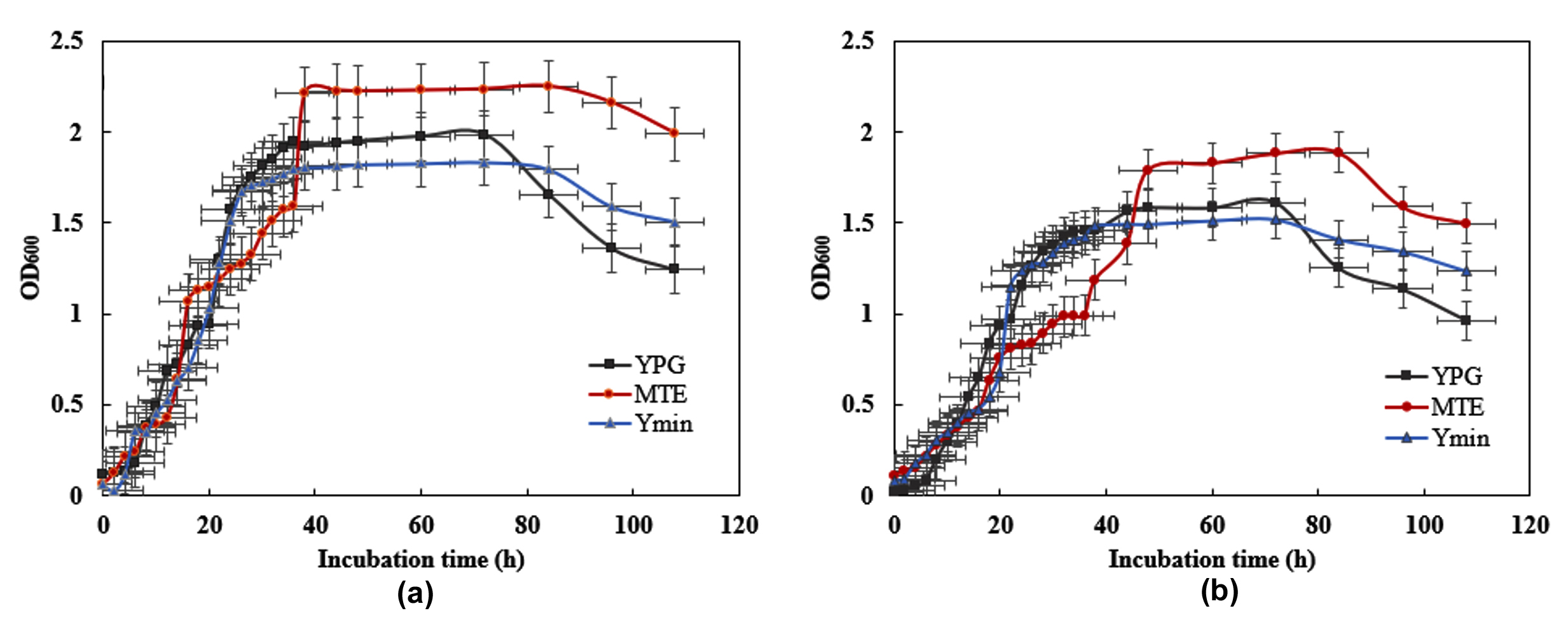
Figure 1. Optical density at 600 nm (OD600) growth curves of S. cerevisiae BJ1824 (a) S. cerevisiae BJ1824/pESC-xynBTN63D and (b) S. cerevisiae BJ1824/pYHM1-xynBTN63D. Data are presented as mean ± standard deviation (SD) of three biological replicates
All characteristic phases of microbial proliferation were observed in both growth curves, including adaptation, exponential, stationary, and death phases.20 In YPG medium, the growth of S. cerevisiae BJ1824/pESC-xynBTN63D embarked on the exponential growth earlier and achieved the optimum phase sooner than in MTE or YMin media (Figure 1a). In contrast, in the stationary phase, these two media showed longer time to adaptation, indicating slower metabolic adjustment to their nutrient composition.21 The similar pattern was demonstrated by the growth of S. cerevisiae BJ1824/pYHM1-xynBTN63D, which YPG again supports the fastest transition to exponential growth and highest cell densities
(Figure 1b). Conversely, MTE and YMin delayed adaptation and prolonged the stationary phase before cell death began, occurring approximately 72-96 hours after inoculation across all media.
The growth of S. cerevisiae BJ1824 harboring the plasmids in MTE and YMin media showed slower adaptation than in YPG, suggesting differences in nutrient mixtures and inoculum conditions. As a rich nutrient, YPG facilitated faster metabolic activation and was utilized to promote rapid cell growth.22 During the exponential phase, yeast metabolized swiftly and consumed great amounts of nutrients, resulting in significant enhancements in OD600 values, followed by a darker medium color. Conversely, the stationary phase persisted longer in MTE and YMin due to the formation of coagulants existing from minerals and salts during elongated agitation.23,24 The death phase was found after approximately 72 hours across all media, marked by diminishing OD600 as nutrients became depleted and metabolic capacity reached its limit. Comparison with the findings of Simair et al. shows that S. cerevisiae has a longer growth cycle, up to 108 hours, while Bacillus sp. completes its growth curve in 5-60 hours.25 The S. cerevisiae has held complex eukaryotic cell structures like a nucleus and vacuoles. This complex, large size required more time to reach the necessary division volume.26
To quantitatively evaluate growth performance, the specific growth rate and doubling time for each culture were calculated from optical density (OD600) measurements during the exponential growth phase (Table 1). The specific growth rate is a measure of an organism’s growth rate. This parameter can then be used to determine the doubling time, which is the time required for a cell to divide. A higher double-time value indicated slower growth of microorganisms.27
Table 1. Specific growth rate (μ) and doubling time (t) of recombinant S. cerevisiae in various media
| Specific Growth rate (h-1) | Doubling time | ||
|---|---|---|---|
| S. cerevisiae | YPG | 0.11 | 6.41 |
| BJ1824/pESC- | MTE | 0.09 | 7.91 |
| xynBTN63D | YMin | 0.14 | 4.98 |
| S. cerevisiae | YPG | 0.16 | 4.20 |
| BJ1824/pYHM1 | MTE | 0.07 | 10.06 |
| -xynBTN63D | YMin | 0.11 | 6.50 |
Based on the data, the two recombinant S. cerevisiae isolates showed distinct growth patterns across different media compositions. The S. cerevisiae BJ1824/pYHM1-xynBTN63D isolate demonstrated the lowest doubling time in YPG media (4.20). As mentioned before, YPG contains abundant nutrients, allowing cells to direct their metabolic energy toward rapid cellular division. This is consistent with Figure 1b, which demonstrates that the isolate underwent a rapid extracellular division. However, a different pattern was observed in S. cerevisiae BJ1824/pESC-xynBTN63D, with the lowest doubling time in YMin medium (4.98). This difference suggests that S. cerevisiae BJ1824/pESC-xynBTN63D adapts more efficiently to nutrient-limited conditions.
Under certain conditions, minimal media can enhance yeast cell division by promoting more efficient metabolic adaptation under nutrient-limited environments. During glucose limitation, Saccharomyces cerevisiae upregulates high-affinity glucose transporters and activates alternative carbon metabolic pathways, thereby improving energy utilization efficiency. This metabolic reprogramming supports biomass synthesis and may contribute to increased cellular proliferation rates despite limited nutrient availability.28-31
Specific activity of XynBTN63D
The specific activity of XynBTN63D is expressed as micromoles of product formed by the enzyme per minute under quantified conditions, normalized to per milligram of total protein.32 This assay was determined by combining enzyme activity (DNS/Miller method) and protein content (Bradford method). The resulting values were plotted to identify the optimal time for protein and enzyme production by the isolates, which correlated with their growth profiles determined from OD600 measurements.
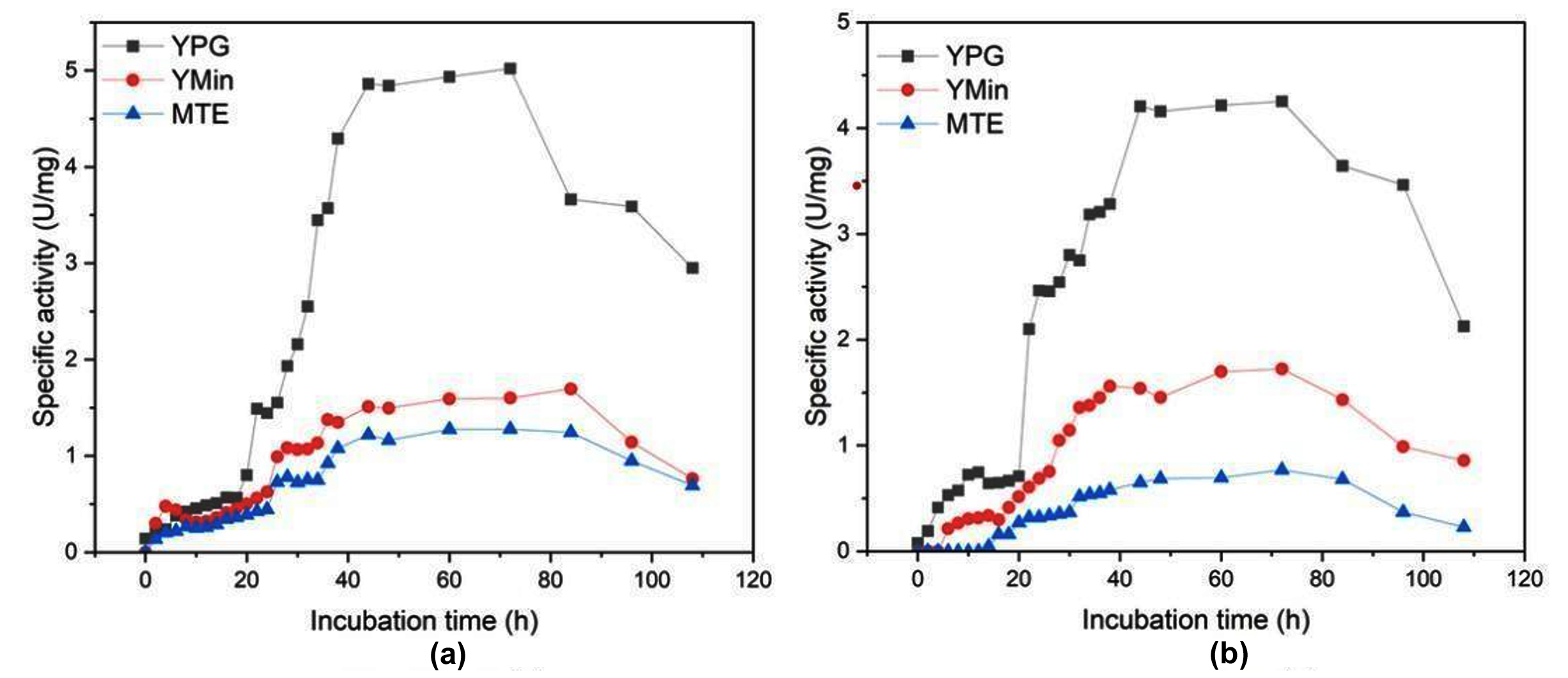
Figure 2. Specific activity curve of XynBTN63D: (a) in S. cerevisiae BJ1824/pESC-xynBTN63D; (b) in S. cerevisiae BJ1824/pYHM1-xynBTN63D
As shown in Figure 2, the specific activity of XynBTN63D was highest in YPG medium for both S. cerevisiae isolates. This result reflected the nutrient-rich ingredients in YPG, which promote optimal enzyme expression.33 Unlike YPG, MTE and YMin media yielded lower specific activities, with the lowest observed in MTE medium at 84 hrs (1.279 U/mg and 0.721 U/mg, respectively). This drop is consistent with the lengthened adaptation and stationary phases observed in these media, which led to flocculation during agitation. Flocculation can suppress extracellular enzyme secretion and yield OD600 readings from non-cellular particles, leading to an overestimation of cell density and an underestimation of enzymatic activity.34,35
Interestingly, the optimal activity time (72 hrs in YPG medium) was shorter than that reported by Mert et al., who observed peak activity at 84 hrs. This difference may be related to the greater nutrient availability in YPG medium, which accelerates gene expression for protein and enzyme production.36 These findings suggest that medium composition and flocculation properties significantly affect the enzyme production and its specific activity.33,35
The presence of minerals and salts in the culture medium can influence optical density (OD) measurements of Saccharomyces cerevisiae by affecting both cellular growth and the suspension’s light-scattering properties. Essential ions such as Mg2+, K+, and phosphate contribute to enzymatic activity, membrane stability, and biomass production, thereby increasing cell density and, consequently, elevating OD values. In addition, changes in ionic strength and osmolarity can modify cell morphology and medium turbidity, potentially affecting OD readings independently of actual cell number.37-39
Analysis of molecular weight and protein content of XynBTN63D
The molecular weight and protein content of the XynBTN63D expressed in S. cerevisiae BJ1824/pESC-xynBTN63D and BJ1824/pYHM1-xynBTN63D cultivated in various production media were determined using the Bradford method (1976) and SDS-PAGE, respectively. Protein content (mg/mL) was used to determine the amount of protein present in each sample, whereas SDS-PAGE separated proteins in accordance with their molecular weight by using polyacrylamide gel electrophoresis.40,41 The appearance of a clear protein band at the expected molecular weight indicates that XynBTN63D was successfully expressed in both systems. The protein content measured in this study corresponds to the actual amount of recombinant XynBTN63D produced in each culture medium. The resulting values are shown in Table 2, and the SDS-PAGE profile is presented in Figure 3.
Table 2. Protein content XynBTN63D in various production media
| Media | Protein content (mg/mL) | |
|---|---|---|
| in S. cerevisiae BJ1824/pESC-xynBTN63D | in S. cerevisiae BJ1824/pYHM1-xynBTN63D | |
| YPG | 0.945 | 0.917 |
| MTE | 0.470 | 0.480 |
| YMin | 0.712 | 0.683 |
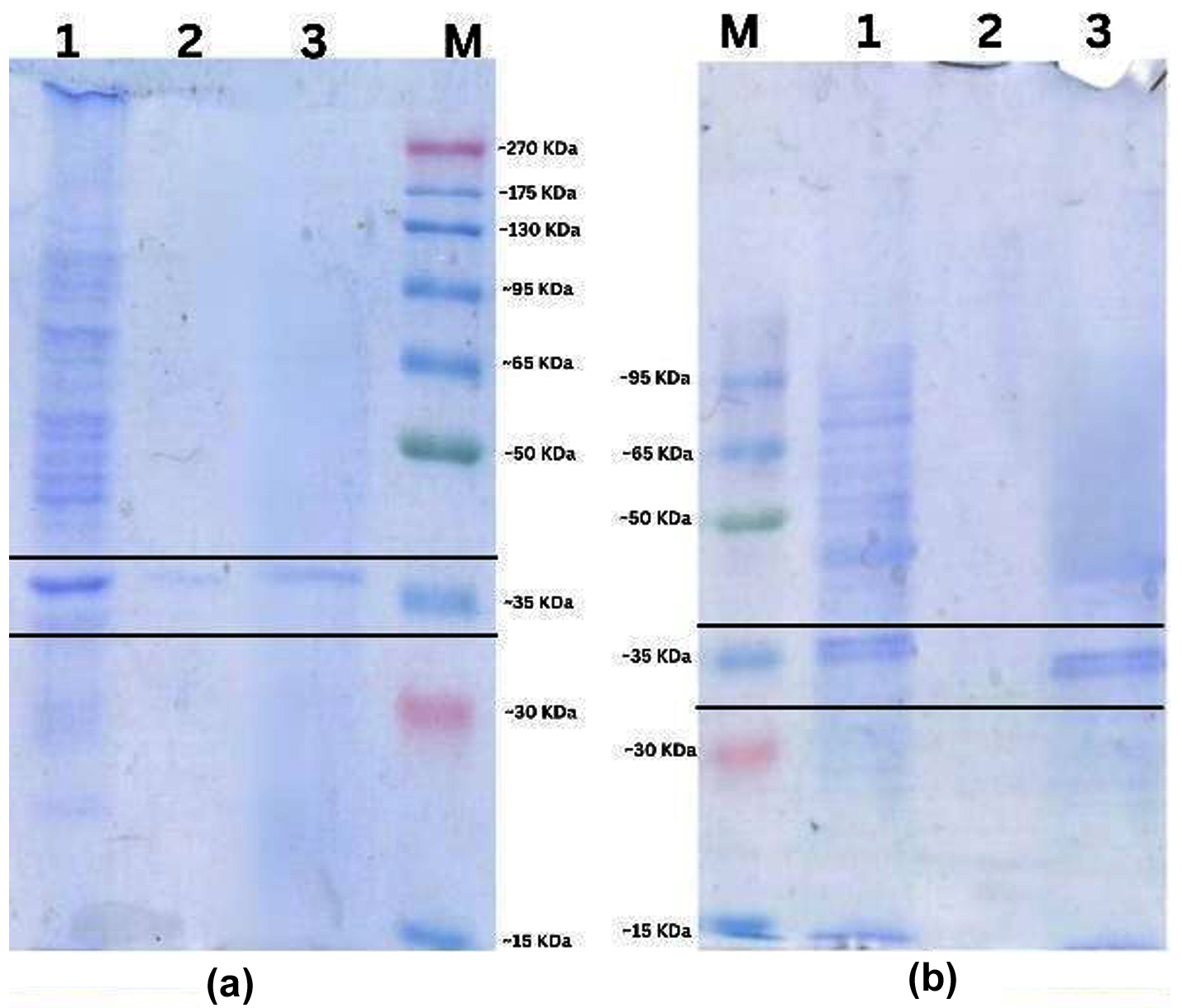
Figure 3. The SDS-PAGE profiles of XynBTN63D on various production media: (a) in S. cerevisiae BJ1824/pESC-xynBTN63D; (b) in S. cerevisiae BJ1824/pYHM1-xynBTN63D. Lane M: protein marker; lane 1: YPG medium; lane 2: MTE medium; lane 3: YMin medium
As evident from Table 1, the highest XynBTN63D protein levels were detected in YPG medium for both isolates, which indicates that the rich media composition supports the enhancing of protein yield.42 Alternatively, MTE medium produced the lowest protein content (0.470 and 0.480 mg/mL, respectively) due to low availability of nutrients and the existence of salts and minerals that can influence protein stability and extraction efficiency.23 The YMin medium produced intermediate protein content for both isolates.
These results are supported by the observed electrophoretic band thickness (Figure 3). According to Jumrah et al. the band thickness aligned with the protein concentration.43 The more intense band observed in the protein band in YPG medium, proving higher protein expression in both isolates. In contrast, MTE medium had the thinnest band in the gel electrophoresis, indicating the lowest protein expression. In addition, the results showed that the molecular weight of the XynBTN63D protein in YPG medium was 35 kDa. Previous research conducted by Safitri et al. stated that the XynBT expressed in E. coli has a molecular weight of around 30 kDa.15 The higher molecular weight of the XynBTN63D protein in this study is expected due to post-translational modifications glycosylation in S. cerevisiae. Specifically, recombinant proteins derived from S. cerevisiae often undergo hypermannosylation (Man>50GlcNAc2).44 The glycosylation in S. cerevisiae BJ1824 (xynBTN63D) is influenced by fermentation metabolism and high sugar media such as galactose.45 In silico prediction using the NetNGlyc 1.0 once more attested to the existence of potential glycosylation sites within the expressed protein sequence, consistent with the observed gain in molecular weight.
Determination of xylanolytic enzyme activity
Enzyme activity refers to the measurement of enzymes’ functional proficiency in biological systems. This is quantified in units per mL (U/mL), where the unit of enzyme is the amount of enzyme required to hydrolyze 1 micromole of substrate to generate 1 micromole of product in 1 unit of time.46 The activity of endo-β-1,4-D-xylanase was determined using the Miller method (DNS) with beechwood xylan substrate. To detect the existence of additional activities of other enzymes, such as exo-β-1,4-D-xylosidase and α-L-arabinofuranosidase, the p-NP-X and p-NP-A substrates were used.47 The results of the enzyme activity assay are presented in Table 3.
Table 3. Activity of xylanolytic enzyme
| Sample | Enzyme activity (U/mL) | ||
|---|---|---|---|
| endo-β-1,4-D-xylanase | exo-β-1,4-D-xylosidase | α-L arabino-furanosidase | |
| S. cerevisiae BJ1824/pESC-YPG | 4.387 | 0.769 | 0.256 |
| S. cerevisiae BJ1824/pESC-MTE | 0.472 | 0.237 | 0.146 |
| S. cerevisiae BJ1824/pESC-YMin | 0.930 | 0.511 | 0.236 |
| S. cerevisiae BJ1824/pYHM1-YPG | 3.735 | 0.621 | 0.135 |
| S. cerevisiae BJ1824/pYHM1-MTE | 0.265 | 0.201 | 0.188 |
| S. cerevisiae BJ1824/pYHM1-YMin | 0.634 | 0.475 | 0.129 |
Among all conditions tested, the highest enzyme activities were invariably present in YPG medium for both isolates. The S. cerevisiae BJ1824/pYHM1-xynBTN63D showed comparatively good xylanolytic activity in the rich YPG medium, though it had slightly lower activity than the pESC construct. However, both constructs consistently exhibited much lower endo-β-1,4-D-xylanase activities in MTE and YMin media. This pattern suggests that the rich nutrient content of YPG medium would support greater enzyme expression and secretion, whereas the more confined and salted conditions of MTE and YMin media would likely restrict enzyme stability, in accordance with the lower protein content in Table 1. Furthermore, the overall trend across these three enzymes indicates that pESC-xynBTN63D consistently yields higher activity than pYHM1-xynBTN63D under the same conditions, suggesting more efficient expression or greater stability of the recombinant protein under the pESC system.23,48
Analysis of thin layer chromatography profile
Xylooligosaccharides (XOS) are the result of XynBTN63D hydrolysis with xylan substrate. XOS is a type of oligosaccharide whose monomers consist of D-xylose (X1).49 The type of XOS yielded in this study is anticipated to be a group of XOS containing two or more monomers. XOS analysis was also conducted to ensure that the isolates S. cerevisiae BJ1824/pESC-xynBTN63D and pYHM1-xynBTN63D, in various media components, were able to express XynBTN63D. The XOS analysis employed the thin-layer chromatography method developed by Ratnadewi et al., based on the principle of “like dissolves like” and molecular migration potential. The qualitative analysis was conducted by comparing the Rf (retardation factor) values of the samples with the standards. The standards used were xylose (X1), xylobiose (X2), and xylotriose (X3).17 The results of the TLC are presented in Figure 4 and Table 4.
Table 4. Rf Value of Thin Layer Chromatography on various media.
Sample |
Eluent (cm) |
Sample distance (cm) |
Rf |
|---|---|---|---|
X1 |
5.6 |
0.622 |
|
X2 |
4.9 |
0.544 |
|
X3 |
4 |
0.444 |
|
S. cerevisiae/pESC-YPG |
3.5 |
0.388 |
|
S. cerevisiae/pESC-MTE |
3.6 |
0.400 |
|
S. cerevisiae/pESC-YMin |
9 |
3.5 |
0.388 |
S. cerevisiae/pYHM1-YPG |
3.4 |
0.377 |
|
S. cerevisiae/pYHM1-MTE |
3.7 |
0.411 |
|
S. cerevisiae/pYHM1-YMin |
3.7 |
0.411 |
The chromatogram and Rf values indicate that the XOS produced by the hydrolysis of XynBTN63D in both isolates and three production media are entirely xylotriose (X3) or XOS containing three xylose monomers. The TLC results have established that the isolates pESC-xynBTN63D and pYHM1-xynBTN63D could express XynBTN63D in the three production media
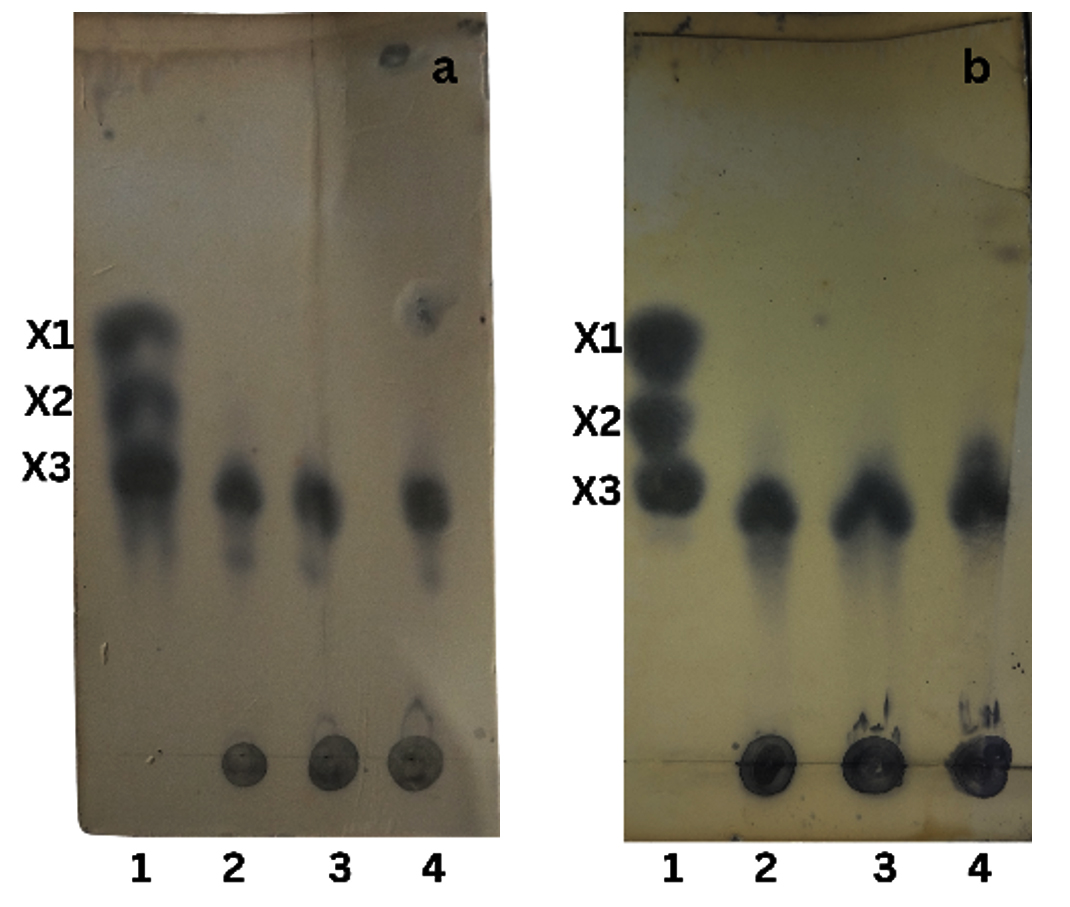
Figure 4. Thin-layer chromatography (TLC) profiles of xylooligosaccharides produced from the hydrolysis of beechwood xylan by XynBTN63D: (a) in S. cerevisiae BJ1824/pESC-xynBTN63D; (b) in S. cerevisiae BJ1824/pYHM1-xynBTN63D. Lane 1: XOS standard; lane 2: YPG medium; lane 3: MTE medium; lane 4: YMin medium
Recombinant XynBTN63D is an endo-β-1,4-D-xylanase with the ability to degrade biomass for xylooligosaccharide (XOS) production. XynBTN63D cloned into pYHM1 and pESC plasmids was successfully expressed in Saccharomyces cerevisiae BJ1824, a food-safe host capable of extracellular recombinant protein production. Since industrial-scale enzyme production requires cost efficiency, this study comparatively evaluated three media compositions, namely YPG (rich medium), YMin (minimal medium), and MTE (semi-defined medium), for recombinant XynBTN63D production. All media supported the growth of recombinant S. cerevisiae BJ1824, as confirmed by OD₆₀₀ measurements. Interestingly, YMin medium, containing galactose as the carbon source and yeast extract as the nitrogen source, promoted faster cell division than YPG. This result indicates that its nutrient composition supports efficient metabolic adaptation, although the resulting enzyme activity remained lower than that of YPG. SDS-PAGE analysis revealed recombinant XynBTN63D bands at approximately 35 kDa in YPG and YMin media, while weaker expression was observed in MTE medium. Among the detected xylanolytic enzymes, endo-β-1,4-D-xylanase activity was dominant, followed by exo-β-1,4-D-xylosidase and α-L-arabinofuranosidase activities. TLC analysis further confirmed that the major hydrolysis product was xylotriose (X3). Overall, YMin medium demonstrated promising potential as a more economical alternative medium for sustainable recombinant XynBTN63D production and XOS bioprocess development.
ACKNOWLEDGMENTS
The authors would like to thank the Ministry of Higher Education, Science, and Technology (Kemendiktisaintek), Indonesia, for financial support through the Fundamental Research Grant Scheme (Hibah Fundamental) 2025 (No. 4563/UN25.3.1/LT/2025).
CONFLICT OF INTEREST
The authors declare that there is no conflict of interest
AUTHORS’ CONTRIBUTION
AAIR conceptualized the study. NNTP supervised the study. MAB performed validation. RT performed data curation and wrote the original draft. AKP and TDA wrote, reviewed and revised the manuscript. All authors read and approved the final manuscript for publication.
FUNDING
This research was funded by the Hibah Penelitian dan Pengabdian kepada Masyarakat 2025 under the Penelitian Fundamental scheme (No. 4563/UN25.3.1/LT/2025). The funding was provided by the Direktorat Jenderal Riset dan Pengembangan (DPPM), Kementerian Pendidikan Tinggi, Sains, dan Teknologi (Kemendiktisaintek), Indonesia.
DATA AVAILABILITY
All datasets generated or analyzed during this study are included in the manuscript.
ETHICS STATEMENT
This article does not contain any studies on human participants or animals performed by any of the authors.
- Li F, Li Q, Zhang Y, Zhou X, Yi R, Zhao X. Effects of Xylooligosaccharides on Lipid Metabolism, Inflammation, and Gut Microbiota in C57BL/6J Mice Fed a High-Fat Diet. Front Pharmacol. 2021;12:791614.
Crossref - Abasubong KP, Jiang G, Cao XF, Liu W, Li XF, Desouky HE. A significant role of dietary xylooligosaccharides prebiotics in aquatic species: progressive advances beyond growth – a review. Animal Advances. 2025;2(1).
Crossref - Manicardi T, Baioni e Silva G, Longati AA, et al. Xylooligosaccharides: A Bibliometric Analysis and Current Advances of This Bioactive Food Chemical as a Potential Product in Biorefineries’ Portfolios. Foods. 2023;12(16):3007.
Crossref - Ali K, Niaz N, Waseem M, et al. Xylooligosaccharides: A comprehensive review of production, purification, characterization, and quantification. Food Res Int. 2025;201:115631.
Crossref - Javed U, Ansari A, Aman A, Ul Qader SA. Fermentation and saccharification of agro-industrial wastes: A cost-effective approach for dual use of plant biomass wastes for xylose production. Biocatal Agric Biotechnol. 2019;21:101341.
Crossref - Mendonça M, Barroca M, Collins T. Endo-1,4-β-xylanase-containing glycoside hydrolase families: characteristics, singularities and similarities. Biotechnol Adv. 2023;65:108148.
Crossref - Tran TN, Doan CT, Dinh TKL, et al. Optimization Production of an Endo-β-1,4-Xylanase from Streptomyces thermocarboxydus Using Wheat Bran as Sole Carbon Source. Recycling. 2024;9(3):50.
Crossref - Pasalari A, Homaei A. Isolation and Molecular Identification of Xylanase-Producing Bacteria from Ulva flexuosa of the Persian Gulf. Processes. 2022;10(9):1834.
Crossref - Kumar V, Marín-Navarro J, Shukla P. Thermostable microbial xylanases for pulp and paper industries: trends, applications and further perspectives. World J Microbiol Biotechnol. 2016;32(2):34.
Crossref - Amadi OC, Egong EJ, Nwagu TN, et al. Process optimization for simultaneous production of cellulase, xylanase and ligninase by Saccharomyces cerevisiae SCPW 17 under solid state fermentation using Box-Behnken experimental design. Heliyon. 2020;6(7):e04566.
Crossref - Wagner ER, Gasch AP. Advances in S. cerevisiae Engineering for Xylose Fermentation and Biofuel Production: Balancing Growth, Metabolism, and Defense. J Fungi. 2023;9(8):786.
Crossref - Choi B, Tafur Rangel A, Kerkhoven EJ, Nygard Y. Engineering of Saccharomyces cerevisiae for enhanced metabolic robustness and L-lactic acid production from lignocellulosic biomass. Metabolic Engineering. 2024;84:23-33.
Crossref - Yang S, Song L, Wang J, Zhao J, Tang H, Bao X. Engineering Saccharomyces cerevisiae for efficient production of recombinant proteins. Eng Microbiol. 2024;4(1):100122.
Crossref - Topaloglu A, Esen O, Turanlı-Yıldız B, Arslan M, Cakar ZP. From Saccharomyces cerevisiae to Ethanol: Unlocking the Power of Evolutionary Engineering in Metabolic Engineering Applications. J Fungi (Basel). 2023;9(10):984.
Crossref - Safitri E, Hanifah, Previta, Sudarko, Puspaningsih NNT, Ratnadewi AAI. Cloning, purification, and characterization of recombinant endo- β-1,4-D-xylanase of Bacillus sp. From soil termite abdomen. Biocatal Agric Biotechnol. 2021;31:101877.
Crossref - Ratnadewi AAI, Rahma MT, Nurhayati N, et al. Production of Xylooligosaccharide from Cassava Pulp’s Waste by Endo-β-1,4-D-Xylanase and Characterization of Its Prebiotic Effect by Fermentation of Lactobacillus acidophilus. Fermentation. 2022;8(10):488.
Crossref - Ratnadewi AAI, Santoso AB, Sulistyaningsih E, Handayani W. Application of Cassava Peel and Waste as Raw Materials for Xylooligosaccharide Production Using Endoxylanase from Bacillus subtilis of Soil Termite Abdomen. Procedia Chemistry. 2016;18:31-38.
Crossref - Wu Z, Liang X, Li M, et al. Advances in The Optimization of Central Carbon Metabolism in Metabolic Engineering. Microbial Cell Factories. 2023,22:76.
Crossref - Sung Y, Yu CY, and Han J. Nutrient Sensors and Their Crosstalk. Exp Mol Med. 2023;55(6):1076-1089.
Crossref - Bate F, Amekan Y, Pushkin DO, Chong JPJ, Bees M. Emergent Lag Phase in Flux-Regulation Models of Bacterial Growth. Bull Math Biol. 2023;85(9):84.
Crossref - Mallick S, Shormi AS, Jahan H, et al. Yeast cells experience chronological life span extension under prolonged glucose starvation. Heliyon. 2025;11(4):e42898.
Crossref - Shemesh P, Fishman A. Optimal fermentation conditions for growth and recombinant protein production in Pichia pastoris: Strain selection, ploidy level and carbon source. Curr Res Food Sci. 2024;9:100840.
Crossref - Bertrand RL. Lag Phase Is a Dynamic, Organized, Adaptive, and Evolvable Period That Prepares Bacteria for Cell Division. J Bacteriol. 2019;201(7):e00697-18.
Crossref - Olivares-Marin IK, Gonzalez-Hernandez JC, Regalado-Gonzalez C, Madrigal-Perez LA. Saccharomyces cerevisiae Exponential Growth Kinetics in Batch Culture to Analyze Respiratory and Fermentative Metabolism. J Vis Exp. 2018;(139):58192.
Crossref - Simair AA, Qureshi AS, Khushk I, et al. Production and Partial Characterization of a-Amylase Enzyme from Bacillus sp. BCC 01-50 and Potential Applications. Biomed Res Int. 2017;2017:9173040.
Crossref - Soifer I, Robert L, Amir A. Single-Cell Analysis of Growth in Budding Yeast and Bacteria Reveals a Common Size Regulation Strategy. Curr Biol. 2016;26(3):356-361.
Crossref - Zahari NZ, Tuah PM, Ali SAM, Sabullah MK. Microbial Growth Rate and Distribution of Doubling Time at Different Concentration of Oil Sludge Medium. IOP Conf Series: Earth Environ Sci. 2022; 1022(012075).
Crossref - Boer VM, de Winde JH, Pronk JT, Piper MD. The genome-wide transcriptional responses of Saccharomyces cerevisiae grown on glucose in aerobic chemostat cultures limited for carbon, nitrogen, phosphorus, or sulfur. J Biol Chem. 2003;278(5):3265–3274.
Crossref - Regenberg B, Grotkjaer T, Winther O, et al. Growth-rate regulated genes have profound impact on interpretation of transcriptome profiling in Saccharomyces cerevisiae. Genome Biol. 2006;7(11):R107.
Crossref - Carlson M. Glucose repression in yeast. Curr Opin Microbiol. 1999;2(2):202-207.
Crossref - Gutteridge A, Pir P, Castrillo JI, Charles PD, Lilley KS, Oliver SG. Nutrient control of eukaryote cell growth: a systems biology study in yeast. BMC Biol. 2010;24:8:68.
Crossref - Siwach R, Chandra S, Kumar A, Pandit S, Agrawal S. Xylanase-assisted bioconversion and bioelectricity production in microbial fuel cells: A novel strategy for renewable energy generation. Sustain Chem Environ. 2025;9:100215.
Crossref - Abdella A, Segato F, Wilkins MR. Optimization of nutrient medium components for production of a client endo-β-1,4-xylanase from Aspergillus fumigatus var. niveus using a recombinant Aspergillus nidulans strain. Biocatal Agric Biotechnol. 2019;20:101267.
Crossref - Watanabe M, Chaiyaso T, Techapun C, et al. Effect of protease addition for reducing turbidity and flocculation of solid particles in drainage water derived from wheat-flour noodle boiling process and its electrostatic properties. Water Resour Ind. 2021;25:100150.
Crossref - Pienasthika M, Brahmanti AA, Purwatiningrum I, Wardani AK. A study of the effect of calcium chloride (CaCl2) and pH on the flocculation ability of Saccharomyces cerevisiae (NCYC 1195). IOP Conf Ser: Earth Environ Sci. 2020;475(1):012082.
Crossref - Mert MJ, la Grange DC, Rose SH, van Zyl WH. Engineering of Saccharomyces cerevisiae to utilize xylan as a sole carbohydrate source by co-expression of an endoxylanase, xylosidase and a bacterial xylose isomerase. J Ind Microbiol Biotechnol. 2016;43(4):431-440.
Crossref - Wang H, Gu CM, Xu S, Wang H, Zhao X, Gu L. Measurement of optical density of microbes by multi-light path transmission method. mLife. 2024;3(4):565-572.
Crossref - Madigan M, Bender K, Buckley D, Sattley W, Stahl D. Brock Biology of Micro-Organisms. New Jersey: Prenticehall, inc. 2018.
- Walker GM. Yeast Physiology and Biotechnology. New York: Wiley. 2011.
- Bizeau J, Mertz D. Design and applications of protein delivery systems in nanomedicine and tissue engineering. Adv Colloid and Interface Sci. 2021;287:102334.
Crossref - Khairah M, Mubarik NR, Manaf LA. Bacterial selection and characterization of chitinase enzyme from bacteria controlling Fusarium proliferatum. Biodiversitas. 2023;24(3).
Crossref - Kram KE, Finkel SE. Rich Medium Composition Affects Escherichia coli Survival, Glycation, and Mutation Frequency during Long-Term Batch Culture. Appl Environ Microbiol. 2015;81(13):4442-4450.
Crossref - Jumrah E, Sudding S, Luqman AA, et al. Utilization of SDSPAGE (Sodium Dodecyl Sulfate-Polyacrylamide Gel) Electrophoresis in Protein Purification. Hayyan Journal. 2024; 1(3):7-12.
Crossref - Li X, Shen J, Chen X, et al. Humanization of Yeasts for Glycan-Type End-Products. Front Microbiol. 2022;13:930658.
Crossref - Crowe SA, Liu Y, Zhao X, Scheller HV, Keasling JD. Advances in Engineering Nucleotide Sugar Metabolism for Natural Product Glycosylation in Saccharomyces cerevisiae. ACS Synth Biol. 2024;13(6):1589-1599.
Crossref - Le Strat Y, Mandin M, Ruiz N, et al. Quantification of Xylanolytic and Cellulolytic Activities of Fungal Strains Isolated from Palmaria palmata to Enhance R-Phycoerythrin Extraction of Palmaria palmata: From Seaweed to Seaweed. Marine Drugs. 2023;21(7):393.
Crossref - Terrasan CRF, Guisan JM, Carmona EC. Xylanase and β-xylosidase from Penicillium janczewskii: Purification, characterization and hydrolysis of substrates. Electron J Biotechnol. 2016;23:54-62.
Crossref - Nowrouzi B, Li RA, Walls LE, et al. Enhanced production of taxadiene in Saccharomyces cerevisiae. Microbial Cell Factories. 2020;19(1):200.
Crossref - Yan F, Tian S, Du K, Xue X, Gao P, Chen Z. Preparation and nutritional properties of xylooligosaccharide from agricultural and forestry byproducts: A comprehensive review. Front Nutr. 2022;9:977548.
Crossref
© The Author(s) 2026. Open Access. This article is distributed under the terms of the Creative Commons Attribution 4.0 International License which permits unrestricted use, sharing, distribution, and reproduction in any medium, provided you give appropriate credit to the original author(s) and the source, provide a link to the Creative Commons license, and indicate if changes were made.