

ISSN: 0973-7510
E-ISSN: 2581-690X
 , J.R. Verma2, Rakesh Kumar3 and B.L. Kumhar4
Cercospora leaf spot, a fungal disease caused by Cercospora canescens Ellis and Martin, that occurs frequently and is a more prevalent and destructive disease, causes huge losses to crop production in Mothbean (Vigna aconitifolia) growing region. The experiments were conducted to investigate the bio-efficacy of fungicides against cercospora leaf spot disease of mothbean during Kharif, 2020 and 2021. Collective findings of the two subsequent years (2020 & 2021) of investigation indicated that the minimum percent disease intensity (7.6%) of cercospora leaf spot caused by C. canescens Ellis and Martin, was recorded in two foliar sprays with pyraclostrobin 133 g/l + epoxiconazole 50 g/l SE @ 1.5 ml/l along with maximum seed yield (438 kg/ha), Rs. 10459 net return, and a 1.76 benefit-cost ratio. To a great extent, difenoconazole 25% EC @ 0.5 ml/l also reduced the disease menace and was found to be the second-best-performing fungicide against the targeted disease in mothbean. The findings indicated that after the 10th day of the second spray, 9.4 percent disease intensity and 414 kg/h seed yield with Rs. 9407 net return and a 1.69 benefit-cost ratio were recorded in the difenoconazole 25% EC @ 0.5 ml/l treatment. Absorbingly, the maximum cercospora leaf spot (31.0%) was recorded in the control along with minimum (260 kg/h) seed yield, Rs. 2930 net return, and 1.25 benefit- cost ratio. Therefore, the application of pyraclostrobin 133 g/l + epoxiconazole 50 g/l SE @ 1.5 ml/l is most feasible treatment for the management of cercospora leaf spot (C. canescens) perils in mothbean crop.
Mothbean, Cercospora Leaf Spot, Cercospora canescens, Fungicides
The mothbean (Vigna aconitifolia) is the incredibly drought-resistant orphan legume of arid regions. Intriguingly, mothbean (V. aconitifolia) is a short-day crop and predominantly cultivated in India’s arid habitats of north-western parts, especially in Rajasthan. The mothbean is indigenous to Pakistan, India, and Myanmar. The deep and quick-penetrating root system of mothbean enables it to grow under drastic climatic conditions in arid regions of Rajasthan, where low rainfall and poor and sandy soil conditions prevail. It is more popular in recent times due to its noteworthy adaptability to limited rainfall and challenging farming environments.1 It is generally consumed as food, feed, fodder, green manuring and also in green pasture. Nutrient-rich green pods of mothbean are delicious in taste and the cheapest source of vegetable protein for balancing nutritional deficiency. Further, mothbean is a great source of dietary carbohydrates and high-quality proteins comparable to other valuable legumes of the predominantly vegetarian ones of arid and semi-arid zones of the country. In addition, it is an excellent source of micronutrients, including calcium, zinc, and iron all of which are critical for human development and health.2
The field of moth bean production in India has been undergoing change for a few years as a result of the country’s vulnerability to a variety of resilient environmental elements and farming techniques. In India, mothbean was cultivated in a 9.93 lakh hectares area with 3.43 lakh tonnes production and an average productivity of 346 kg per hectare during 2020-21.3 The major Indian states are Rajasthan, Gujarat, Himachal Pradesh, Jammu & Kashmir, Chhattisgarh and Hariyana, all have semi-arid to arid climates, and mothbean is a suitable crop for these areas where water scarcity restricts the production of other crops. Agro-ecological conditions in Rajasthan favor mothbean production in the state, and Rajasthan alone contributed about 97.9 and 94.4 percent of the national area and production, respectively, during 2021-22.4 Woefully, major fluctuations were observed in the total mothbean growing area, its production, and its productivity in Rajasthan due to the influence of biotic and abiotic factors during the past eleven years, from 2013-14 to 2023-24 (Figure 1). However, during the 2024-25 cropping season, Rajasthan produced 4.95 lakh tons on an area of 10.46 lakh hectares, with an average yield of 473 kg per hectare, according to reports from several organizations.5 Thus, to gap up this variation in area, productivity, and average yield (per hectare) of mothbean, a sustainable crop management needs to be developed for this orphan legume.
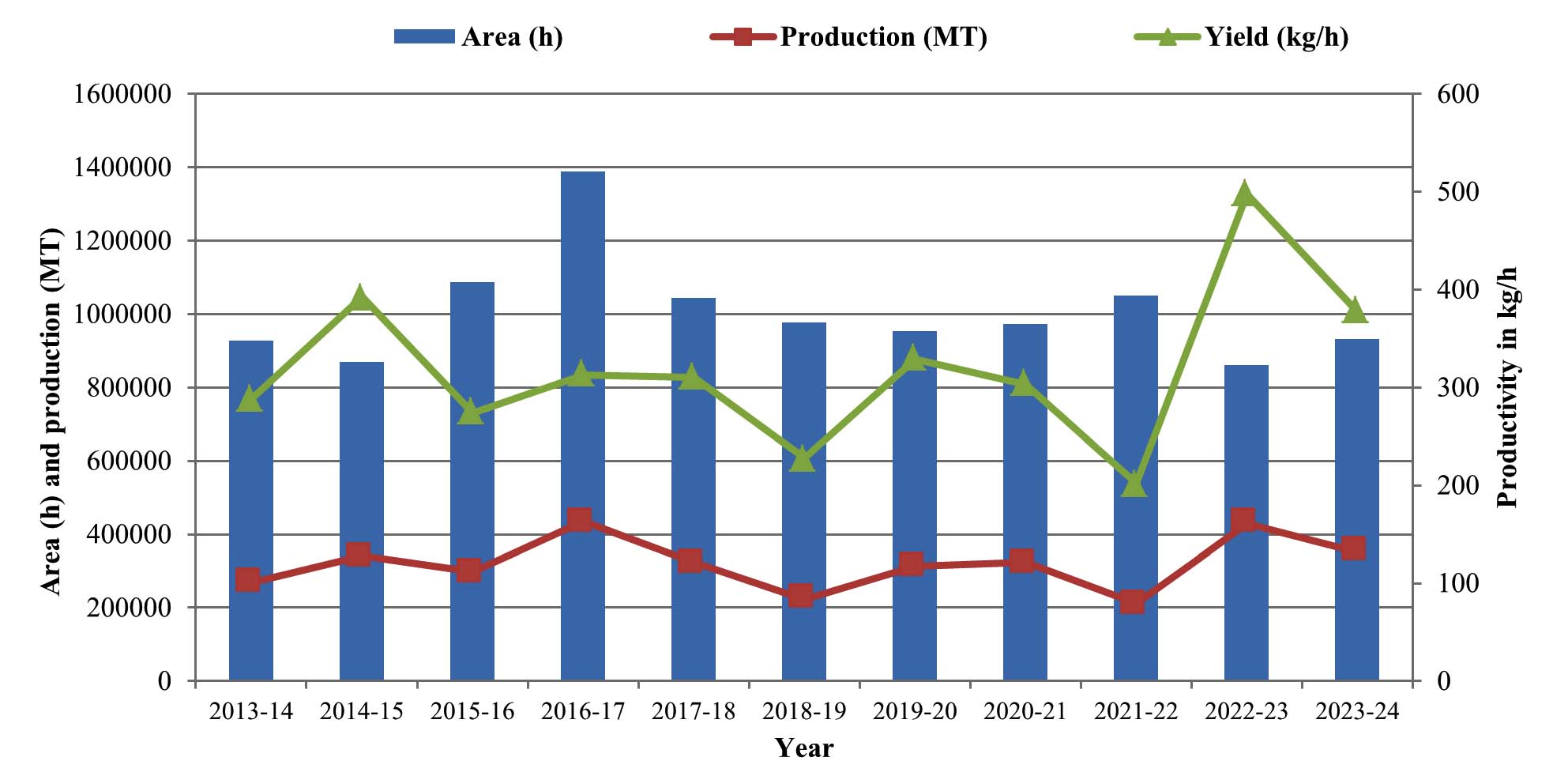
Figure 1. Area, production and productivity of mothbean in Rajasthan (Source: https://rajas.rajasthan.gov.in)
Deplorably, the mothbean crop suffers from many biotic factors like fungi, bacteria, viruses, nematodes, etc. The most significant problem in Rajasthan’s mothbean-growing regions is cercospora leaf spot (CLS), which lowers mothbean productivity overall. Cercospora leaf spot (C. canescens Ellis and Martin) disease also occurs on other closely related legumes plants such as mungbean, ‘true’ beans (Phaseolus), and soybean. Interestingly, cercospora leaf spot disease was initially documented from Delhi, India.6 The fungus, Cercospora canescens primarily spreads through infected seeds, plant debris, or rain splash. Apart from this, high humidity in warm, humid environments and prolonged periods of leaf wetness encourage the development and spread of the fungal spores. However, optimal temperature for the fungus is around 25-30 °C. Woefully, dense planting increases humidity around the plants and results in poor air circulation, which favours the growth of this fungal pathogen.
The cercospora leaf spot (CLS) disease is characterized by small, circular spots on the leaves, which start off as light brown or greyish lesions with a yellowish halo. As the infection progresses, the spots enlarge and may coalesce, resulting in a significant reduction in photosynthetic capacity, stunting plant growth, and in severe cases premature defoliation occurs. With extensive leaf loss, the plant’s ability to photosynthesize is hindered, which can affect seed production up to 40 percent. Cercospora leaf spot (C. canescens Ellis and Martin) disease affects the foliation, and in severe infections it damages the entire crop, which woefully leads to yield losses of up to 50-70%.7-10
The bio-efficacy of various fungicides (Table 1) against C. canescens Ellis and Martin causing cercospora leaf spot disease of mothbean was evaluated during Kharif 2020 and 2021. The experimental trial was laid out at Agricultural Research Station (Agriculture University, Jodhpur), Mandor in randomized blocked design. The local cultivar of Mothbean (V. aconitifolia) was sown in the first week of July in both subsequent Kharif seasons. Three replications for each treatment were maintained in 4.0 x 3.0 m2 plot size. This experiment incorporated ten treatments (Table 1), including nine fungicides and one control. All the treatments were applied as foliar spray on the crop in field conditions. First spray was started from the initial appearance of the disease and second was done after 15 days of first spray. Twenty leaves from ten randomly chosen plants in each treatment were examined in order to determine the percent disease intensity (PDI) before the 1st and 2nd spray and ten days after the first and last sprays. Further, 0-9 scale was used for the disease scoring on leaves11 and percent disease intensity was calculated.12
Percent disease intensity = Sum of numerical rating / No. of leaves examined x Maximum disease rating x 100
At crop maturity mothbean was harvested from each experimental plot and kept separately. Further, seed yield per plot was recorded and calculated in kg/h. As recommended,13 the analysis of variance technique (ANOVA) for Randomized Block Design (RBD) was used to statistically analyze the data from this investigation.
Table (1):
Details of treatments applied against cercospora leaf spot diseases of mothbean under natural field condition
T1 |
Two foliar spray of thiram 37.5% + carboxin 37.5% WS @ 2 ml/l at an interval of 15 days |
T2 |
Two foliar spray of hexaconozole 5% EC @ 1 ml/l at an interval of 15 days |
T3 |
Two foliar spray of trifloxystrobin 25% + tebuconazole 50% WG (75% WG) @ 0.5 g/l at an interval of 15 days |
T4 |
Two foliar spray azoxystrobin 23% SC @ 1 ml/l at an interval of 15 days |
T5 |
Two foliar spray of difenoconazole 25% EC @ 0.5 ml/l at an interval of 15 days |
T6 |
Two foliar spray of carbendazim 50% WP @ 2 g/l at an interval of 15 days |
T7 |
Two foliar spray of myclobutanil 10% WP @ 1 g/l at an interval of 15 days |
T8 |
Two foliar spray of metiram 55% WG + pyraclostrobin 5% WG @ 3.5 g/l at an interval of 15 days |
T9 |
Two foliar spray of pyraclostrobin 133 g/l + epoxiconazole 50 g/l SE @1.5 ml/l at an interval of 15 days |
T10 |
Control |
The application of fungicides had a varied impact on the percent disease intensity and seed yield of mothbean (Tables 2 and 3). For instance, two years (Kharif, 2020 & 2021) pooled data on the percent disease intensity revealed that all the tested fungicides were crucially effective in reducing the cercospora leaf spot disease (C. canescens Ellis and Martin) over the control (34.9 and 37.0 percent) after 10th day of 1st and 2nd spray but the variation in the effectiveness of the fungicides were found statistically significant (Table 2). It’s interesting to note that, before the application of treatment findings (pooled) indicated that the disease intensity ranged from 1.5 to 8.9 percent in the experimental plots. At 10 days after 1st and 2nd spray, lowest 10.3 percent and 7.6 percent disease intensity was recorded with two foliar spray with pyraclostrobin 133 g/l + epoxiconazole 50 g/l SE @ 1.5 ml, respectively. However, two foliar sprays with difenoconazole 25% EC @ 0.5 ml/l at an interval of 15 days were second best with 10.9 and 9.4 percent disease intensity followed by hexaconozole 5% EC @ 1 ml/l recorded 10.9 percent after 10 of 1st spray and trifloxystrobin 25% + tebuconazole 50% (75% WG) @ 0.5 g/l which was recorded 10.0 percent disease intensity after 10 days of 2nd spray. Two foliar sprays with hexaconazole 5% EC @ 1 ml/l, carbendazim 50% WP @ 2 g/l and of myclobutanil 10% WP @ 1 g/l at an interval of 15 days were the next best at 10 days after 2nd spray with 11.1 percent, 11.5 percent and 11.9 percent disease intensity, respectively. Similarly, azoxystrobin 23% SC @ 1 ml/l, thiram 37.5 % + carboxin 37.5% WS @ 2 ml/l and metiram 55% WG + pyraclostrobin 5% WG @ 3.5 g/l were also found effective against cercospora leaf spot disease (C. canescens Ellis and Martin) of mothbean and, 12.9 percent, 13.4 percent and 15.2 percent disease intensity was recorded, respectively.
Table (2):
Bio-efficacy of fungicides against cercospora leaf spot of mothbean crop tested under natural field conditions
| Treatments | Cercospora leaf spot (CLS)* | ||||||||
|---|---|---|---|---|---|---|---|---|---|
| Prior to spray | 10 days after 1st spray | 10 days after 2nd spray | |||||||
| 2020 | 2021 | Pooled | 2020 | 2021 | Pooled | 2020 | 2021 | Pooled | |
| T1 -Two foliar spray of thiram 37.5% + carboxin 37.5% @ 2 ml/l at an interval of 15 days | 7.1
(15.45) |
9.7
(18.15) |
8.4
(16.85) |
13.3
(21.39) |
11.7
(20.00 |
12.5
(20.70) |
11.0
(19.36) |
15.7
(23.39) |
13.4
(21.47) |
| T2– Two foliar spray of hexaconazole @ 1 ml/l at an interval of 15 days | 5.1
(13.05) |
7.1
(15.45) |
6.1
(14.3) |
10.7
(19.09) |
11.1
(19.46) |
10.9
(19.28) |
9.1
(17.62) |
13.1
(21.23) |
11.1
(19.46) |
| T3 – Two foliar spray of trifloxystrobin 25% + tebuconazole 50% @ 0.5 g/l at an interval of 15 days | 4.8
(12.66) |
6.1
(14.30) |
5.5
(13.5) |
10.7
(19.09) |
12.1
(20.36) |
11.4
(19.73 |
8.8
(17.31) |
11.1
(19.47) |
10.0
(18.43) |
| T4– Two foliar spray azoxystrobin 23% SC @ 1 ml/l at an interval of 15 days | 6.7
(15.00) |
4.9
(12.79) |
3.4
(7.5) |
11.9
(20.18) |
15.9
(23.50) |
13.9
(21.89) |
10.7
(19.13) |
14.9
(22.77) |
12.9
(21.05) |
| T5– Two foliar spray of difenoconazole @ 0.5 ml/l at an interval of 15 days | 3.0
(10.0 ) |
4.9
(12.79) |
1.5
(5.0) |
9.9
(18.34) |
11.9
(20.18) |
10.9
(19.28) |
7.7
(16.16) |
10.9
(19.36) |
9.4
(17.85) |
| T6-Two foliar spray of carbendazim 50% WP @ 2 g/l at an interval of 15 days | 5.0
(12.90) |
7.5
(15.89) |
6.3
(14.4) |
13.0
(21.13) |
13.0
(21.13) |
13.0
(21.13) |
9.4
(17.84) |
13.5
(21.63) |
11.5
(19.82) |
| T7-Two foliar spray of myclobutanil @ 1 g/l at an interval of 15 days | 5.3
(13.30) |
8.0
(16.43) |
6.7
(14.9) |
10.9
(19.28) |
15.0
(22.79) |
12.9
(21.09) |
9.8
(18.27) |
14.0
(21.99) |
11.9
(20.18) |
| T8-Two foliar spray of metiram 55% WG + pyraclostrobin 5% WG @ 3.5 g/l at an interval of 15 days | 8.3
(16.74) |
9.5
(17.95) |
8.9
(17.3) |
14.3
(22.22) |
15.5
(23.18) |
14.9
(22.71) |
12.9
(21.05) |
17.5
(24.77) |
15.2
(22.95) |
| T9 -Two foliar spray of pyraclostrobin 133 g/l + epoxiconazole 50 g/l SE @1.5 ml/l at an interval of 15 days | 2.7
(7.49) |
1.7
(8.5) |
2.2
(18.24) |
9.8
(19.19) |
10.8
(18.72) |
10.3
(14.37) |
6.1
(17.57) |
9.1
(16.00) |
7.6
(9.50) |
| T10– Control | 9.3
(17.76) |
4.9
(12.79) |
7.1
(15.3) |
29.3
(32.77) |
30.1
(33.27) |
29.7
(33.02) |
27.0
(31.31) |
34.9
(36.27) |
37.0
(33.83) |
| S.Em. ± | 1.00 | 0.38 | 0.7 | 0.60 | 0.67 | 0.63 | 0.58 | 0.66 | 0.60 |
| C.D. at 5% | 2.99 | 1.18 | 2.1 | 1.86 | 2.05 | 1.95 | 1.76 | 2.02 | 1.85 |
| CV (%) | 32.36 | 10.31 | 21.3 | 7.80 | 7.85 | 7.80 | 9.03 | 7.43 | 7.74 |
* Figures in parenthesis are angular transformed value and average of three replications
Table (3):
Seed yield and economics of different novel fungicide treatments used against cercospora leaf spot of mothbean crop (Pooled- Kharif, 2020 & 2021)
| Treatments | Seed yield (kg/h)* | Net Return | B:C Ratio | ||
|---|---|---|---|---|---|
| 2020 | 2021 | Pooled | |||
| T1 – Two foliar spray of thiram 37.5% + carboxin 37.5% @ 2 ml/l at an interval of 15 days | 305 | 297 | 301 | 4186 | 1.33 |
| T2– Two foliar spray of hexaconazole @ 1 ml/l at an interval of 15 days | 376 | 368 | 372 | 8746 | 1.73 |
| T3– Two foliar spray of trifloxystrobin 25% + tebuconazole 50% @ 0.5 g/l at an interval of 15 days | 403 | 395 | 399 | 6295 | 1.40 |
| T4-Two foliar spray azoxystrobin 23% SC @1 ml/l at an interval of 15 days | 333 | 325 | 329 | 1530 | 1.09 |
| T5– Two foliar spray of difenoconazole @ 0.5 ml/l at an interval of 15 days | 418 | 410 | 414 | 9407 | 1.69 |
| T6– Two foliar spray of carbendazim 50 % WP @ 2 g/l at an interval of 15 days | 333 | 326 | 330 | 5295 | 1.41 |
| T7– Two foliar spray of myclobutanil @ 1 g/l at an interval of 15 days | 375 | 367 | 371 | 7091 | 1.53 |
| T8– Two foliar spray of metiram 55% WG + pyraclostrobin 5 % WG @ 3.5 g/l at an interval of 15 days | 342 | 334 | 338 | 6259 | 1.50 |
| T9 – Two foliar spray of pyraclostrobin 133 g/l + epoxiconazole 50 g/l SE @1.5ml/l at an interval of 15 days | 442 | 434 | 438 | 10459 | 1.76 |
| T10– Control | 264 | 256 | 260 | 2930 | 1.25 |
| S.Em. ± | 25.2 | 15.40 | 17.02 | – | – |
| C.D. at 5% | 75.4 | 47.43 | 52.44 | – | – |
| CV (%) | 12.2 | 7.58 | 8.30 | – | – |
*Average of three replications
Further, findings of the present investigation suggest that the mothbean seed yield increased and found statistically significant over the control (Table 3). The findings showed that maximum 438 kg/ha seed yield was recorded in two foliar spray of pyraclostrobin 133 g/l + epoxiconazole 50 g/l SE @ 1.5 ml at an interval of 15 days along with Rs. 10459 net return and 1.76 benefit coast ratio followed by difenoconazole 25% EC @ 0.5 ml/l at an interval of 15 days recorded 414 kg/h seed yield along with Rs. 9407 net return and 1.69 benefit coast ratio, respectively. Interestingly, 68.5 percent seed yield of mothbean was increased over the control in the pyraclostrobin 133 g/l + epoxiconazole 50 g/l SE @ 1.5 ml treatment which is the highest increased seed yield among all treatments under the present investigation (Figure 2). On the contrary, minimum seed yield (260 kg/h); with minimum net return (Rs. 2930) and benefit coast ratio (1.25) was recorded in control. Thus, findings of the present study divulged that the combination of pyraclostrobin 133 g/l and epoxiconazole 50 g/l SE economically suited to integrate in the management modules for cercospora leaf spot disease in mothbean.
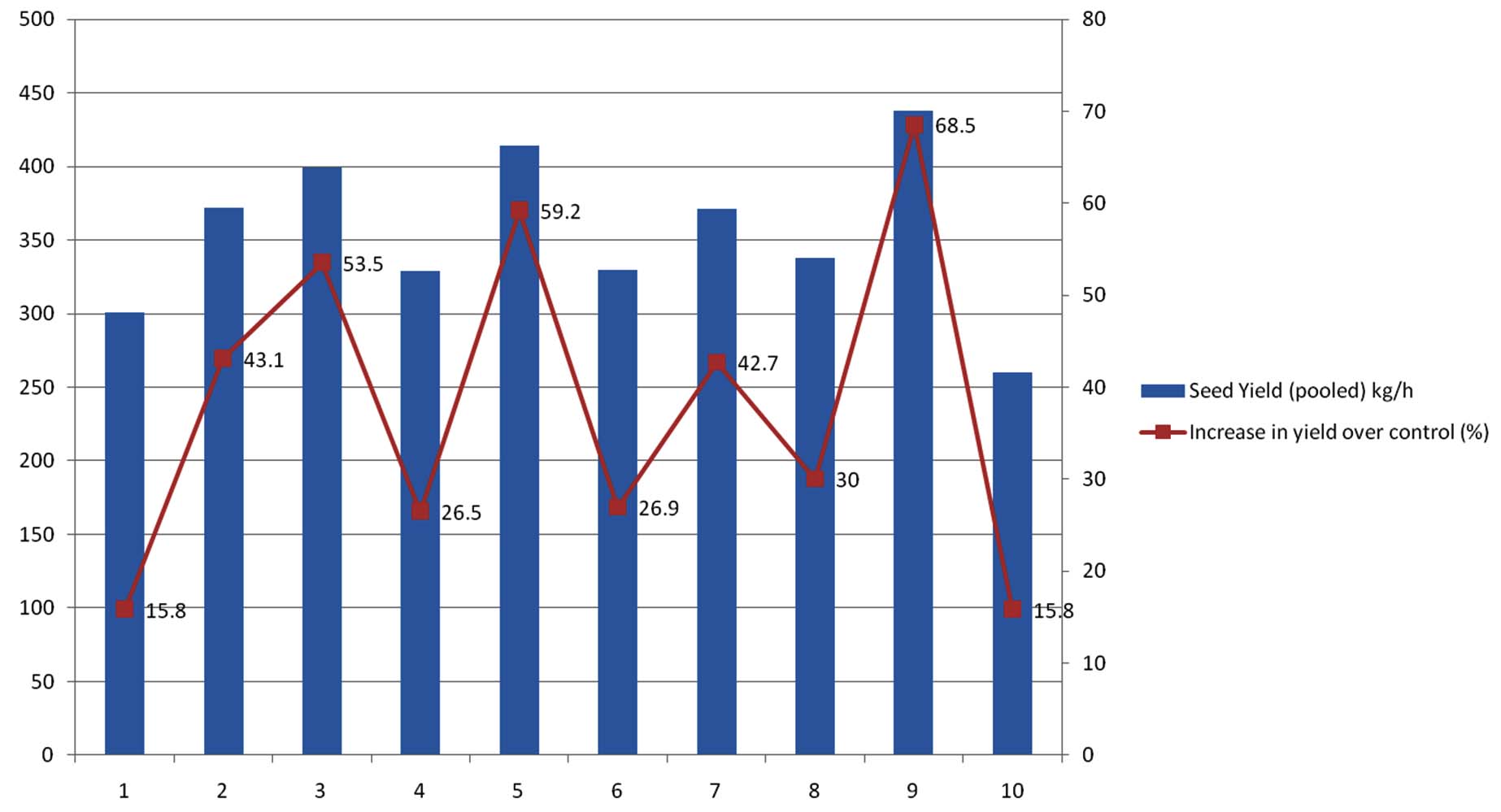
Figure 2. The economics of different treatments for cercospora leaf spot in mothbean crop
The findings of the present investigations are tantamount to the findings previous studies, for instance, the minimum intensity of disease in the treatment of metiram 55% + pyraclostrobin 5% WG (0.3%) was found significantly superior over all the other treatments.14 Two sprays at 10 days interval of trifloxystrobin 25% + tebuconazole 50% (Nativo 75 WG) @ 350 g/h were significantly effective in controlling both the diseases i.e. leaf spot and powdery mildew and with a maximum average increase in the grain yield over the check.15 Combinations of fungicides also reported significantly superior against cercospora leaf spot disease in tobacco.16 Similarly, Carbendazim (12%) and Mancozeb (63%) combination when used as foliar sprays effectively reduced the cercospora leaf spot disease intensity.17 Interestingly, metiram and pyraclostrobin in a combination at 0.3% effectively restrict the Cercospora canescens in vitro mycelial growth,18 thus it is evident that the combination products of fungicide are most effective against plant pathogens. Notably, formulations of single fungicidal compound also effectively reduced the cercospora leaf spot disease menace.9,18-21 Difenoconazole at 0.0125% proved to be most effective fungicide against mungbean cercospora leaf spot with minimum disease intensity and maximum yield,19 which corroborates the findings of the present investigation.
Perusal of data obtained from this study evinced that among the tested fungicides, two foliar sprays with pyraclostrobin 133 g/l + epoxiconazole 50 g/l SE @ 1.5 ml/l recorded minimum percent disease intensity (7.6%) of cercospora leaf spot with maximum seed yield (438 kg/ha) and highest benefit: cost ration (1.76). These two compounds have different modes of action against the targeted pathogen. Thus, it can be recommended that the combination of pyraclostrobin 133 g/l and epoxiconazole 50 g/l SE is statistically very effective and economically sound to contain the cercospora leaf spot disease menace in mothbean. Further, there are fewer chances of resistance development against this combination due different modes of actions on the target pathogen. However, difenoconazole 25% EC @ 0.5 ml/l (9.4%) after 10th day of second spray was found statistically at par with this combination. Using difenoconazole 25% EC as a single compound against this pathogen does not seem sensible due to emerging fungicide-resistant problems in plant pathogens. Therefore, a combination of fungicides is most suitable to cater cercospora leaf spot disease problem in mothbean for sustainable productivity of the crop.
ACKNOWLEDGMENTS
The authors would like to thank the Zonal Director Research, Dr BRC ARS, Mandor, Agriculture University, Jodhpur, Rajasthan, India, for the integral support during the course of this investigation.
CONFLICT OF INTEREST
The authors declare that there is no conflict of interest.
AUTHORS’ CONTRIBUTION
ReK and RaK conceptualized the study, applied methodology, performed formal analysis and investigation. JRV, RaK and BLK performed visualization. Rek and Rak wrote the original draft.JRV, RaK and BLK wrote, reviewed and revised the manuscript. All authors read and approved the final manuscript for publication.
FUNDING
This study was supported through funding by the Agriculture University, Jodhpur, Rajasthan, India.
DATA AVAILABILITY
All datasets generated or analyzed during this study are included in the manuscript.
ETHICS STATEMENT
Not applicable.
- Singh VK, Prasad JVNS, Indoria AK, et al. Promising Climate Resilient Technologies for Rajasthan. ICAR-Central Research Institute for Dryland Agriculture, Hyderabad. 2023:104.
- Jyoti R, Dhull SB, Kinabo J, Kidwai MK, Sangwan A. A narrative review on nutritional and health benefits of underutilized summer crop to address agriculture challenges: Moth bean (Vigna aconitifolia L.). Legume Science. 2023;5(4):e204.
Crossref - Kanishka RC, Gayacharan, Basavaraja T, Chandora R, Rana, JC. Moth bean (Vigna aconitifolia): A minor legume with major potential to address global agricultural challenges. Front Plant Sci. 2023;14-1179547.
Crossref - Meena MS, Mishra JP Meena HN. Popularization of mothbean cultivation in Rajasthan. Indian Farming. 2024;74(3):21-25.
- Annonymous. Rajasthan Agriculture Statistics. Commissionrate of Agriculture, Rajasthan, Path Krishi Bhawan. Jaipur. 2024:41.
- Munjal RL, Lall G and Chona BL. Some cercospora species from India-IV. Indian Phytopathology. 1962;13:144-149.
- Kumar R, Meena AK, Kumar V, Nathawat BDS, Yadav AL. Management of Cercospora Leaf Spot [Cercospora canescens Ellis and Martin] of Mothbean [Vigna aconitifolia (Jacq.) Marechal] through fungicides. Legume Research. 2023;47(9):1620-1624.
Crossref - Maurya AK, Navathe S, Mohapatra C, Chand R. Antioxidants elevates the resistance to Cercospora canescens in inter-specific cross of Vigna radiata (Kopergaon) x Vigna mungo (Pant Urd 31). Indian Phytopathol. 2018;71(4):519-528.
Crossref - Shahzady H, Ahmad Tanvir, Moosa Anam, Khan Waqas, Naeem Iqra, Nasir Muhammad, Khan Muhammad, Abbas Aqleem. A General Review of Cercospora Leaf Spot Disease of Mungbean and its Management. International Journal of Scientific Research. 2017;5(2):81-84
- Poehlman JM. What we have learned from the International mungbean nurseries. In: Cowell R (ed). First International Mungbean Symposium AVRDC, Taiwan. 1978:97-100.
- Mayee CD , Datar, VV. Phytopathometry. Technical Bulletin-I, Marathawad Agricultural University, Parbhani, India. 1986:146-168.
- Wheeler BEJ. An Introduction to Plant Diseases. John Willey and Sons Ltd., London. 1969.
- Panse VG, Sukhatme PV. Statistical Methods for Agricultural Workers. 3rd ed. New Delhi, India: Indian Council of Agricultural Research; 1978:147-148.
- Ingole MN, Ingle ST, Charpe A, et al. Management of cercospora leaf spot in mungbean. The Pharma Innovation Journal. 2023;SP-12(12):2246-2248.
- Banyal DK, Thakur A, Singh A. Management of leaf spot (Cercospora canescens) and powdery mildew (Erysiphe polygoni) of cowpea through fungicides. Plant Dis Res. 2019;34(2):119-123.
Crossref - Punit Kumar ND, Karegowda C, Murali R, et al. Frog Eye Leaf Spot Disease of FCV Tobacco Caused by Cercospora nicotianae in Southern Districts of Karnataka. J Pure Appl Microbiol. 2016;10(1):401-406.
- Yadav DL, Pandey RN, Jaisni P, Gohel NM. Sources of resistance in mungbean genotypes to cercospora leaf spot disease and its management. Afr J Agric Res. 2014;9(41):3111-3114.
Crossref - Huma A, Muhammad AI, Muhammad K, et al. Evaluation of advanced mungbean germplasm against Cercospora leaf spot and its In-vitro management by different fungicides. Pak J Agric Res. 2020;33(4):4:872-877.
Crossref - Kapadiya HJ, Dhruj IU. Management of mungbean cercospora leaf spot through fungicides. Indian Phytopathol. 1999;52(1):96-97.
- Khunti JP, Bhoraniya MF, Roa D. Management of powdery mildew and cercospora leaf spot of mungbean by some systemic fungicides. Legume Research. 2005;28(1):65-67.
- Khunti JP, Bhoraniya MF and Vora VD. Management of powdery mildew and cercospora leaf spot of mungbean by some systemic fungicides. J Mycol Plant Pathol. 2002;32(1):103-105.
© The Author(s) 2026. Open Access. This article is distributed under the terms of the Creative Commons Attribution 4.0 International License which permits unrestricted use, sharing, distribution, and reproduction in any medium, provided you give appropriate credit to the original author(s) and the source, provide a link to the Creative Commons license, and indicate if changes were made.