

 , Deep Prakash Parasar1 , Smita Sarma2,
Pritam Bardhan3
, Suresh Deka3, Songeeta Singha4 and Manash Pratim Kashyap5 Natural colouring agents or biopigments, particularly those derived from microorganisms, present an exciting opportunity for extensive research and industrial application. The use of these naturally derived pigments has gained remarkable momentum in the food industry, driven by the increasing consumer preference for safe, functional, and eco-friendly additives. Historical and traditional food practices also reveal a strong foundation for the use of natural colourants in various food products across different cultures. Examples of food items enriched with microbial pigments include wheat rotis, fortified biscuits, white chocolate, meatballs, cookies, and eggs, all of which demonstrate the successful incorporation of these compounds into everyday foods. Yeast-derived bioactive compounds and pigments such as β-carotene, astaxanthin, lycopene and mannoproteins derived from diverse yeast species including Rhodotorula mucilaginosa, Rhodotorula glutinis, Phaffia rhodozyma, Metschnikowia pulcherrimsa, Cryptococcus, Sporobolomyces and Exophiala salmonis offer significant potential for food fortification and functional enhancement. The supplementation of yeast-derived pigments and bioactive compounds into conventional foods not only improves their visual and sensory attributes but also offers substantial health benefits, such as antioxidant, antimicrobial, and immunomodulatory effects. Consequently, the inclusion of these natural pigments can significantly enhance the health-promoting properties and nutritional value of food products, aligning with the global trend toward sustainable and functional foods.
Biopigments, Food Industry, Health Benefits, Nutraceuticals, Yeast
Throughout history, yeast has played a key role in transforming simple food substrates into complex, value-added products ranging from traditional bread making to functional ingredients with health benefits. ‘True yeasts’, including Saccharomyces (baker’s yeast) and Candida are widely distributed on plant surfaces, including leaves, in soil and water, and within the gut microbiome of animals, including humans and are nutritionally rich in proteins, B vitamins, and minerals.1
In recent years, yeast-derived compounds have gained considerable attention in both scientific and industrial sectors. Yeast strains are valued for their capacity to produce various bioactive compounds such as enzymes, polysaccharides, polyphenols, and carotenoids, which can serve as safe and functional alternatives to synthetic additives in the food, cosmetic, agricultural, and pharmaceutical industries.2 Yeasts are also efficient producers of microbial lipids due to their high cellular biomass.3 Under conditions of low nitrogen, phosphorus, or iron, certain yeast strains (oleaginous yeasts) can accumulate intracellular lipid content reaching or exceeding 20% of their cell dry weight.4 Moreover, certain yeast strains, particularly those belonging to the genera Rhodotorula, Sporobolomyces, Sporidiobolus, Xanthophyllomyces, and Pichia have been recognized as prolific producers of natural pigments, including γ-carotene, β-carotene, torulene, torularhodin, and astaxanthin.5-7 Figure 1 presents the distinct colony morphologies of various pigment-producing yeast strains. Interestingly, both lipids and pigments in oleaginous yeasts originate from a common precursor molecule, acetyl-CoA, and the pigments are typically localized within lipid bodies or droplets. These pigments have broad applications as food colourants and are also utilized in textiles, cosmetics, leather, inks, and paints.
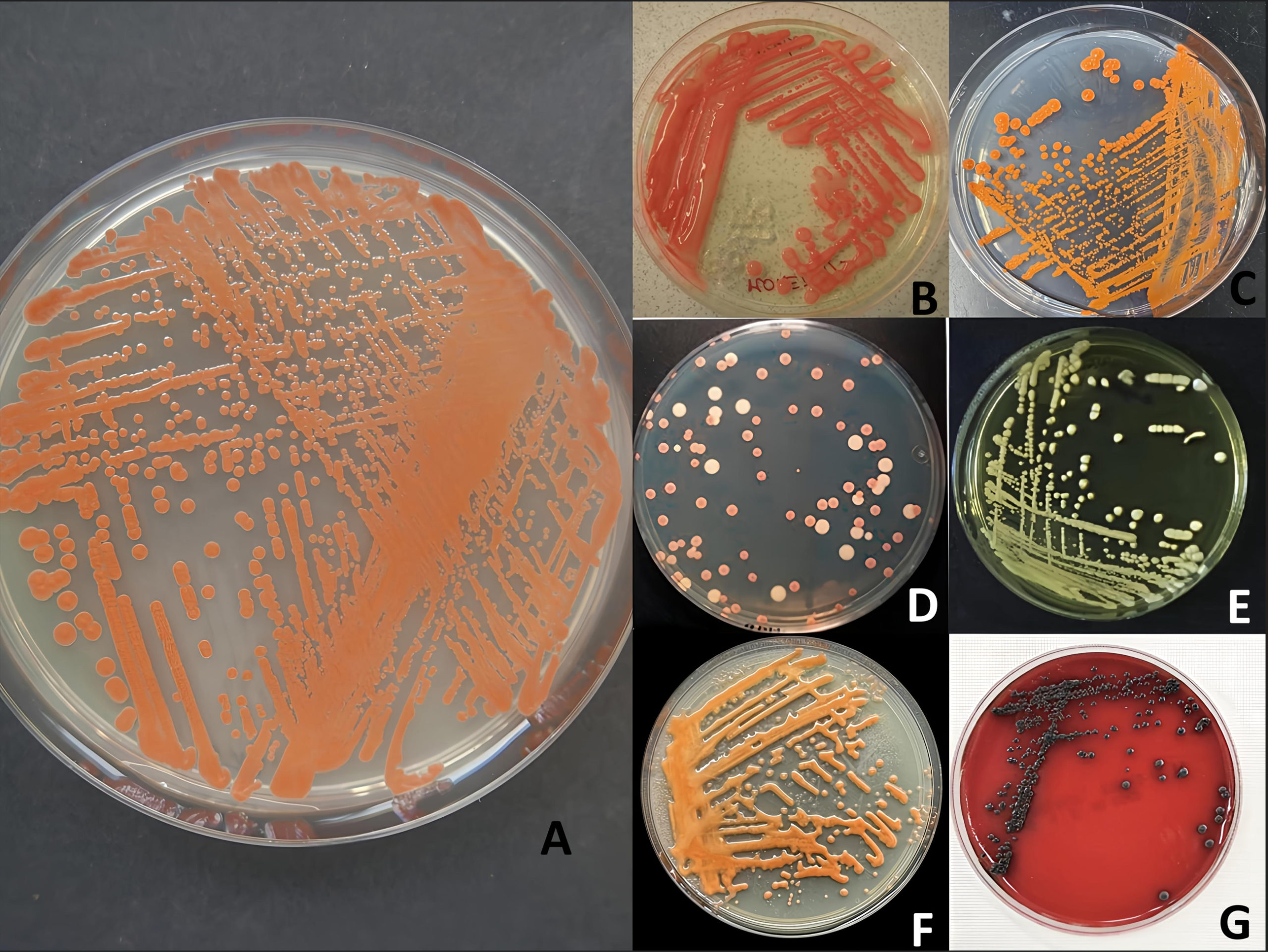
Figure 1. Various pigment-producing yeast strains,53-59 (A) Rhodotorula mucilaginosa, (B) Rhodotorula glutinis, (C) Phaffia rhodozyma, (D) Metschnikowia pulcherrima, (E) Cryptococcus yeasts, (F) Sporobolomyces, (G) Exophiala salmonis
Natural pigments, as colouring substances, constitute one of the most important sensory attributes influencing human perception and preference — spanning food, clothing, and interior design. The increasing complexity of modern lifestyles has driven the demand for natural pigments.8 In the food industry, colours not only elevate the visual appeal but also preserve appearance during processing and storage, maintaining product consistency despite environmental and seasonal variations.9
The major sources of natural pigments include plants, animals, and microorganisms.8 Among these, microbial pigments stand out as eco-friendly and sustainable alternatives to synthetic dyes due to their cost-effective production through fermentation technology. Microorganisms, including fungi, bacteria, and microalgae, are recognized for their ability to produce pigments with significant therapeutic potential, such as antioxidant, antimicrobial, and anticancer activities.5,10
Historically, natural pigments were the only colouring agents available until the advent of synthetic dyes in the 20th century. Although synthetic pigments offer advantages such as low cost, wide range of colours, and mass production, they are also recalcitrant, bioaccumulative, toxic, mutagenic, and carcinogenic.11 Therefore, there is a resurgence of scientific interest in natural pigments as safer alternatives.12 In fact, the global market for natural colorants has been expanding at an annual growth rate of about 7%, with an estimated market value of USD 7.79 billion by 2020.5 In this regard, carotenoids are of particular interest as these natural pigments not only impart vivid colour but also enhance food quality and shelf life due to their antioxidant properties.13 In this review, we summarize the current applications of yeast-derived natural pigments and bioactive compounds in various food products to their nutritional and functional value.
Applications of yeast-derived compounds in food
Yeast-derived compounds are increasingly incorporated into food formulations to improve their nutritional, functional, and sensory properties. These applications demonstrate that yeast-derived pigments and compounds not only improve the appearance, taste, and texture of foods but also boost shelf life, safety, and consumer appeal due to their antioxidant and antimicrobial properties. In food design, colour remains a key determinant of product acceptability alongside taste and aroma. Table 1 highlights their applications in different food products and Components extracted from different yeast strains are listed in Table 2. The structural representation of these compounds is shown in Figure 2.
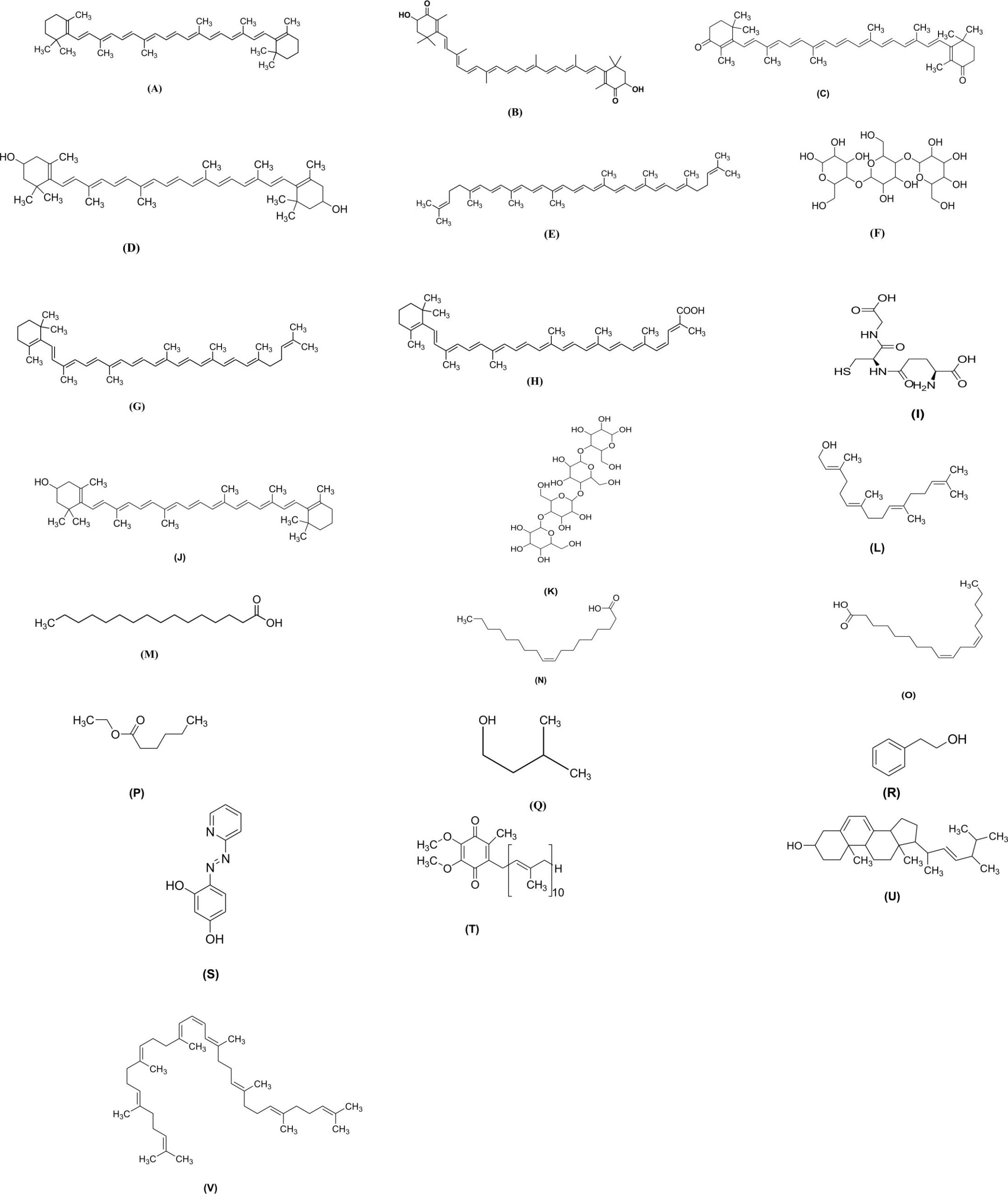
Figure 2. Structures of compounds (A) β-carotene, (B) Astaxanthin, (C) Canthaxanthin, (D) Zeaxanthin, (E) Lycopene, (F) β-glucan, (G) δ-carotene, (H) Torularhodin, (I) Glutathione, (J) β-cryptoxanthin, (K) Mannans, (L) Geranylgeraniol, (M) Palmitic acid, (N) Oleic acid, (O) Linoleic acid, (P) Ethylhexonate, (Q) Isoamyl alcohol, (R) Phenyl alcohol, (S) Lipase, (T) Ubiquinone, (U) Ergosterol, (V) Phytoene
Table 1. Processed food items fortified with yeast-derived compounds
Compounds extracted from yeast |
Processed food items |
Ref. |
|---|---|---|
β-carotene |
Wheat roti |
14 |
β-carotene |
Biscuit |
15 |
β-carotene |
White chocolate |
16 |
Astaxanthin |
Meatballs |
17 |
Astaxanthin |
Cookies |
18 |
Astaxanthin |
Eggs |
19 |
Astaxanthin |
Yogurt |
20 |
Astaxanthin |
Chia oil |
21 |
Lycopene |
Guava beverage |
22 |
Lycopene |
Wheat flour cookies |
23 |
Mannoprotein |
Mayonnaise |
24 |
β-carotene |
Hard boiled candy, Jelly |
25 |
β-carotene |
Pasta |
26 |
Astaxanthin |
Acid curd cheese (Tvarog) |
27 |
Lycopene |
Bread |
28 |
Astaxanthin |
Whole milk, Skimmed milk and Semi-Skimmed milk |
29 |
β-carotene |
Drinking yoghurt |
30 |
Table 2. Components extracted from different yeast strains
Yeast strain |
Extracted compound |
Ref. |
|---|---|---|
Saccharomyces cerevisiae |
Amino acids, Glutathione, Proteins, Mannoproteins, β-glucans |
32 |
Rhodotorula taiwanensis |
β-carotene, β-cryptoxanthin, torulene and torularhodin |
2 |
Xanthophyllomyces dendrorhous |
β-carotene, astaxanthin, canthaxanthin, zeaxanthin |
33 |
S. cerevisiae (cell wall) |
β-glucan, mannoprotein, and chitin |
34 |
S. cerevisiae |
Mannans |
35 |
Yarrowia lipolytica |
Geranylgeraniol |
36 |
Rhodotorula toruloides CBS 14 |
Carotenoids: γ-carotene, β-carotene, torularhodin, and torulene. Lipids: palmitic acid, oleic acid, and linoleic acid, unsaturated fatty acid |
37 |
Wickerhamomyces anomalus Y-1 |
Ethyl hexanoate, isoamyl alcohol and phenyl alcohol |
38 |
Rhodotorula mucilaginosa |
Pigments: torularhodin, torulene, β-carotene and γ-carotene |
39 |
Phaffia rhodozyma |
carotenoid pigment astaxanthin |
6 |
R. graminis DB-VPG 7021 |
β-carotene, γ-carotene, torulene and torularhodin |
39 |
Hortaea werneckii AS1 |
Melanin pigment |
40 |
Cryptococcus rajasthanensis |
Melanin pigment |
41 |
Rhodotorula glutinis |
Torulene, torularhodin and β-carotene |
42 |
Rhodotorula and Sporobolomyces roseus |
Torulene, torularhodin, and β-carotene |
42 |
Rhodotorula minuta, Rhodotorula acheniorum and Rhodotorula graminis |
Carotenoid |
43 |
Sporobolomyces roseus and Rhodotorula glutinis. |
Carotenoids |
44 |
Rhodotorula glutinis |
Lipid, carotenoid and Phenylalanine ammonia-lyase |
45 |
Cryptococcus aureus, K. marxianus |
Inulinase enzyme |
46 |
Kluyveromyces |
β-galactosidase enzyme |
46 |
Candida kefyr, S. fragilis, |
polygalacturonases, pectinlyases, pectinesterase or |
46 |
S. cerevisiae, K. marxianus |
pectate lyase |
|
C. rugosa, Y. lipolytica, C. antarctica, C. utilis, and Saccharomyces sp. |
lipase |
47 |
Candida sp. |
Ethyl hexanoate |
48 |
Rhodotorula mucilaginosa |
β-carotene |
49 |
Sporidiobolus pararoseus |
Carotenoids |
50 |
Blakeslea trispora and Phycomyces blakesleeanus |
β-carotene, ubiquinone, ergosterol, organic acids, carotenoids like lycopene, γ-carotene, and phytoene |
51 |
Rhodotorula mucilaginosa R2 |
β-carotene, torulene, torularhodin, Lipids, PUFA |
52 |
From the earliest stages of bread-making to modern food technology, yeast has played a key role by transforming a simple food item into something extraordinary. Yeasts are unicellular microbes that belong to the ascomycetes group. They are eukaryotic in nature and have completely different properties from bacteria.1 They are normally found in soil, plants, water, animals, and in some insects. Yeast are single-celled organisms that grow in living systems, and is a good source of vitamin B and protein. They usually measure 8 micrometres in diameter and commonly found in oval, cylindrical, or spherical shapes.31
Applications of compounds in food products
Processed food items
Wheat rotis using β-carotene
In India, wheat is the most widely produced and consumed cereal crops, as most Indians follow a vegetarian diet. Wheat contains iron, but it has low bioavailability due to the presence of iron inhibitors such as phytates. Wheat rotis were prepared using both natural and synthetic sources of β-carotene. After grinding the wheat grains into flour, wheat rotis were prepared, and the β-carotene was added either as a synthetic suspension or by directly mixing mashed carrots into the cooked rotis. The study demonstrated that the addition of both synthetic and natural β-carotene improves iron bioavailability of the food. This enhancement is due to the ability of β-carotene to bind with the iron, preventing the phytate from binding with it and inhibiting iron absorption. This processed food has the potential to increase iron absorption from wheat-based meals. The study concludes that both synthetic and natural β-carotene are effective in enhancing the nutritional quality of this food, which is especially important for people who suffer from anaemia due to iron deficiency.14
β–carotene–fortified biscuits
Biscuits were prepared with the addition of β-carotene, and consumption of this processed biscuit resulted in improved micronutrient levels and had a favourable effect on health complications and brain function.15
White chocolate enriched with β-carotene
White chocolate enriched with free and encapsulated β-carotene was prepared using freeze drying, spray drying, and coaxial electrospinning process. The encapsulated formulation was added incorporated in the chocolate at the time of adding flavouring and emulsifying agents to it. Addition of β-carotene affected on different quality parameters, such as colour enhancement and higher melting energy. Overall, this processed white chocolate, having β-carotene, improves the stability of the chocolate and also enhances its nutritional qualities as well as the shelf life of the food product.16
Fortified meatballs
Beef meatballs were prepared by adding Astaxanthin in two different concentrations, 0.5% and 1% (w/v), and cooked at 150 °C and 200 °C. Use of astaxanthin changed the colour parameters L*, a*, b*, chroma (C) and hue angle (h°) values (according to CIELAB criteria), where the L* and h° values were decreased after cooking, and on the other hand, a*, b*, and C values were increased. The pH and the TBARS values were also increased in the food after the addition of Astaxanthin. It also increases their stability against oxidative degradation.17
Astaxanthin-incorporated cookies
Cookies were prepared by partially replacing flour (Barley, oat, and wheat flour) with Astaxanthin (Haematococcus pluvialis powder). Incorporation of astaxanthin decreases the size and the hardness of the cookies by increasing their moisture content. The reddish colour of the Haematococcus pluvialis influences the colour of the cookies by changing their yellowish colour into red. Addition of astaxanthin to the cookies also enhances their nutritional quality, increases the phenolic content, and the antioxidant properties. During in vitro digestion, the glucose release also decreases in the cookies having astaxanthin powder.18
Astaxanthin fortified eggs
Astaxanthin was incorporated in the feed of laying hens to enhance the nutritional quality of eggs by increasing their content of polyunsaturated fatty acids (PUFA), saturated fatty acids (SFA), monounsaturated fatty acids (MUFA), and DHA in the egg yolk. It also increases the vitamin A content while influencing the colour and texture of the eggs particularly by decreasing chewiness due to alterations in lipid composition. These astaxanthin fortified eggs have anti-inflammatory, antioxidant, anti-proliferative, and anti-apoptotic properties, and also provides protection against cell apoptosis and inflammation, as well as improves lipid profiles of blood and reproductive health in poultry.19
Astaxanthin in yogurt
Yogurt was prepared by processing it with a carotenoid compound, astaxanthin oleoresin, in both traditional and diet yogurt by mixing 9.0 ± 0.1 mg of astaxanthin oleoresin per 125 g of both the traditional and diet yogurt to obtain the exact apricot colour. The pigment shows high stability throughout the entire storage period.20
Astaxanthin fortified chia oil
Astaxanthin was added to chia oil at a concentration of 400 µg/g of chia oil. This mixture was assessed for its stability and potential use in functional food items. The incorporation of astaxanthin increases the antioxidant level of the oil and also increases the TEAC (Trolox Equivalent Antioxidant Capacity) value compared to chia oil alone. The composition shows good stability, and no change was observed in the ALA content. Consumption of omega-3 fatty acids and astaxanthin together decreases lipid oxidation in plasma, oxidative stress, hepatic steatosis, cholesterol levels, and triglycerides, while also enhancing antioxidant defence capacity. This composition of chia oil and astaxanthin increases the antioxidant capacity in cell lines. Incorporation of astaxanthin into chia oil enhances the benefits of both compounds and is also beneficial for application in functional food products.21
Lycopene fortified guava beverage
A processed guava beverage was prepared by incorporating tomato puree into pink guava pulp in different concentrations, as tomato puree is rich in lycopene. This fortification increases the lycopene content in the beverage that enhances its colour intensity. However, higher levels of tomato puree (above 6%) affects its flavour and decrease consumer acceptability. The fortification of lycopene in the beverage not only enhances its physical appearance, it also increases its nutritional values by increasing its antioxidant activity, therapeutic properties, such as DNA damage and protection against oxidative stresses.22
Lycopene incorporated whole wheat flour cookies
Lycopene was added to cookies prepared from whole wheat flour in the form of crude lycopene, that is extracted from tomato or by directly adding tomato powder. Addition of lycopene increases the visual appearance as well as the nutritional quality of the cookies. It increases the total carotenoid content, DPPH radical scavenging activity, total phenolic content as well as inhibition of lipid peroxidation. The cookies also show enhanced antioxidant properties and also increase the fat and ash content with the addition of lycopene. Incorporation of lycopene enhances the colour and the hardness of the cookies as compared to the control one. Hardness was due to the fibre content in the tomato powder.23
Mannoprotein in mayonnaise
Mannoprotein was extracted from the cell wall of spent brewer’s yeast and it was incorporated into mayonnaise in different concentrations, viz., 0.6, 0.8, and 1.0 g per 100 g of emulsion to assess its performance as a natural stabilizer in place of xanthan gum. This formulation shows enhanced emulsion stability that increases with the increasing concentration of mannoprotein. Addition of mannoprotein reduces the yellowish colour over time by increasing lightness. In terms of colour, aroma, flavour and texture there is no significant difference between the processed and the control mayonnaise sample. Mannoprotein can act as a natural alternative to artificial additive because of its stabilizing and emulsifying activity in mayonnaise by offering the potential for enhanced nutritional values with its carbohydrate and protein content.24
Processed candy and jelly
Yeast extracted carotenoids, such as β-carotene, torulene and torularhodin are used to prepare confectionery products like hard boiled candy and jelly by incorporating the compounds in different concentrations to the food products. These pigments not only enhance the colour profile; it also increases the antioxidant activity of both the food products. Incorporation of these pigments also influenced the appearance and texture of the food products by enhancing the red colour with increasing concertation’s. The pigment has the capability to inhibit MCF-7 breast cancer cells.25
Processed pasta with β-carotene
β-carotene was incorporated into pasta by adding carrot powder (β-carotene source) into wheat flour in different concentrations. This formulation increases the antioxidant activity and vitamin content in the food as β-carotene is a provitamin A which possesses a protective effect against some type of cancer. Incorporation of β-carotene in the pasta enhances its nutritional quality by increasing its vitamin and mineral contents with functional health benefits without influencing its sensory acceptability.26
Processed acid curd cheese (tvarog)
Astaxanthin was incorporated into acid curd cheese at different concentrations in the form of astaxanthin lipid preparation (ALP). Addition of astaxanthin increases its antioxidant activity, reduces lipid oxidation at the time of storage and also changes the colour of the cheese. Addition of astaxanthin decreases the pH value and has capability to inhibit the production of lactic acid which leads to extended freshness and greater shelf life. It also offers various health benefits like protection against oxidative stress and strong antioxidant activity. Overall, it enhances the nutritional quality of the food.27
Bread enriched with lycopene
Bread was prepared by incorporating tomato, which is enriched with lycopene and other bioactive compounds. Tomato waste, consisting of seeds and skin were dried and ground to make powder and then added that powder to wheat flour in different concentrations. The processed bread shows increased moisture content and elasticity of the bread crumbs with higher antioxidant capacity and other health promoting compounds. Due to the presence of lycopene, the enriched bread shows reddish brown colour but the size and porosity were decreased.28
Astaxanthin enriched milk
Whole milk, skimmed milk and semi-skimmed milk were prepared by incorporating astaxanthin oleoresin extracted from Haematococcus pluvialis. Addition of astaxanthin gives a visually attractive colour to the milk products and also shows high stability over the storage period in the refrigerator. Addition of astaxanthin not only provides the natural colouring, it also provides higher antioxidant activity that has potential to give protection against various types of cancers, cardiovascular problems and different immunological diseases.29
β-carotene enriched drinking yoghurt
Drinking yogurt was prepared by incorporating carrot pulp and orange juice enriched with β-carotene in different formulations. Based on sensory evaluation of taste, appearance, and overall acceptability, the best formulation was found to be 10% carrot juice, 10% orange juice, and 80% yogurt base. The β-carotene content of the formulation was found to be higher compared to plain yogurt. As a natural source of antioxidants and provitamin A, β-carotene enhances the nutritional quality of the processed yogurt by improving its antioxidant properties, improving skin complexion, and potentially inhibiting the growth of tumour cells by increasing the body’s immune response. The incorporation of β-carotene using orange juice and carrot pulp resulted in functional dairy products with enhanced nutritional content and improved health benefits.30
Food, pharmaceutical and cosmetics industries, as well as nutraceuticals, are undergoing a paradigm shift with the emergence of biotechnology as a result of the ability of natural pigments and bioactive compounds from yeast to be used as both food colourants and therapeutic agents. Some carotenoids including β-carotene, astaxanthin, lycopene, and torularhodin have strong antioxidant, antimicrobial, anti-inflammatory, and anti-neoplastic properties. These microbial metabolites can therefore offer a safe and environmentally friendly substitute for the synthetic dyes that are now being under increasing review for harmful health impacts. This trend is also driven by changes in consumer habits which are increasingly focused on clean label, health optimising and organics products.
Yeasts provide unique physiological benefits as production platforms, most importantly their fast generation times, their genetic stability and high scalability within bioreactor settings. Fermentation-based cultivation is also very close to the concept of green chemistry, which is in the economic interests of the cultivator and has great potential to use waste streams from agro-industrial processes as inexpensive carbon source, thus supporting the projects of the circular economy.
Although there are clear benefits in commercializing this, there are some persistent hurdles like yield limitations, complexity downstream, environmental instability of the product and new bioprocessed ingredients. The key to break these limitations are imminent metabolic engineering, synthetic biology, and advanced bioprocess optimization to move production into economically feasible range. Moreover, bioprospecting for new yeast strains is still an important field to look for new pigments that have better stability and functional properties. In conclusion, yeast-based biomanufacturing is a key approach for the sustainable development of next generation food additives and therapeutics.
ACKNOWLEDGMENTS
The authors acknowledge the Assam down town University for providing financial support in the form of a seed money grant.
CONFLICT OF INTEREST
The authors declare that there is no conflict of interest.
AUTHORS’ CONTRIBUTION
All authors listed have made a substantial, direct and intellectual contribution to the work, and approved it for publication.
FUNDING
This study was funded by the Assam down town University in the form of a Seed Money Grant (Memo No.: AdtU/R/2024-25/294).
DATA AVAILABILITY
All datasets generated or analyzed during this study are included in the manuscript.
ETHICS STATEMENT
Not applicable.
- Montes de Oca R, Salem AZM, Kholif AE, et al. Yeast: description and structure. In: Salem AZM, Kholif AE, Puniya AK, eds. Yeast Additive and Animal Production. 2016:4-13.
- Parasar DP, Ramakrishnan E, Kabilan S, Kotoky J, Sarma HK. Characterization of β-Cryptoxanthin and Other Carotenoid Derivatives from Rhodotorula taiwanensis, A Novel Yeast Isolated from Traditional Starter Culture of Assam. Chem Biodivers. 2020;17(12):e2000198.
Crossref - Kot AM, Blazejak S, Kieliszek M, Gientka I, Brys J. Simultaneous Production of Lipids and Carotenoids by the Red Yeast Rhodotorula from Waste Glycerol Fraction and Potato Wastewater. Appl Biochem Biotechnol. 2019;189(2):589-607.
Crossref - Zganjar M, Ogrizovic M, Matul M, et al. High-throughput screening of non-conventional yeasts for conversion of organic waste to microbial oils via carboxylate platform. Sci Rep. 2024;14(1):14233.
Crossref - Paillie-Jimenez ME, Stincone P, Brandelli A. Natural Pigments of Microbial Origin. Front Sustain Food Syst. 2020;4:590439.
Crossref - Nutakor C, Kanwugu ON, Kovaleva EG, Glukhareva TV. Enhancing astaxanthin yield in Phaffia rhodozyma: current trends and potential of phytohormones. Appl Microbiol Biotechnol. 2022;106(9-10):3531-3538.
Crossref - Kot AM, Sek W, Kieliszek M, Blazejak S, Pobiega K, Brzezinska R. Diversity of Red Yeasts in Various Regions and Environments of Poland and Biotechnological Potential of the Isolated Strains. Appl Biochem Biotechnol. 2024;196(6):3274-3316.
Crossref - Devi M, Ramakrishnan E, Deka S, Parasar DP. Bacteria as a source of biopigments and their potential applications. J Microbiol Methods. 2024;219:106907.
Crossref - Dikshit R, Tallapragada P. Comparative study of natural and artificial flavoring agents and dyes. Natural and Artifiial Flavoring Agents and Food Dyes: Handbook of Food Bioengineering. 2018;7:83-111.
Crossref - Aruldass CA, Dufosse L, Ahmad WA. Current perspective of yellowish-orange pigments from microorganisms- a review. J Clean Prod. 2018;180:168-182.
Crossref - Lellis B, Favaro-Polonio CZ, Pamphile JA, Polonio JC. Effects of textile dyes on health and the environment and bioremediation potential of living organisms. Biotechnol Res Innov. 2019;3(2):275-290.
Crossref - Kamarudin KR, Solehin SN, Badrulhisham NS, Aisyah MR. Production of Natural Food Colourants Using Food Grade Microbial Pigments – A New Focus in Industrial Microbiology. Journal of Sustainable Natural Resources. 2020;1(1).
Crossref - Mata-Gomez LC, Montanez JC, Mendez-Zavala A, Aguilar CN. Biotechnological production of carotenoids by yeasts: an overview. Microb Cell Fact. 2014;13:12.
Crossref - Butler N, Ghugre P. Effect of Beta Carotene on the Ionisable Iron Content of Wheat. Curr Res Nutr Food Sci J. 2020;8(1):88-96.
Crossref - van Stuijvenberg ME, Kvalsvig JD, Faber M, Kruger M, Kenoyer DG, Benade AJS. Effect of iron-, iodine-, and beta-carotenefortified biscuits on the micronutrient status of primary school children: A randomized controlled trial. Am J Clin Nutr. 1999;69(3):497-503.
Crossref - Drosou C, Krokida M. Enrichment of White Chocolate with Microencapsulated β-Carotene: Impact on Quality Characteristics and β-Carotene Stability during Storage. Foods. 2024;13(17):2699.
Crossref - Bingol M, Brennan C, Zeng M, Oz F. Effect of the fortification with astaxanthin on the quality parameters and heterocyclic amines content of meatballs. Int J Food Sci Technol. 2022;57(12):7653-7665.
Crossref - Mofasser Hossain AKM, Brennan MA, Mason SL, Guo X, Zeng XA, Brennan CS. The Effect of Astaxanthin-Rich Microalgae “Haematococcus pluvialis” and Wholemeal Flours Incorporation in Improving the Physical and Functional Properties of Cookies. Foods. 2017;6(8):57.
Crossref - Yu AC, Long C, Sheng XH, et al. High dietary astaxanthin supplementation alters egg yolk nutritional composition in hens. Poult Sci. 2025;104(9):105393.
Crossref - Mezquita PC, Barragan-Huerta BE, Ramirez JP, Hinojosa CO. Stability of astaxanthin in yogurt used to simulate apricot color, under refrigeration. Food Sci Technol. 2014;34(3):559-565.
Crossref - Espinaco BY, Niizawa I, Marino F, Zorrilla SE, Sihufe GA. Storage stability of chia (Salvia hispanica L.) oil incorporated with astaxanthin. J Food Process Preserv. 2021;45(2).
Crossref - Pasupuleti V, Kulkarni SG. Lycopene fortification on the quality characteristics of beverage formulations developed from pink flesh guava (Psidium guajava L.). J Food Sci Technol. 2013;51(12):4126.
Crossref - Bhat NA, Wani IA, Hamdani AM. Tomato powder and crude lycopene as a source of natural antioxidants in whole wheat flour cookies. Heliyon. 2020;6(1):e03042.
Crossref - Silva Araujo VB da, Melo ANF de, Costa AG, et al. Followed extraction of β-glucan and mannoprotein from spent brewer’s yeast (Saccharomyces uvarum) and application of the obtained mannoprotein as a stabilizer in mayonnaise. Innov Food Sci Emerg Technol. 2014;23:164-170.
Crossref - Sharma R, Ghoshal G. Characterization and cytotoxic activity of pigment extracted from Rhodotorula mucilaginosa to assess its potential as bio-functional additive in confectionary products. J Food Sci Technol. 2021;58(7):2688-2698.
Crossref - Sule S, Oneh AJ, Agba IM. Effect of carrot powder incorporation on the quality of pasta. MOJ Food Process Technol. 2019;7(3):99-103.
Crossref - Dmytrow I, Szymczak M, Szkolnicka K, Kaminski P. Development of Functional Acid Curd Cheese (Tvarog) with Antioxidant Activity Containing Astaxanthin from Shrimp Shells Preliminary Experiment. Foods. 2021;10(4):895.
Crossref - Nour V, Ionica ME, Trandafir I. Bread enriched in lycopene and other bioactive compounds by addition of dry tomato waste. J Food Sci Technol. 2015;52(12):8260.
Crossref - Mezquita PC, Huerta BEB, Ramirez JCP, Hinojosa CPO. Milks pigmentation with astaxanthin and determination of colour stability during short period cold storage. J Food Sci Technol. 2015;52(3):1634-1641.
Crossref - Senarathne YSM, Wickramasinghe I. Development of Beta (b) Carotene Enriched Drinking Yoghurt by Incorporating Carrot (Daucus carota) Pulp and Orange (Citrus sinensis) Juice. Vidyodaya Journal of Science. 2019;22(1):40.
Crossref - Ali A, Shehzad A, Khan M, Shabbir MA, Amjid MR. Yeast, its types and role in fermentation during bread making process-A Review. 2012.
- Berzosa A, Delso C, Sanz J, Sanchez-Gimeno C, Raso J. Sequential extraction of compounds of interest from yeast biomass assisted by pulsed electric fields. Front Bioeng Biotechnol. 2023;11:1197710.
Crossref - Garcia-Estrada C, Kosalkova K, Sanchez-Orejas IC. Extraction and Analysis of Carotenes and Xanthophylls Produced by Xanthophyllomyces dendrorhous. Methods Mol Biol. 2018;1852:283-295.
Crossref - Utama GL, Oktaviani L, Balia RL, Rialita T. Potential Application of Yeast Cell Wall Biopolymers as Probiotic Encapsulants. Polymers. 2023;15(16):3481.
Crossref - Schiavone M, Francois JM, Zerbib D, Capp JP. Emerging relevance of cell wall components from non-conventional yeasts as functional ingredients for the food and feed industry. Curr Res Food Sci. 2023;7:100603.
Crossref - Wang K, Yin M, Sun ML, et al. Engineering Yarrowia lipolytica for Efficient Synthesis of Geranylgeraniol. J Agric Food Chem. 2024;72(37):20568-20581.
Crossref - Nagaraj YN, Blomqvist J, Sampels S, et al. Supercritical carbon dioxide extraction of lipids and carotenoids from Rhodotorula toruloides CBS 14 in comparison with conventional extraction methods. Biotechnol Biofuels Bioprod. 2025;18(1):35.
Crossref - Shi X, Wang X, Hou X, Tian Q, Hui M. Gene Mining and Flavour Metabolism Analyses of Wickerhamomyces anomalus Y-1 Isolated From a Chinese Liquor Fermentation Starter. Front Microbiol. 2022;13:891387.
Crossref - Zoz L, Carvalho JC, Soccol VT, Casagrande TC, Cardoso L. Torularhodin and torulene: Bioproduction, properties and prospective applications in food and cosmetics – A review. Braz Arch Biol Technol. 2015;58(2):278-288.
Crossref - Elsayis A, Hassan SWM, Ghanem KM, Khairy H. Optimization of melanin pigment production from the halotolerant black yeast Hortaea werneckii AS1 isolated from solar salter in Alexandria. BMC Microbiol. 2022;22(1):92.
Crossref - Barretto DA, Vootla SK. Biological activities of melanin pigment extracted from Bombyx mori gut-associated yeast Cryptococcus rajasthanensis KY627764. World J Microbiol Biotechnol. 2020;36(10):159.
Crossref - Naz T, Ullah S, Nazir Y, et al. Industrially Important Fungal Carotenoids: Advancements in Biotechnological Production and Extraction. J Fungi. 2023;9(5):578.
Crossref - Yadav S, Manjunatha KH, Ramachandra B, Suchitra N, Prabha R. Characterization of pigment producing rhodotorula from dairy environmental samples. Asian J Dairy Food Res. 2014;33(1):1-4.
Crossref - Davoli P, Mierau V, Weber RWS. Carotenoids and fatty acids in red yeasts Sporobolomyces roseus and Rhodotorula glutinis. Appl Biochem Microbiol. 2004;40(4):392-397.
Crossref - Kot AM, Blazejak S, Kurcz A, Gientka I, Kieliszek M. Rhodotorula glutinis—potential source of lipids, carotenoids, and enzymes for use in industries. Appl Microbiol Biotechnol. 2016;100(14):6103-6117.
Crossref - Karim A, Gerliani N, Aider M. Kluyveromyces marxianus: An emerging yeast cell factory for applications in food and biotechnology. Int J Food Microbiol. 2020;333:108818.
Crossref - Sarmah N, Revathi D, Sheelu G, et al. Recent advances on sources and industrial applications of lipases. Biotechnol Prog. 2018;34(1):5-28.
Crossref - Zhao H, Du B, Zhao P, et al. Analysis of ester-producing performance in high-yield ethyl hexanoate yeast and the effect on metabolites in bio- enhanced Daqu, the starter for Baijiu and other traditional fermented foods. J Appl Microbiol. 2024;135(4):lxae081.
Crossref - Allahkarami S, Sepahi AA, Hosseini H, Razavi MR. Isolation and identification of carotenoid-producing Rhodotorula sp. from Pinaceae forest ecosystems and optimization of in vitro carotenoid production. Biotechnol Rep. 2021;32:e00687.
Crossref - Cabral MMS, Cence K, Zeni J, et al. Carotenoids production from a newly isolated Sporidiobolus pararoseus strain by submerged fermentation. Eur Food Res Technol. 2011;233(1):159-166.
Crossref - Ribeiro BD, Barreto DW, Coelho MAZ. Technological Aspects of β-Carotene Production. Food Bioproc Tech. 2011;4(5):693-701.
Crossref - Bardhan P, Eldiehy KSH, Daimary N, et al. Structural Characterization of Mixed Rice Straw and Deoiled Algal Cake-Based Substrate as a Potential Bioenergy Feedstock for Microbial Lipids and Carotenoid Production. Waste Biomass Valorization. 2022;13(1):195-212.
Crossref - Buedenbender L, Kumar A, Blümel M, Kempken F, Tasdemir D. Genomics- and Metabolomics-Based Investigation of the Deep-Sea Sediment-Derived Yeast, Rhodotorula mucilaginosa 50-3-19/20B. Marine Drugs. 2021; 19(1):14.
Crossref - Agnetti F, Moretta I, Danesi P, et al. Rhodotorula glutinis and suspected dermatosis in a dog. Webzine Sanità Pubblica Veterinaria. 2012;72. Webzine Sanità Pubblica Veterinaria
- Phaffia. Wikipedia. Updated October 4, 2025. Accessed May 25, 2026. https://en.wikipedia.org/wiki/Phaffia
- Morata A, Loira I, Escott C, del Fresno JM, Bañuelos MA, Suárez-Lepe JA. Applications of Metschnikowia pulcherrima in Wine Biotechnology. Fermentation. 2019;5(3):63.
Crossref - Godinho RMdC, et al. Cryptococcus and Cryptococcosis. In: Mora-Montes, H., Lopes-Bezerra, L. (eds) Current Progress in Medical Mycology. Springer, Cham. 2017.
Crossref - Sporobolomyces. iNaturalist. Accessed May 25, 2026. https://www.inaturalist.org/taxa/1017005-Sporobolomyces
- Yoon YA, Park KS, Lee JH, Sung K, Ki C, Lee NY. Subcutaneous Phaeohyphomycosis Caused by Exophiala salmonis. Ann Lab Med. 2012;32:438-441.
Crossref
© The Author(s) 2026. Open Access. This article is distributed under the terms of the Creative Commons Attribution 4.0 International License which permits unrestricted use, sharing, distribution, and reproduction in any medium, provided you give appropriate credit to the original author(s) and the source, provide a link to the Creative Commons license, and indicate if changes were made.