


ISSN: 0973-7510
E-ISSN: 2581-690X
 , Katherukamem Rajukumar1 , Dhanapal Senthilkumar1, Fateh Singh1, Govindarajulu Venkatesh1, Jaswant Patel1, Rohit Sahu1, Nourin Khan1, Amandeep2, Vijendra Pal Singh1 and Aniket Sanyal1
African swine fever (ASF), a deadly disease caused by African swine fever virus (ASFV), emerged in north-eastern India in 2020 and subsequently spread to several states, devastating swine herds due to the lack of commercial vaccines. We report the isolation, genetic characterization and growth kinetics of ASFV isolated from Punjab, India in primary porcine pulmonary alveolar macrophages (PAM). Partial sequencing of the B646L gene categorized the virus as genotype II, showing complete nucleotide identity with previously reported Indian genotype II isolates. Phylogenetic analysis placed the isolate amongst genotype II ASFVs circulating in Europe and the Asia-Pacific region since 2007. Multistep growth curves were constructed based on HAD50 titres and viral DNA copy numbers after infection of PAM cultures at 1.0 and 0.1 multiplicity of infection (MOI) observed up to 168 hrs post-infection (hpi). At 1.0 MOI, viral titres and genome copy numbers in the cell associated (CA) fraction peaked earlier (120-144 hpi) before declining, whereas the culture supernatant (CS) fraction showed a delayed but sustained increase, reaching maximum levels at 168 hpi. At 0.1 MOI, both HAD50 titres and viral genome copies increased progressively in CA and CS fractions, with higher peak levels observed in the CS fraction at later time points. By observing up to 168 hpi, this study reveals higher extracellular virus production with lower DNA copy to HAD ratio in PAM cultures infected at 0.1 MOI, demonstrating optimal duration for higher virus yield in cell culture supernatants, which would support efficient ASFV propagation, pathogenesis and vaccine development studies.
African Swine Fever, African Swine Fever Virus, ASFV, Growth Kinetics, PAM
The African swine fever virus (ASFV) is the only DNA arbovirus classified within the Asfarviridae family, responsible for causing 100% mortality in all members of the pig family upon infection with virulent strains.1,2 The first description of African swine fever (ASF) traces back nearly a century to 1921 in Kenya.3 Since then, it has primarily been reported from different regions of Africa and occasionally from some European countries. However, following the 2007 Georgian outbreak, ASF rapidly spread to Eastern Europe, Asia and other geographical regions and became a grievous problem for the global pig industry.4 ASF is a notifiable disease that savagely killed over half of the pig population of China within just one year of its spread, from 2018 to 2019.5 Following China, ASF was reported in India on May 2020, leading to a similarly catastrophic situation in the Indian pig population. Molecular analysis of Indian ASFV isolates using E183L, B646L and B602L (central variable region) genes revealed their closed relatedness to highly pathogenic ASFV genotype II circulating in Europe and the Asia-Pacific region.6 Whole-genome comparisons further suggested ASFV Wuhan/2019-1 from China as the nearest ancestor of Indian ASF viruses.7 Currently, ASF outbreaks have been confirmed across several Indian states in both domesticated pigs and free-ranging wild boars,8,9 raising concerns about its continued spread and economic consequences. In the absence of any therapeutic interventions or a globally accessible commercial vaccine, the ASF control measures are only bounded to early diagnosis followed by stamping out policy, strict sanitary and robust surveillance system.10,11 Efforts to combat ASFV are currently focused on developing effective vaccines, with a particular emphasis on live-attenuated ASFV (LAV) strains. These LAVs have demonstrated substantial protection against homologous virulent strains, achieved through gene deletions that occur either naturally or via genetic modification.12,13 In spite of these advancements, significant challenges remain, including scaling up production and ensuring cross-protection across diverse ASFV genotypes.
ASFV exhibits a narrow cell tropism, primarily replicating in cells including monocytes, blood-derived macrophages, and pulmonary alveolar macrophages of pigs. These cells have been crucial for studying ASFV isolation, virus-host interactions, and replication dynamics.14,15 However, their use is limited by issues such as low reproducibility, batch-to-batch variability, expensive cell extraction, and ethical concerns related to animal welfare.16,17 To overcome these challenges, there is a pressing need to identify suitable cell lines that can efficiently support ASFV replication. Such cell lines would facilitate the isolation, purification, and biological study of ASFV, ultimately aiding in the development of LAVs. However, continuous tissue culture passages can result in altered ASFV genome, affecting its biological properties in vitro and in vivo.18-20
Because of the challenges associated with the propagation of field-isolated ASFV strains in established cell lines, using porcine pulmonary alveolar macrophages (PAM) remains the preferred system for ASF virus isolation and propagation.16,21 The growth characteristics of Indian ASFV isolates in cell culture systems remain unexplored. There is no report of systematic examination of the growth kinetics of Indian ASFV strains in cultured cells. In this study, we constructed and analysed the multistep growth curves of an Indian ASFV isolate to comprehensively evaluate its replication kinetics in PAM cultures.
Cells
Porcine pulmonary alveolar macrophages (PAM) were harvested from four- to six-week-old piglets using an established protocol.22 Harvested cells resuspended in cell freezing medium (RPMI-1640 containing 7% DMSO and 20% FBS) were cryopreserved in liquid nitrogen until use.
Virus isolation
Isolation of the ASFV strain Ind-NIHSAD/SW/22_1055 was done from a porcine blood sample obtained during a confirmed ASF outbreak in Punjab state as described previously with suitable modifications.6 Briefly, 100 µl of growth medium [RPMI-1640 (Sigma, USA) containing 1X antibiotic-antimycotic solution (Sigma, USA)] and 10% FBS containing PAM revived from cryopreservation was added to each well of a cell culture plate at a concentration of 2 × 10⁵ cells per well. The plate was maintained overnight in a 37 °C incubator with 5% CO2 environment. Plasma recovered from whole blood was treated with gentamicin (50 µg per ml concentration) for 45 min at 37 °C, and inoculated in PAM cells at final dilutions of 1/10 and 1/100 in triplicates. Each well was supplemented with 15 µL of freshly prepared 1% porcine erythrocyte suspension. The cells were placed in a carbon dioxide incubator at 37 °C and monitored for seven days for haemadsorption (HAD) or cytopathic effect. After two freeze-thaw cycles at the end of incubation, the culture supernatants were further passaged and propagated in PAM cells to get the virus stock (P5) used in this study. The titre of the ASF virus stock was estimated using the HAD50 assay and immunoperoxidase monolayer assay (IPMA), as per Reed and Muench method.23
ASFV B646L gene amplification, nucleotide sequencing and analysis
DNA extraction from the PAM cell lysate was done using a viral nucleic acid extraction kit (Genes2me, India) according to the manufacturer’s protocol. Partial B646L gene fragment (478 bp, encoding the p72 capsid protein) was amplified by conventional PCR adapted from Bastos et al.24 Each 25 µL PCR reaction contained 12.5 µL of Platinum PCR SuperMix High Fidelity (Invitrogen, USA), 1 µL of each primer [p72-F (5′-CTGCTCATGGTATCAATCTTATCGA-3′) and p72-R (5′-GATACCACAAGATCRGCCGT-3′)] at a final concentration of 10 µM, 2 µL of template DNA (~100 ng), and PCR grade water to 25 µL. The amplified products were resolved on 1.5% agarose gel and purified using a gel extraction Kit (QIAquick, Qiagen, USA). DNA concentration was measured using a BioSpectrometer (Eppendorf, Germany). BigDye Cycle Sequencing Kit v3.1 (Applied Biosystems, USA) was used for direct sequencing of the purified amplicons using ABI 3130 Genetic Analyzer (Applied Biosystems, USA).
Genetic relationship was inferred by aligning the ASFV sequence with representative GenBank sequences, using Clustal W. A neighbour-joining phylogenetic tree (Tamura–Nei model) was generated using MEGA 11 software. Bootstrap analysis (1,000 replicates) was done to assess the robustness of tree topology (https://www.megasoftware.net/).
Viral growth kinetics
Overnight grown PAM cultures were inoculated with the stock ASFV at 0.1 and 1.0 multiplicity of infection (MOI) in duplicate wells of a 24-well culture plate, and kept in an incubator set at 37 °C and 5% CO2 tension. Cells were rinsed three times with PBS, after 2 hrs of incubation, to remove non-attached virus, and were then added to 500 µL of EMEM supplemented with 1x antibiotic-antimycotic solution and 10% FBS. Cells and the culture supernatants were harvested at 2, 24, 48, 72, 96, 120, 144 and 168 hours post infection (hpi) and stored at -80 °C until use. Sham control inoculated with medium alone was included in duplicate for each condition. Following three freeze-thaw cycles, ASFV titres were determined by HAD50 assay and quantitative real-time PCR (qPCR).
Determination of ASFV titres by HAD50 assay
Infectious ASFV particles in cellular fractions and culture supernatants were quantified using the HAD50 assay, a visual method where ASFV-infected cells form rosettes with swine red blood cells. The HAD50 titre was determined by endpoint titration in PAM cells, following the protocol of Rai et al.,25 with suitable modifications. Fifty µL of serial ten-fold dilutions of each sample prepared in growth medium was distributed in triplicate in 96 well plates. Each well was then co-seeded with 50 µL of growth medium containing 3 × 10⁴ PAM cells and placed in an incubator maintained at 37 °C and 5% CO2 tension. After 24 hrs, each well was added with 15 µL of 1% swine RBC and incubated further for seven days. Plates were observed microscopically for appearance of HAD, and the HAD50 per mL titres were calculated using the Reed and Muench method.
qPCR for ASFV genome detection
For ASFV genome quantification, 200 µL of cell culture supernatants or cell homogenates was used to isolate total nucleic acid using SpinRNA viral RNA extraction Kit (Genes2me, India). The WOAH-recommended qPCR assay targeting the B646L gene26 with minor modifications was used to detect and quantify ASFV genomic DNA, using Premix ExTaq (Probe qPCR) master mix (Takara, Japan). Each 20 µL qPCR mix contained 0.5 µM of each primer [forward (5’-CTGCTCATGGTATCAATCTTATCGA-3’) and reverse (5’-GATACCACAAGAT-CRGCCGT-3’)], 0.15 µM of TaqMan probe 5’-FAM-CCACGGGAGGAATACCAACCCAGTG-TAMRA-3’, 3 µL of template DNA and nuclease-free water to adjust the final volume. A CFX96 Touch Real-Time PCR Detection System (Bio-Rad, USA) was used to perform the amplification reaction using a cycling programme with an initial denaturation at 95 °C for 2 min, followed by 45 cycles of 95 °C for 15 s and 58 °C for 45 sec. A cycle threshold (Ct) value of <40 was considered as the cut-off for ASFV positivity.
Standard curve for ASFV B646L gene quantification
A 478 bp product of partial B646L gene (encoding C-terminal end of p72 protein), amplified using specific primers,24 was cloned into the pGEM-T easy vector (Promega, USA). Recombinant plasmid (pGEM-T/B646L) was extracted using PureYield Plasmid Miniprep System (Promega, USA), and quantified using BioSpectrometer (Eppendorf, Germany). Serial ten-fold dilutions of the plasmid DNA were prepared and used as template in the qPCR assay. DNA copy number was estimated using the formula: CN (copies/ml) = (6.02 × 10²³ × C) / (n × 1.096 × 10⁻²¹), where C represents plasmid DNA concentration (g/mL) and n denotes the plasmid size (bp). Ct values were plotted against the logarithm of CN to construct a standard curve which was used to quantify the viral DNA load in test samples.
Data analysis
Statistical analysis of the multistep growth curves of the ASFV isolate Ind-NIHSAD/SW/22_1055 was carried out using GraphPad Prism (v10) software. Shapiro–Wilk test was used to assess data normality. Two-way ANOVA followed by Tukey’s multiple comparison test was employed for analysing differences in viral titres (HAD50 /mL) and genome copy numbers (copies/mL) across different fractions and MOI. A P-value of less than 0.05 was considered statistically significant. Results are expressed as mean ± standard error (SE).
Isolation and confirmation of the ASFV Ind-NIHSAD/SW/22_1055 isolate
Isolation of the ASFV strain Ind-NIHSAD/SW/22_1055 in PAM cells was confirmed by conventional and real-time PCR and by the appearance of rosette-shaped HAD of porcine erythrocytes which is a distinctive phenotypic characteristic of ASFV, mediated by CD2v protein of the virus27 (Figure 1). The HAD property was observed in PAM cells starting from 48 hpi during each passage. The titre of the virus at 5th passage was estimated to be 106.25 HAD50/ml.
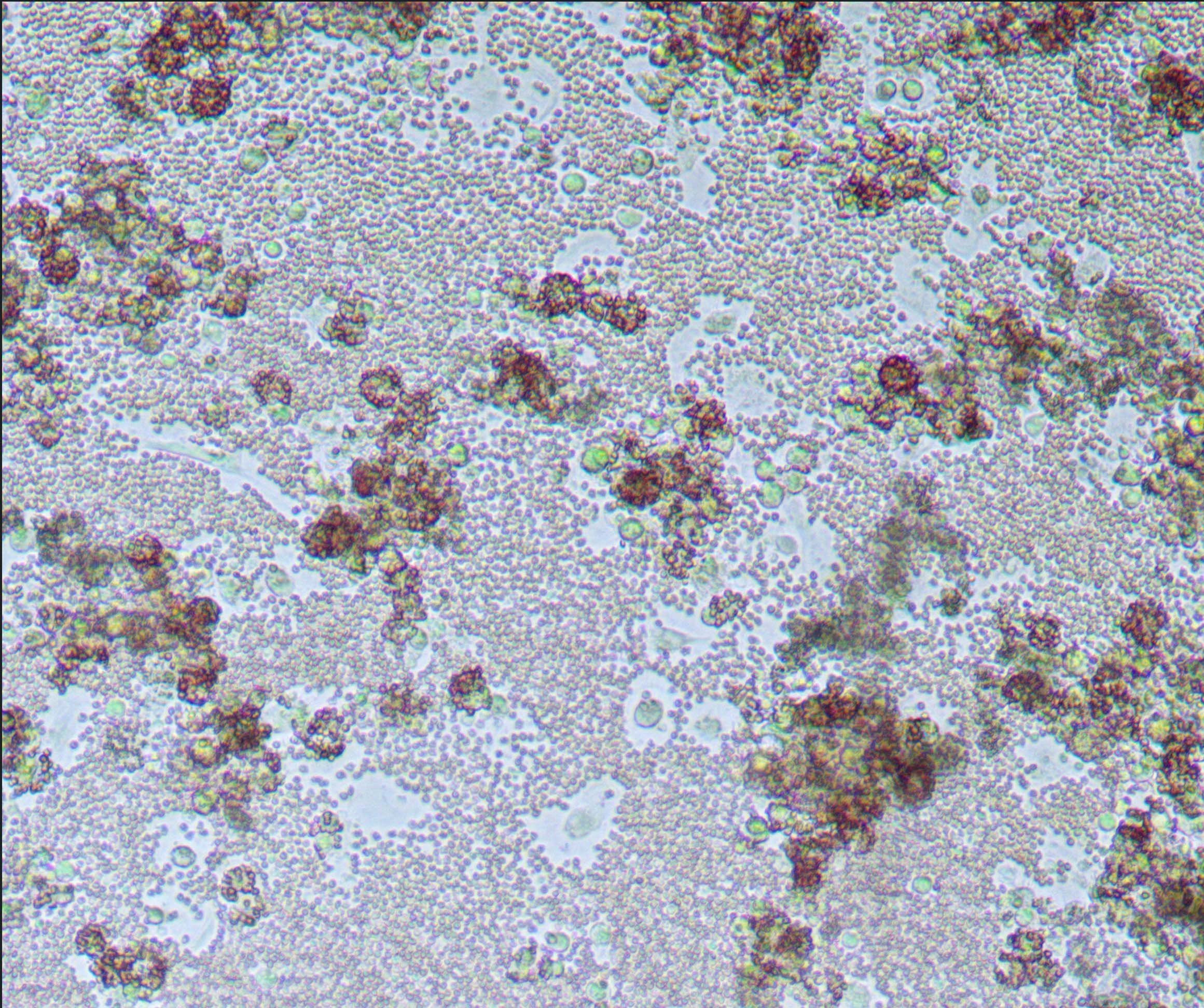
Figure 1. ASFV infected PAM culture showing haemadsorption of porcine erythrocytes, 72 hpi, passage two
Genetic characterization of the ASFV isolate
A 478 bp fragment of the B646L gene, which encodes the p72 protein (C-terminal end) of the virus was amplified and sequenced. GenBank accession number of the generated nucleotide sequence is PZ221713. Sequence analysis revealed that the ASFV isolated from Punjab state shared 100% nucleotide and amino acid sequence homology with Indian ASFV reported previously from the north-eastern states of India. The partial B646L gene based phylogenetic tree showed that the ASFV isolate reported in this study grouped with other ASFV (genotype II) reported from Europe and Asia (Figure 2).
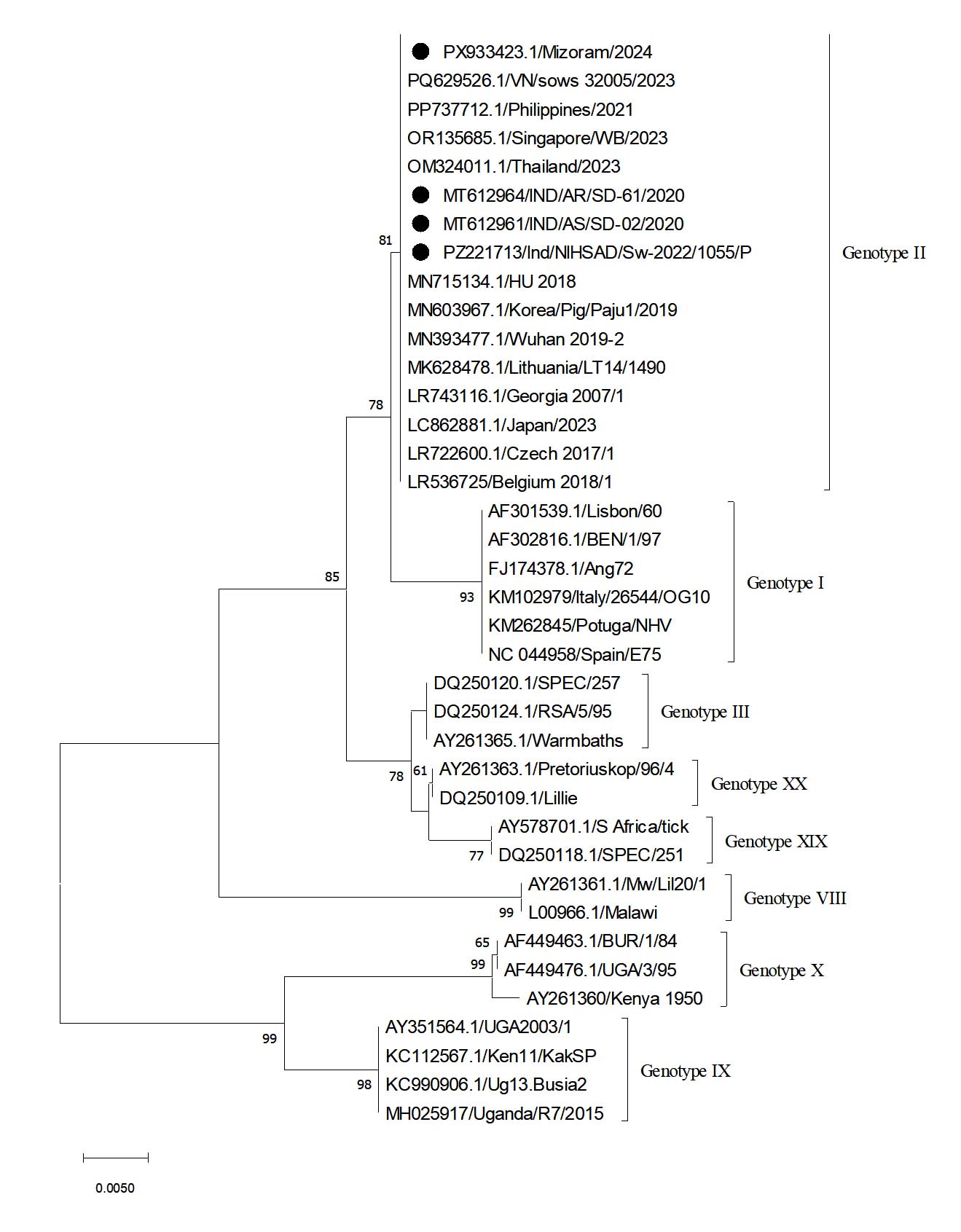
Figure 2. ASFV partial B646L gene based phylogenetic tree showing grouping of Indian isolates with other genotype II viruses reported across the world. Nodes show bootstrap values ≥60%. Substitutions per site is indicated by the scale bar
ASFV growth kinetics in PAM cells
To understand the replication kinetics of the Indian ASFV field isolate Ind-NIHSAD/SW/22_1055 in PAM cultures, multistep growth curves were generated at 0.1 and 1 MOI. Presence of the virus in cell-associated (CA) and cell supernatant (CS) fractions were systematically analysed at various intervals up to 7 days. Infection of PAM cultures with the ASFV isolate induced characteristic cytopathic effects (CPE), including cytoplasmic vacuolization, cell rounding with clustering (5-15 cells), membrane blebbing, detachment and lysis, started between 48 hpi and 72 hpi, shortly after the rosette-shaped HAD formation, and progressively intensified from 72 hpi onwards. CPE progression was earlier and rapid in PAM cells infected at higher MOI. Infectivity titres (HAD50/mL) as well as viral DNA copy numbers (copies/mL) were estimated (Figures 3 and 4).
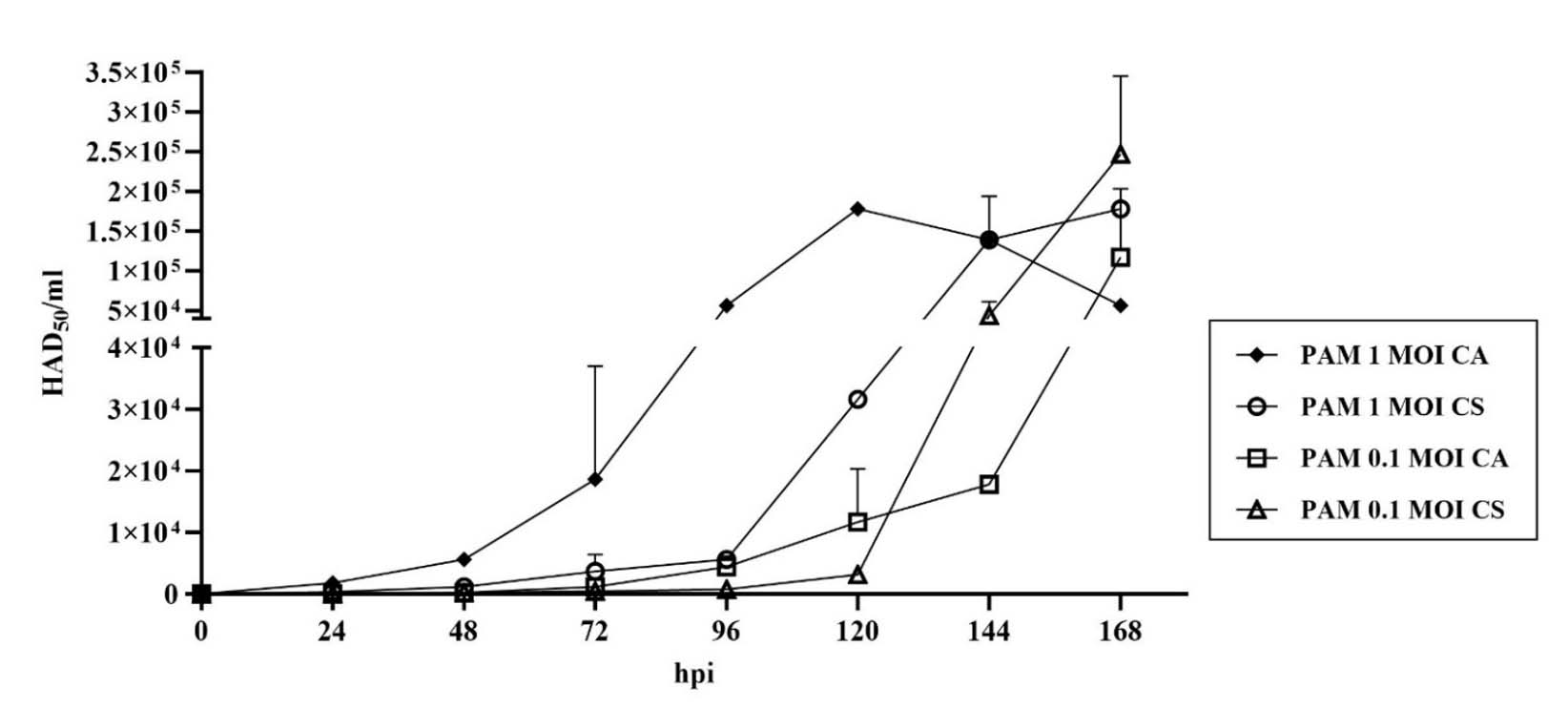
Figure 3. HAD50 titres estimated at different intervals in PAM cultures infected with ASF virus at 1.0 and 0.1 MOI
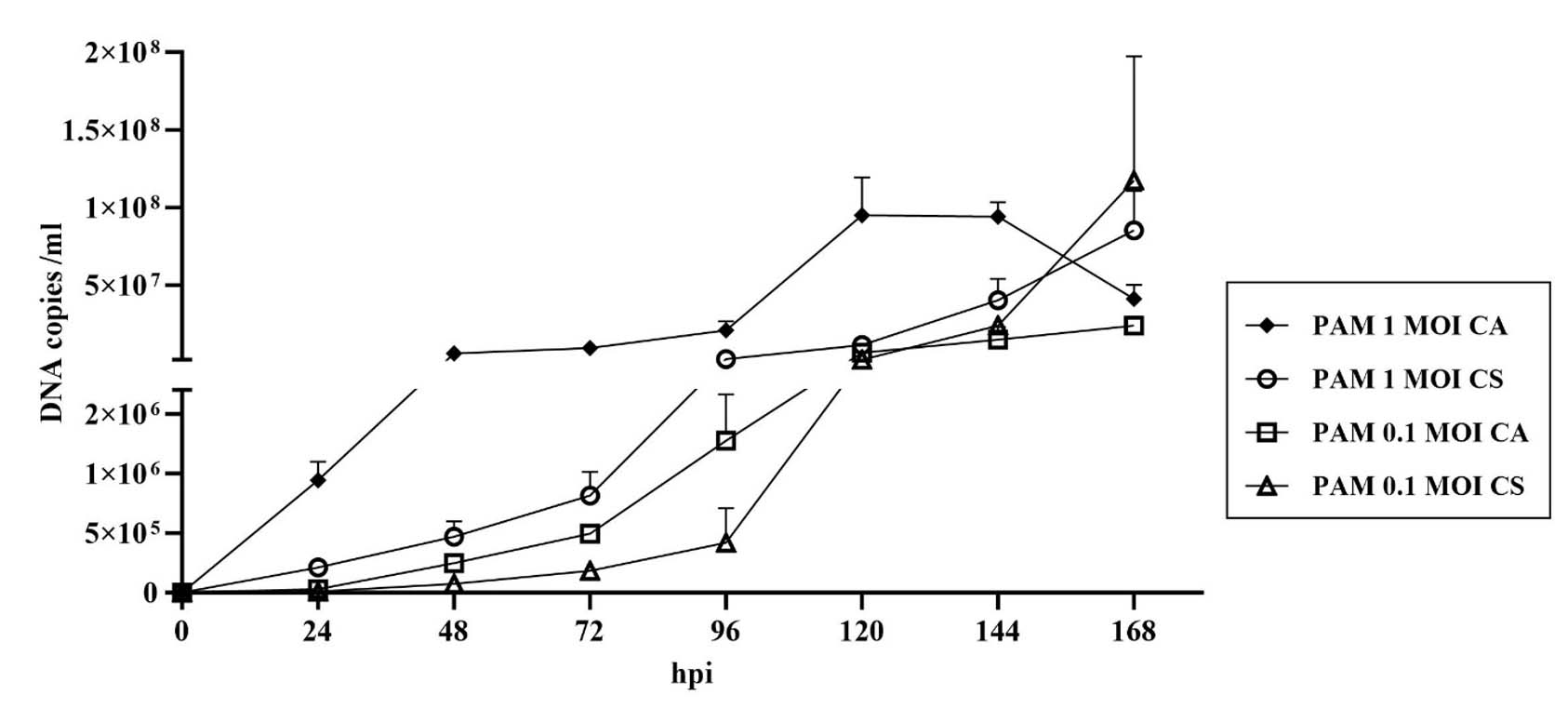
Figure 4. DNA copy numbers estimated at different intervals in PAM cultures infected with ASF virus at 1.0 and 0.1 MOI
At 1 MOI, virus titre in CA fraction of PAM cell culture, as quantified using HAD assay was 1.78 × 10³ HAD50/mL at 24 hpi which peaked at 144 hpi with a mean titre of 1.39 × 10⁵ ± 3.89 x 10⁴ HAD50/mL followed by a decline by 168 hpi. In the CS fraction, HAD50 titers began at 3.21 × 10² ± 0.5 × 101 HAD50/mL at 24 hpi and reached a peak of 1.78 × 10⁵ HAD50/mL at 168 hpi, surpassing corresponding levels in CA at this endpoint.
At 1 MOI, evaluation of viral DNA copy numbers by qPCR showed that the CA fraction contained a mean of 9.45 × 10⁵ ± 1.07 × 10⁵ copies/mL at 24 hpi, showed maximum of 9.50 × 10⁷ ± 1.72 × 10⁷ copies/mL at 120 hpi, then declined to 4.13 × 10⁷ ± 6.44 x 10⁶ copies/mL at 168 hpi. Genome copies in the CS fractions were estimated to be 2.11 × 10⁵ ± 2.90 x 10⁴ copies/mL at 24 hpi which peaked to 8.55 x 10⁷ ± 1.79 x 10⁷ copies/mL at 168 hpi without any decline at previous time points.
At 0.1 MOI, HAD50 titre of CA fraction was estimated to be 4.4 x 101 ± 1.2 x 101 HAD50/mL at 24 hpi which reached a maximum of at 1.17 × 10⁵ ± 6.08 x 104 by 168 hpi, whereas CS HAD50 titres started at 1.6 × 10 ± 1.6 × 10 HAD50/mL at 24 hpi and attained a peak of 2.47 × 10⁵ ± 6.92x 10⁴ HAD50/mL at 168 hpi.
At 0.1 MOI, ASFV DNA copy numbers in CA fraction advanced from 2.89 × 10⁴ ± 1.52 × 10⁴ copies/mL at 24 hpi to 2.41 × 10⁷ ± 4.12 × 10⁶ copies/mL at 168 hpi, while copies in CS progressed from 1.10 x 10⁴ ± 2.59 x 10³ copies/mL at 24 hpi to a peak of 1.18 x 10⁸ ± 5.64 x 10⁷ copies/mL at 168 hpi.
Statistical analysis revealed that in PAM cells infected with ASFV at 1.0 or 0.1 MOI, HAD50 titre in CA fraction was significantly higher at 120 hpi (P < 0.0001) and 144 hpi (P < 0.001), but lower at 168 hpi (P < 0.05) at 1.0 MOI as compared CS fractions. No significant differences were observed at other time points. The CS HAD50 titres were significantly higher (P < 0.01) at 168 hpi at 0.1 MOI as compared to 1.0 MOI.
In PAM cells infected with ASFV, CA genome copy numbers were significantly higher at from 24 hpi to 72 hpi (P < 0.05) at 1.0 MOI as compared to 0.1 MOI. Although cell supernatant (CS) fractions showed no statistically significant differences across various time points, the viral copy numbers were found to be higher at 0.1 MOI than at 1.0 MOI at 168 hpi.
To assess ASFV particle infectivity and to know the proportion of infectious virions and defective genomes, we quantified both HAD50 titers and qPCR genome copies, calculating their ratios (copies per HAD50). At 1.0 MOI, ratios ranged from 374 (96 hpi) to 1,104 (48 hpi) for CA fractions and from 328 (72 hpi) to 656 (24 hpi) for CS fractions. At 0.1 MOI, ratios ranged from 257 (168 hpi) to 1123 (48 hpi) for CA fractions, and from 210 (24 hpi) to 653 (120 hpi) for CS fractions.
As ASF remains a major threat to the pig industry globally, understanding the replication behaviour of ASFV isolated in various parts of the world remains a priority in virology research. Replication of the ASF virus is predominantly restricted to monocyte/macrophage lineages, with PAM cultures serving as the ideal method for virus isolation and propagation of field isolates due to their physiological relevance.28 This study provides the first detailed characterization of multistep growth kinetics of an Indian ASFV genotype II isolate in PAM cultures infected at low and high MOI, revealing robust infectivity and genome replication consistent with highly virulent strains.
The isolation and genetic characterization of the ASFV field isolate described in this study confirmed its classification within genotype II, exhibiting 100% sequence identity in the B646L (p72) gene with other Indian ASFV isolates reported previously.6,7,29 The phylogenetic clustering with Asian and European genotype II strains aligns with the ongoing spread of this dominant ASFV lineage, as documented in outbreaks across the Indian subcontinent since 2020, as well as in the Asia-Pacific region.
The ASFV isolate used in the current study consistently exhibited the distinctive rosette-shaped hemadsorption (HAD) phenomenon across all five passages in PAM cells, confirming preservation of its CD2v (EP402R)-mediated erythrocyte binding capacity. This hallmark phenotypic trait represents a critical virulence determinant conserved across genotype II ASFV strains reported from Europe (Georgia/2007 lineage), Asia (China/Wuhan), and Africa.25,28 These findings underscore the Indian isolate’s alignment with globally circulating highly pathogenic forms, achieving a titre of 106.25 HAD50/ml at passage five. Following HAD formation, infected PAM cultures displayed characteristic cytopathic effects including cytoplasmic vacuolization, cell clustering, membrane blebbing, and progressive lysis from 72 hpi onwards. These morphological changes precisely mirror CPE patterns documented for other genotype II isolates such as ASFV YZ-1-3 and Armenia07, as well as genotype I (Espana75) and genotype X (Kenya05/Tk-1) isolates in primary PAM cultures.30,31 These CPE patterns directly correlated with MOI-dependent replication dynamics observed in multistep growth curves. At high MOI (1.0), rapid CPE progression drove early cell-associated (CA) titer peaks at 120-144 hpi followed by significant declines at 168 hpi, reflecting virus-induced lysis and progeny release into cell supernatants (CS). In contrast, low MOI (0.1) infections exhibited slower initial replication, but with sustained CA and CS titers through 168 hpi without decline, indicative of slower cell-to-cell spread and persistent extracellular virus production.
These growth patterns demonstrate accelerated intracellular replication and earlier cell lysis under high-MOI (1 MOI) conditions, evidenced by earlier peak CA HAD50 titers. No significant difference (P < 0.05) was observed between 1.0 and 0.1 MOI up to 96 hpi, aligning with previous studies involving a genotype II ASFV Congo-a virus and a genotype IX ASFV-Kenya-IX-1033.32,33 These kinetics suggest low-inoculum infection favours persistent extracellular virion release, a replication strategy potentially critical for ASFV transmission via oronasal secretions in swine. Most previous ASFV growth kinetic studies involving various ASFV isolates concluded analyses at 120 hpi or earlier,32,34-36, potentially missing late-stage replication dynamics critical for virus yield optimization in vitro.
Analysis of viral DNA copies per HAD50 provided insight into virion infectivity in PAM cells. In the current study, viral DNA copy numbers were significantly higher up to 72 hpi in CA fractions of 1.0 MOI infected cells, with higher DNA copies per HAD50. This suggests that both infectious and non-infectious forms of the ASF virus were produced during their replication, with a higher tendency for accumulation of non-infectious DNA in cellular fractions at higher MOI infection. Lower minimum ratios observed at 0.1 MOI means a slightly higher infectivity efficiency at lower MOI, which indicates less interference between viruses and defective virions. CS ratios were consistently lower as compared to the CA fractions, indicating a lower proportion of defective particles in supernatants.
By extending observations to 168 hpi, this study reveals higher extracellular virus production with lower DNA copy to HAD ratio in PAM cultures infected at 0.1 MOI, demonstrating optimal duration for higher virus yield in cell culture supernatants, and provides further insights into prolonged ASFV replication relevant for isolate propagation, pathogenesis and vaccine development studies.
ACKNOWLEDGMENTS
The authors are grateful to the Indian Council of Agricultural Research, New Delhi, and the Director, ICAR–National Institute of High Security Animal Diseases, Bhopal, for facilities and funding. The authors also appreciate the Department of Animal Husbandry, Punjab, for sharing samples from disease outbreak.
CONFLICT OF INTEREST
The authors declare that there is no conflict of interest.
AUTHORS’ CONTRIBUTION
All authors listed have made a substantial, direct and intellectual contribution to the work, and approved it for publication.
FUNDING
This study was supported by the National Agricultural Science Fund (NASF) of ICAR through grant number NASF/BGAM-9005/2022-23.
DATA AVAILABILITY
All datasets generated or analyzed during this study are included in the manuscript.
ETHICS STATEMENT
Not applicable.
- Alonso C, Borca M, Dixon L, Revilla Y, Rodriguez F, Escribano JM. ICTV Virus Taxonomy Profile: Asfarviridae. J Gen Virol. 2018;99(5):613-614.
Crossref - Penrith ML. African swine fever. Onderstepoort J Vet Res. 2009;76(1):91-95.
Crossref - Montgomery RE. On A Form of Swine Fever Occurring in British East Africa (Kenya Colony). J Comp Pathol Ther. 1921;34:159-191.
Crossref - WAHIS. African Swine Fever (Asf) – Situation Report 32. 2023;(July):1-6. https://www.woah.org/app/ uploads/2023/04/asf-report-32.pdf
- Wu K, Liu J, Wang L, et al. Current State of Global African Swine Fever Vaccine Development under the Prevalence and Transmission of ASF in China. Vaccines. 2020;8(3):1-26.
Crossref - Rajukumar K, Senthilkumar D, Venkatesh G, et al. Genetic characterization of African swine fever virus from domestic pigs in India. Transbound Emerg Dis. 2021;68(5):2687-2692.
Crossref - Senthilkumar D, Rajukumar K, Venkatesh G, et al. Complete genome analysis of African swine fever virus isolated from domestic pigs during the first ASF outbreaks in India. Transbound Emerg Dis. 2022;69(5):e2020-e2027.
Crossref - FAO. ASF situation in Asia & Pacific update. 2026. https://www.fao.org/animal-health/situation-updates/asf-in-asia-pacific/en.
- Balaji KGS, Karikalan M, Saravanan S, et al. High mortality in free-ranging wild boars associated with African swine fever virus in India. Arch Virol. 2024;169(7):137.
Crossref - Gaudreault NN, Madden DW, Wilson WC, Trujillo JD, Richt JA. African Swine Fever Virus: An Emerging DNA Arbovirus. Front Vet Sci. 2020;7:1-17.
Crossref - Zhang C, Li S, Zhang M, et al. Editorial: Diagnostics and detection of African swine fever virus. Front Vet Sci. 2023;10:2-4.
Crossref - Vu HLX, McVey DS. Recent progress on gene-deleted live-attenuated African swine fever virus vaccines. npj Vaccines. 2024;9(1):1-10.
Crossref - Zhang H, Zhao S, Zhang H, Qin Z, Shan H, Cai X. Vaccines for African swine fever: an update. Front Microbiol. 2023;14:1139494.
Crossref - Dixon LK, Islam M, Nash R, Reis AL. African swine fever virus evasion of host defences. Virus Res. 2019;266:25-33.
Crossref - Franzoni G, Dei Giudici S, Oggiano A. Infection, modulation and responses of antigen-presenting cells to African swine fever viruses. Virus Res. 2018;258:73-80.
Crossref - Meloni D, Franzoni G, Oggiano A. Cell Lines for the Development of African Swine Fever Virus Vaccine Candidates: An Update. Vaccines. 2022;10(5):707.
Crossref - Oh T, Do DT, Vo HV, et al. The Isolation and Replication of African Swine Fever Virus in Primary Renal-Derived Swine Macrophages. Front Vet Sci. 2021;8:251.
Crossref - Krug PW, Holinka LG, O’Donnell V, et al. The Progressive Adaptation of a Georgian Isolate of African Swine Fever Virus to Vero Cells Leads to a Gradual Attenuation of Virulence in Swine Corresponding to Major Modifications of the Viral Genome. J Virol. 2014;89(4):2324.
Crossref - Rodriguez JM, Moreno LT, Alejo A, Lacasta A, Rodriguez F, Salas ML. Genome Sequence of African Swine Fever Virus BA71, the Virulent Parental Strain of the Nonpathogenic and Tissue-Culture Adapted BA71V. PLoS One. 2015;10(11):e0142889.
Crossref - Zhang X, Wang Z, Ge S, et al. Attenuated African swine fever virus through serial passaging of viruses in cell culture: a brief review on the knowledge gathered during 60 years of research. Virus Genes. 2023;59(1):13-24.
Crossref - Gao Y, Xia T, Bai J, et al. African Swine Fever Virus Exhibits Distinct Replication Defects in Different Cell Types. Viruses. 2022;14(12):2642.
Crossref - Wensvoort G, Terpstra C, Pol JMA, et al. Mystery swine disease in the Netherlands: The isolation of Lelystad virus. Vet Q. 1991;13(3):121-130.
Crossref - Reed LJ, Muench H. A simple method of estimating fifty per cent endpoints. Am J Epidemiol. 1938;27(3):493-497.
Crossref - Bastos ADS, Penrith ML, Cruciere C, et al. Genotyping field strains of African swine fever virus by partial p72 gene characterisation. Arch Virol. 2003;148(4):693-706.
Crossref - Rai A, Pruitt S, Ramirez-Medina E, et al. Identification of a continuously stable and commercially available cell line for the identification of infectious African swine fever virus in clinical samples. Viruses. 2020;12(8):820.
Crossref - King DP, Reid SM, Hutchings GH, et al. Development of a TaqMan® PCR assay with internal amplification control for the detection of African swine fever virus. J Virol Methods. 2003;107(1):53-61.
Crossref - Rodriguez JM, Yanez RJ, Almazan F, Vinuela E, Rodriguez JF. African swine fever virus encodes a CD2 homolog responsible for the adhesion of erythrocytes to infected cells. J Virol. 1993;67(9):5312-5320.
Crossref - Beltran-Alcrudo D, Arias M, Gallardo C, Kramer S, Penrith ML. African Swine Fever: Detection and Diagnosis. 2017. https://openknowledge.fao.org/server/api/core/bitstreams/d6d6ad7b-b4d7-4116-a95e-06826e8a25b0/content
- Senthilkumar D, Rajukumar K, Venkatesh G, et al. Complete Genome Analysis of African Swine Fever Virus Isolated from Wild Boar, India, 2021. Emerg Infect Dis. 2025;31(8):1665.
Crossref - Masujin K, Kitamura T, Kameyama KI, et al. An immortalized porcine macrophage cell line competent for the isolation of African swine fever virus. Sci Rep. 2021;11(1).
Crossref - Zhang J, Wang Y, Zhang K, et al. Characterization of three African swine fever viruses from different clinical settings revealed a potential attenuation mechanism. Anim Dis. 2024;4(1):24.
Crossref - Koltsova G, Koltsov A, Krutko S, Kholod N, Tulman ER, Kolbasov D. Growth kinetics and protective efficacy of attenuated ASFV strain congo with deletion of the EP402 gene. Viruses. 2021;13(7):1259.
Crossref - Hemmink JD, Abkallo HM, Henson SP, et al. The African Swine Fever Isolate ASFV-Kenya-IX-1033 Is Highly Virulent and Stable after Propagation in the Wild Boar Cell Line WSL. Viruses. 2022;14(9):1912.
Crossref - Thaweerattanasinp T, Kaewborisuth C, Viriyakitkosol R, et al. Adaptation of African swine fever virus to MA-104 cells: Implications of unique genetic variations. Vet Microbiol. 2024;291:110016.
Crossref - Droesbeke B, Balmelle N, Cay AB, et al. Replication Kinetics and Infectivity of African Swine Fever Virus (ASFV) Variants with Different Genotypes or Levels of Virulence in Cell Culture Models of Primary Porcine Macrophages. Microbiol Res (Pavia). 2024;15(3):1690-1708.
Crossref - Borca MV, O’Donnell V, Holinka LG, et al. Deletion of CD2-like gene from the genome of African swine fever virus strain Georgia does not attenuate virulence in swine. Sci Rep. 2020;10(1):494.
Crossref
© The Author(s) 2026. Open Access. This article is distributed under the terms of the Creative Commons Attribution 4.0 International License which permits unrestricted use, sharing, distribution, and reproduction in any medium, provided you give appropriate credit to the original author(s) and the source, provide a link to the Creative Commons license, and indicate if changes were made.